10 Best YouTube Video Thumbnail Maker Tools for 2026
Compare the top YouTube video thumbnail maker tools by features, pricing, ease of use and integrations, plus what makes thumbnails get clicks.
5 min read
October 13, 2026

Learn how to grow Instagram followers with a tactical playbook for 2026. This guide covers content, repurposing, and engagement for solopreneurs.
Written by:


Reels account for 46% of time spent on Instagram and are shared more than 4.5 billion times per day, according to Hootsuite's 2026 Instagram statistics. That changes the whole conversation around follower growth. If you're still treating Instagram like a static portfolio with the occasional post and a handful of hashtags, you're playing an older version of the game.
That's why most advice about how to grow Instagram followers feels frustrating in practice. It tells you to post more, be authentic, use trends, and engage consistently. None of that is wrong. It's just incomplete. Busy solopreneurs, local businesses, consultants, and creators don't need more random tips. They need a repeatable system that turns one solid piece of long-form content into a week of Instagram assets without eating the whole workday.
Follower growth works better when you stop treating followers as the target and start treating them as the result of a machine. Good profile. Clear niche. Discovery-first content. Useful captions. Consistent distribution. Daily engagement. That stack compounds. Without it, even strong content gets buried.
Users often don't have a follower problem. They have a workflow problem.
They open Instagram, feel pressure to post something, scramble for an idea, publish inconsistently, then wonder why growth is flat. The issue usually isn't effort. It's that they're creating from scratch every time, with no operating system behind the account.
Instagram growth used to feel more feed-based. Build a grid, post decent photos, and gradually collect followers. That's not how the platform behaves anymore. Short-form video dominates attention, and discovery happens outside your follower base first.
That shift is why so many accounts feel stuck. They're making content for existing followers when they should be making content for people who haven't heard of them yet. If the content doesn't travel, the profile never gets enough qualified visitors to convert.
Practical rule: Build for discovery first, then optimize for conversion once people land on your profile.
A lot of generic advice skips that distinction. Some practical frameworks in Gainsty's Instagram growth tips are useful because they focus on positioning, consistency, and audience fit instead of gimmicks.
If your business already creates podcasts, client calls, webinars, interviews, trainings, or longer educational videos, you're sitting on raw material for growth. The missing piece is often a content repurposing process, not more creativity. That's where a structured workflow for AI for social media marketing becomes useful. It helps you turn existing expertise into multiple platform-ready outputs instead of relying on daily inspiration.
A few things look productive but rarely create durable growth:
The better model is simpler. Start with one valuable long-form asset. Pull out strong clips, sharp opinions, clear teaching moments, customer questions, objections, and stories. Publish them in a repeatable rhythm. Let the account teach Instagram who you serve.
That's how follower growth becomes sustainable. Not exciting for one day. Sustainable for months.
A lot of follower growth dies at the profile.
Someone sees a Reel, taps your name, lands on your page, and leaves because the account feels vague. The content may be fine. The problem is that the profile doesn't answer three basic questions fast enough: who is this for, what do I get if I follow, and why should I trust this person or business?
Your profile should read like a positioning statement, not a personality puzzle.

A strong profile usually includes:
If you're trying to learn how to grow Instagram followers, don't hide behind brand fluff. Clarity converts better than cleverness.
Most profiles underuse Story Highlights. They shouldn't be random saved stories. They should reduce hesitation.
Think of Highlights as the trust layer under the bio. Useful categories often include:
People rarely follow based on one touchpoint alone. They scan. They look for signs that you're consistent, credible, and relevant to their current problem.
Your profile should make the follow decision easy. If a visitor has to decode what you do, you've already lost momentum.
Content pillars aren't just topic buckets. They're the repeatable themes that tell both Instagram and your audience what your account stands for.
For most service businesses and creators, three to five pillars are enough. More than that usually means the niche is too loose.
Here's a practical way to define them:
| Pillar type | What it does | Example |
|---|---|---|
| Education | Teaches the audience something useful | Home inspection mistakes, tax prep basics, skincare myths |
| Proof | Shows evidence and trust signals | Client stories, transformations, testimonials |
| Perspective | Shares your point of view | Industry opinions, common mistakes, what you'd do differently |
| Personality | Makes the brand memorable | Founder routines, values, team culture, day-in-the-life |
| Offer alignment | Connects content to what you sell | Walkthroughs, service process, FAQs, objections |
The key is alignment. If your pillar gets attention but has nothing to do with your business, it may grow the wrong audience.
Before you publish, ask:
If the answer to the third question is no, don't post it.
That filter saves a lot of time, especially for small teams. It also keeps your content engine from drifting into whatever happened to work once.
If you want practical traction on Instagram, build around a Reels-first mix.
That doesn't mean every post has to be a high-production video. It means you prioritize the format most likely to put your account in front of people who don't already follow you. Buffer reports that Reels get 36% more reach than other post types, and accounts posting 3 to 5 times per week see 2 times faster follower growth. Those two numbers matter because they connect format and cadence. Discovery improves when you publish the right type of content often enough to give the system something to work with.
Not every format plays the same role:
That mix is more realistic than trying to force one format to do everything. Reels bring people in. Carousels help them understand your thinking. Stories help them feel connected enough to stay.
A useful production benchmark comes from Michelle Gifford's growth playbook. It suggests batch-producing 3 Reels and 2 carousels per week, with most effort going into Reels for discovery. I'm not linking that source again here because it belongs in the outreach section where the rest of its data fits, but the operating idea is solid: don't spread your effort evenly across every format.
Most sustainable growth manifests in this way.
If you record a podcast, webinar, Q&A, customer interview, sermon, training, listing walkthrough, or coaching session, you already have the raw ingredients for weeks of Instagram content. Long-form video contains structure. It has openings, objections, examples, stories, transitions, and moments of emphasis. That's exactly what short-form content needs.
A single long-form asset can usually become:
That's a better use of time than brainstorming unrelated posts every morning.
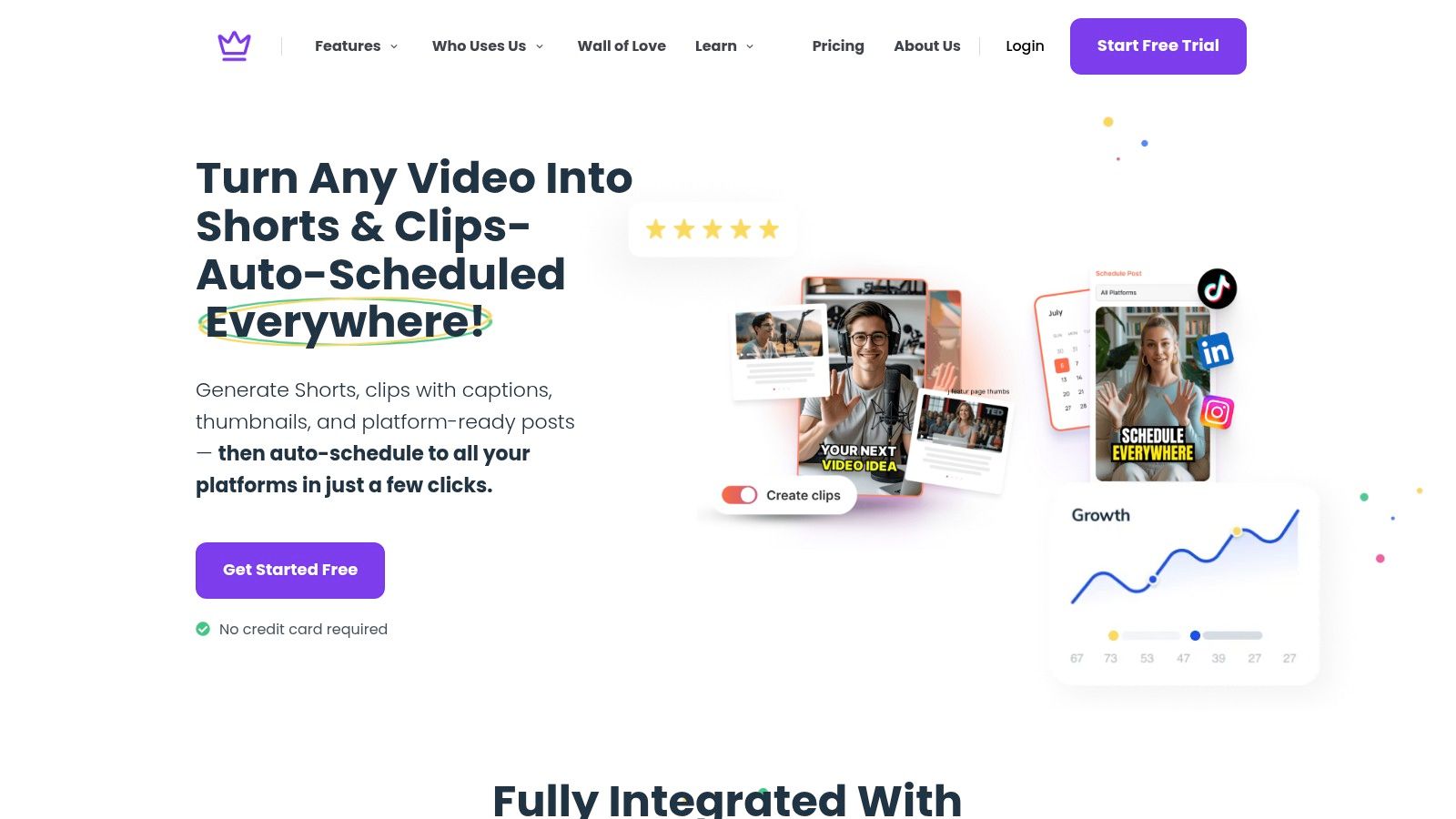
One option for this workflow is Taja AI, which turns long-form video into platform-ready clips, captions, thumbnails, and posts. If you're working from podcasts or webinars and need vertical-first outputs, that's more efficient than manually cutting everything yourself. If you're sorting out dimensions and publishing requirements, this guide to Instagram video format is useful to keep your exports clean.
Don't ask, “What should I post today?” Ask, “What can I extract from the last thing I already recorded?”
Some source material repurposes especially well:
| Long-form source | Best short-form angle |
|---|---|
| Podcast interview | Strong opinion, surprising answer, clean quote |
| Webinar | Tactical teaching clip, myth-busting moment |
| Customer testimonial | Problem, solution, result narrative |
| Sales call FAQ | Objection handling and trust-building |
| Tutorial or demo | Quick fix, mistake to avoid, checklist clip |
Here's a simple example. Say you recorded a customer testimonial video. You don't need one polished Reel and done. You can turn it into a set:
Later in the week, embed a live example or walkthrough like this:
The point isn't volume for its own sake. The point is reducing production friction so consistency becomes possible.
A few mistakes show up constantly:
Good Reels don't need to be flashy. They need to be useful, specific, and easy to understand without context.
A Reel can win the click. The caption often decides whether the person stays, engages, or follows.
Many businesses waste that space by repeating what's already obvious in the video. “New podcast episode out now” or “Some thoughts on marketing.” That doesn't add value, and it doesn't help Instagram understand the topic.
Captions work better when they do one job at a time.

A practical structure looks like this:
That's enough for most posts. You don't need a mini essay every time.
Here's the bigger reason this matters. HubSpot's Instagram growth guide recommends using relevant keywords in captions, showing real customer stories, and posting raw behind-the-scenes content. It also recommends having someone engage with 5 to 20 new people per day and posting at least once per week, all of which support a more durable growth system through searchability, consistency, and audience quality. I'm not linking that PDF here because I'm keeping the source link budget clean and using the engagement idea in the routine section, but the caption lesson is simple: write for both humans and search.
Hashtags still help with context, but they're not magic. Dumping broad tags under every post is usually lazy targeting disguised as strategy.
Use a smaller set that matches the content. A simple stack works well:
If you're a real estate professional, for example, your hashtag set should reflect location, buyer stage, and niche angle. If you're a consultant, use hashtags tied to the exact problem you solve, not generic “business” terms.
Write the keyword in the sentence first. Use the hashtag as support, not as the main discovery tactic.
The best captions create a bridge from one post to the whole profile.
Try prompts like:
What doesn't work well is baiting. Forced engagement asks, broad motivational filler, and random storytelling that never lands a point usually dilute trust.
If your content teaches something useful, the caption should sharpen it. If your content tells a story, the caption should frame why it matters. If your content makes a claim, the caption should make that claim searchable and easy to respond to.
That's how captions help with how to grow Instagram followers. Not by being long. By being clear enough to deepen the right kind of attention.
Publishing alone won't carry the account.
Instagram growth gets easier when you treat distribution as a daily job, not a lucky outcome. Good content still needs a push, especially early on when the account has limited momentum and a smaller trust base.
HubSpot's guide recommends engaging with 5 to 20 new people per day. That's a useful daily range because it's doable for a solo operator and focused enough to stay high quality. The mistake is doing this randomly.
Pick people who fit your ideal follower profile. That might mean local homeowners, founders in your niche, people following complementary businesses, or commenters on accounts your audience already trusts.
A practical daily routine:
That work compounds because it creates familiarity before people ever see your content directly.
There's a straightforward outreach tactic that still works when the fit is good. A proven playbook suggests reaching out to 10 micro-influencers, with an estimated 20% conversion rate, and says each Story mention can generate roughly 50 to 200 profile visits when audience alignment is strong, as shared in Michelle Gifford's Instagram growth strategy.
That doesn't mean blasting salesy DMs.
It means identifying adjacent creators, service providers, niche pages, or local businesses that already have your audience's attention and starting a real conversation. Share their work. Reference something specific. Suggest a simple collaboration, resource swap, Q&A, or mention that benefits both sides.
Here's what usually works better than a cold pitch:
You don't need to live in the app. You need a routine that survives busy weeks.
A simple version looks like this:
| Time block | Activity | Purpose |
|---|---|---|
| Early check-in | Reply to comments and DMs | Strengthen signals and relationships |
| Midday | Engage with new relevant accounts | Create awareness outside your audience |
| After posting | Interact for a short window | Increase early activity on the post |
| End of day | Send outreach DMs or follow-ups | Open new distribution paths |
Most small accounts don't need more content first. They need more targeted contact with the people most likely to care.
This part isn't glamorous, but it's where a lot of wasted content gets rescued. If you've already built a solid repurposing system, this daily routine makes that content travel further.
A good strategy is only useful if it turns into a schedule you'll follow.
The first month should focus on setup, consistency, and signal collection. The next stretch should focus on iteration, stronger distribution, and tightening the content engine around what your audience responds to.
Don't try to optimize everything at once.
In the first phase, you're proving that you can publish consistently with a clear niche and a repeatable source of content. In the second phase, you're improving conversion and reach by refining the pieces that already exist.
If you need structure for planning that publishing rhythm, this guide on how to create a content calendar is a practical starting point.
| Phase | Weekly Priority | Key Tasks | Success Metric |
|---|---|---|---|
| Days 1 to 30 | Foundation | Rewrite bio, clean up profile, create Highlights, define content pillars, choose long-form source material | Profile feels clear and cohesive |
| Days 1 to 30 | Production rhythm | Batch content from existing podcasts, webinars, interviews, or recordings. Publish on a consistent schedule that you can maintain | You're posting consistently without scrambling |
| Days 1 to 30 | Content signal gathering | Track which hooks, topics, and formats get the strongest saves, shares, replies, and profile visits | Early patterns become visible |
| Days 31 to 60 | Refinement | Double down on the best-performing topics, strengthen hooks, tighten captions, improve cover consistency | More posts create qualified profile visits |
| Days 31 to 60 | Distribution | Start the daily engagement routine, comment strategically, reply to Stories, and begin outreach to adjacent accounts | More conversations and warm traffic reach the profile |
| Days 61 to 90 | Scale what works | Turn recurring topics into series, repurpose new long-form content weekly, keep outreach steady, test collaborative content | The system becomes easier to repeat |
| Days 61 to 90 | Conversion quality | Review followers for relevance, remove obvious spam or low-quality accounts when needed, and keep profile messaging aligned with your offer | Audience quality improves along with consistency |
Don't reduce the whole effort to follower count alone.
A better read on progress includes:
That last one matters more than people admit. If your growth plan requires endless ideation, constant trend monitoring, and daily editing from scratch, it won't last. The system has to fit the business.
By day 90, you should know your strongest content pillars, your most reusable source formats, and your best distribution channels. At that point, follower growth stops feeling mysterious. It becomes the side effect of repeated execution.
If you already record long-form content, Taja AI can help turn those podcasts, webinars, interviews, and trainings into ready-to-publish short clips, captions, and platform-specific posts so your Instagram growth runs on a repeatable system instead of daily content panic.


We are blessed to work with leading brands & Companies


We try to make easy and simple for every professionals. Get 30 days free trial - No credit card required.


© 2025 Taja AI. All rights reserved.