.jpeg)

How to Flip Video: Mirror and Rotate Quickly
Learn how to flip video in popular editors and mobile apps. Step-by-step guide to horizontal mirrors and vertical flips with quality and privacy tips.
5 min read
October 9, 2026

Stop wasting content. Learn how a content distribution platform automates repurposing and scheduling to grow your reach on YouTube, TikTok, and more.
Written by:


You record a solid podcast episode on Tuesday. By Friday, it has already disappeared under newer posts, unread links, and the next thing on your to-do list. The work was real. The shelf life was not.
That pattern drains creators and small business owners fast. You are not failing because you need more ideas. You are losing time because one strong asset never gets rebuilt into the clips, captions, quote graphics, thumbnails, emails, and channel-specific posts that keep it working after publish day.
A content distribution platform matters now for a different reason than it used to. The category has expanded because scheduling alone does not solve the main bottleneck. Manual repurposing does. Burned-out teams are looking for systems that can take one long-form piece and turn it into dozens of usable assets with less editing, less copy-pasting, and fewer missed posting windows.
That shift is why the market keeps growing.
The smarter way to use these platforms is as repurposing and automation engines. You make one substantive piece of content. The platform helps extract clips, draft post variations, format assets for different channels, and keep distribution moving without you touching every step by hand. That is how creators get more reach from work they have already done, instead of living in a constant cycle of starting from zero.
You finish a strong piece of content, publish it once, and move on because the rest of the week is already full. The recording took effort. The follow-up never happens.
That is where good content starts losing value.
A small business owner publishes a podcast episode. A consultant posts a webinar replay. A founder shares a detailed product walkthrough. Each one contains enough raw material for clips, quote posts, email copy, carousels, and follow-up posts across multiple channels. In practice, the asset gets one link post, maybe one trimmed clip, then disappears under newer work.
The problem is not quality. The problem is distribution capacity.
Audience behavior changes by channel and format. Someone skimming LinkedIn during a work break will not engage the same way as someone watching vertical video on TikTok or opening an email newsletter with buying intent. One version of one asset cannot do all of those jobs.
That creates a predictable mess:
I see this pattern most often with lean teams that publish valuable long-form content but still run distribution by hand. The content is doing its job. The system around it is not.
Burnout usually shows up after the recording. It happens when the same person has to clip, resize, rewrite, caption, schedule, and post every version manually.
A common pitfall for small teams is focusing on idea generation when the actual gap is systemization. They do not need another brainstorm. They need a repeatable way to turn one source asset into many usable outputs without reopening the same file ten times.
A single webinar or podcast can feed weeks of distribution. It can produce short-form clips, post variations, blog drafts, thumbnails, title options, and channel-specific captions. But if that process lives across five tools and depends on spare time, it breaks the moment the calendar gets busy.
That is why creators are paying closer attention to tools built around repurposing, not just scheduling. Teams exploring Programmatic short-form media strategies are responding to the same pressure. Get more output from the content you already made, with less manual handling between formats and channels.
The goal is not to publish more for the sake of volume. The goal is to keep strong content working after day one.
Think of a content distribution platform as an intelligent shipping hub for your ideas.
You bring in one large package, your podcast episode, webinar recording, blog post, or tutorial video. The platform doesn't just stick a label on it and send it out untouched. It breaks that package down, sorts the parts, repackages them for different destinations, and sends each version where it fits.
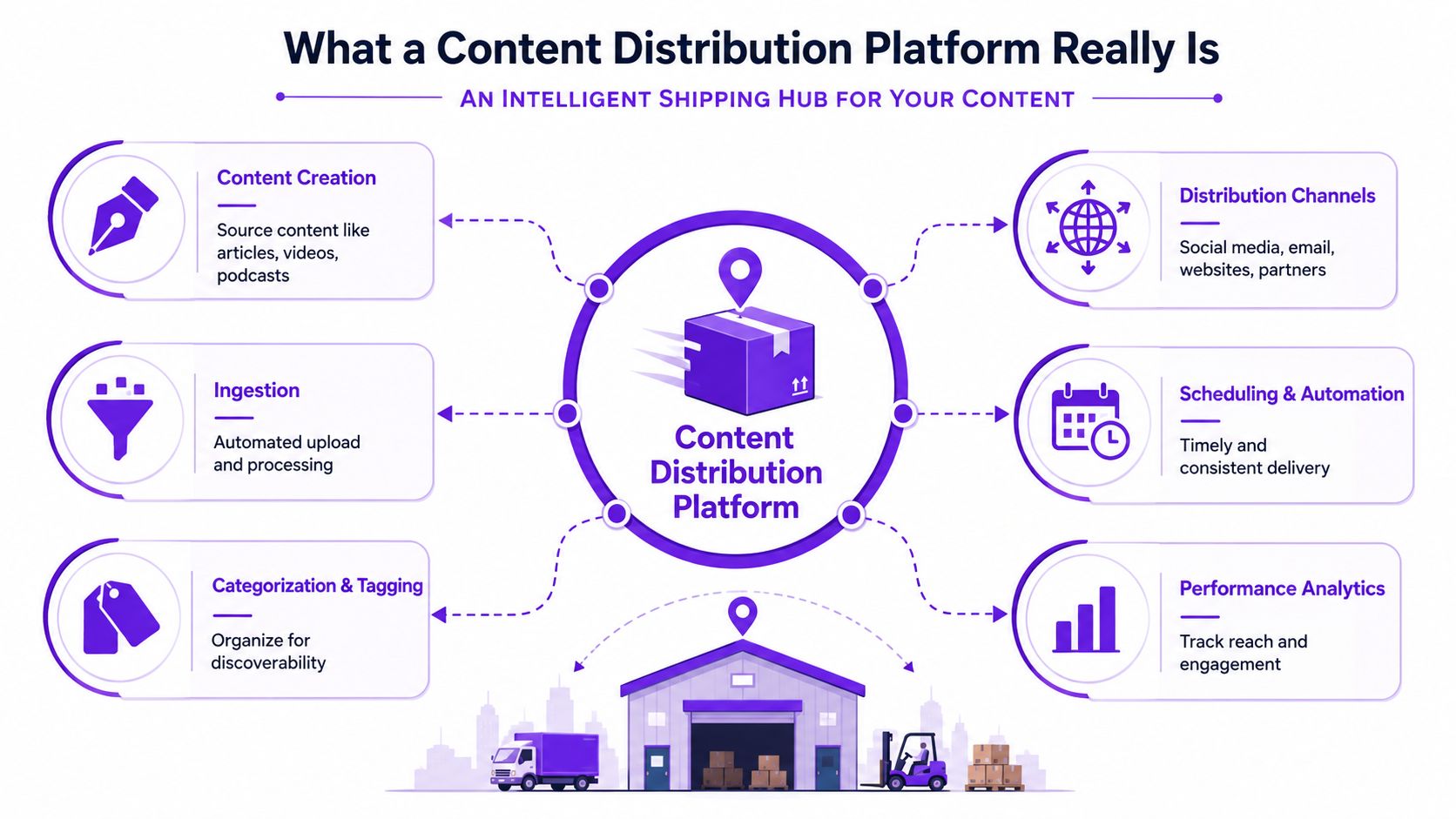
A basic scheduler is useful, but it has a narrow job. It posts what you give it.
If you upload one square graphic and one caption, a scheduler helps you publish that asset at the right time. That's operationally helpful. It is not strategic transformation.
A real content distribution platform does more:
That's why creators looking at Programmatic short-form media strategies are thinking beyond simple scheduling. The focus is increasingly on systematized adaptation and placement, not just posting frequency.
Another way to frame it is a central content airport.
Your long-form asset lands once. From there, different flights depart for different destinations:
| Source asset | Output type | Best-fit destination |
|---|---|---|
| Podcast episode | Vertical clips | TikTok, Reels, Shorts |
| Webinar | Insight posts | LinkedIn, X |
| Tutorial video | Search-friendly summary | Blog, newsletter |
| Interview | Quote cards or clips | Instagram, Facebook |
The important distinction is this: a content distribution platform isn't only a delivery tool. It's a transformation engine.
Practical rule: If a tool only helps you queue posts, it's a scheduler. If it helps you turn one core asset into many platform-native assets, you're looking at a real distribution platform.
That difference matters because most content teams don't fail at posting. They fail at repurposing consistently enough to give strong content a longer life.
You do not need more features. You need fewer repetitive tasks.
That is the standard I use when evaluating a content distribution platform. If a feature does not remove a recurring job from your week, it is decoration. If it cuts editing, tagging, packaging, or publishing time, it belongs in the stack.
The biggest shift is where the workflow starts.
Old-school social tools start at the post level. Modern distribution platforms start with the source asset. One podcast, webinar, interview, or tutorial goes in. The platform then identifies usable moments, transcript pull quotes, topic segments, and format options that can become clips, captions, summaries, and platform-ready variants.
That matters because manual conversion is where creators lose hours. Recording the long-form piece is hard enough. Rewatching it, pulling highlights, rewriting each angle, and formatting every version is where consistency breaks.
A strong platform shortens that chain. It turns one asset into a usable backlog.
This is the less glamorous part, but it saves more time than flashy AI copy features.
Platforms that handle metadata well can tag assets by topic, speaker, product, funnel stage, offer, or campaign. Aprimo explains how content architecture and workflow systems help teams route assets across channels and keep performance data connected to the content operation in its content architecture overview.
In practical terms, that means the system knows what a piece of content is, where it should go, and how to find it again later.
Without that layer, your library turns into a graveyard of old files. With it, older assets stay reusable, searchable, and easy to repackage when a topic starts working again.
If your current setup depends on memory, Slack messages, and naming files correctly, it will break as soon as output increases.
A common mistake is reusing the exact same asset everywhere.
That usually fails for obvious reasons. A 16:9 talking-head clip feels wrong on Reels. A LinkedIn caption reads awkwardly on X. A thumbnail that works on YouTube often looks cluttered in a mobile feed. Good distribution platforms adjust the package, not just the posting time.
The useful formatting features are simple:
If you want a clearer picture of what that looks like inside a real workflow, this guide to content automation software breaks down the operational side well.
Basic dashboards give you likes and impressions. That is reporting, not decision support.
The better platforms connect performance back to production. They help you spot which hooks earn watch time, which topics deserve another cut, which clips should be reposted in a different format, and which old assets are worth reviving. That is where distribution starts behaving like an automation engine instead of a posting tool.
This also affects budget decisions. Teams trying to improve output efficiency often pair platform analytics with broader video marketing ROI strategies so they can judge whether a repurposing workflow is creating business value, not just more content.
Here is the practical filter:
| Feature | Manual task it removes | What changes for you |
|---|---|---|
| Clip generation | Scrubbing long videos for usable moments | Faster short-form production |
| Auto captions and copy drafts | Writing every asset from scratch | More output from one recording |
| Asset tagging | Searching through folders and drives | Faster reuse of past content |
| Multi-channel publishing | Posting one by one in native apps | Less admin work |
| Performance feedback | Guessing what to make next | Better decisions on what to repurpose |
The best feature is usually the boring one. It is the one that takes a repeated job off your plate every single week.
A modern workflow starts with one strong source asset, not ten separate content ideas.
Say you run a local service business, a coaching offer, a podcast, or a small B2B brand. You record one twenty-minute conversation answering a question your audience asks all the time. That recording should not live and die as one YouTube upload.
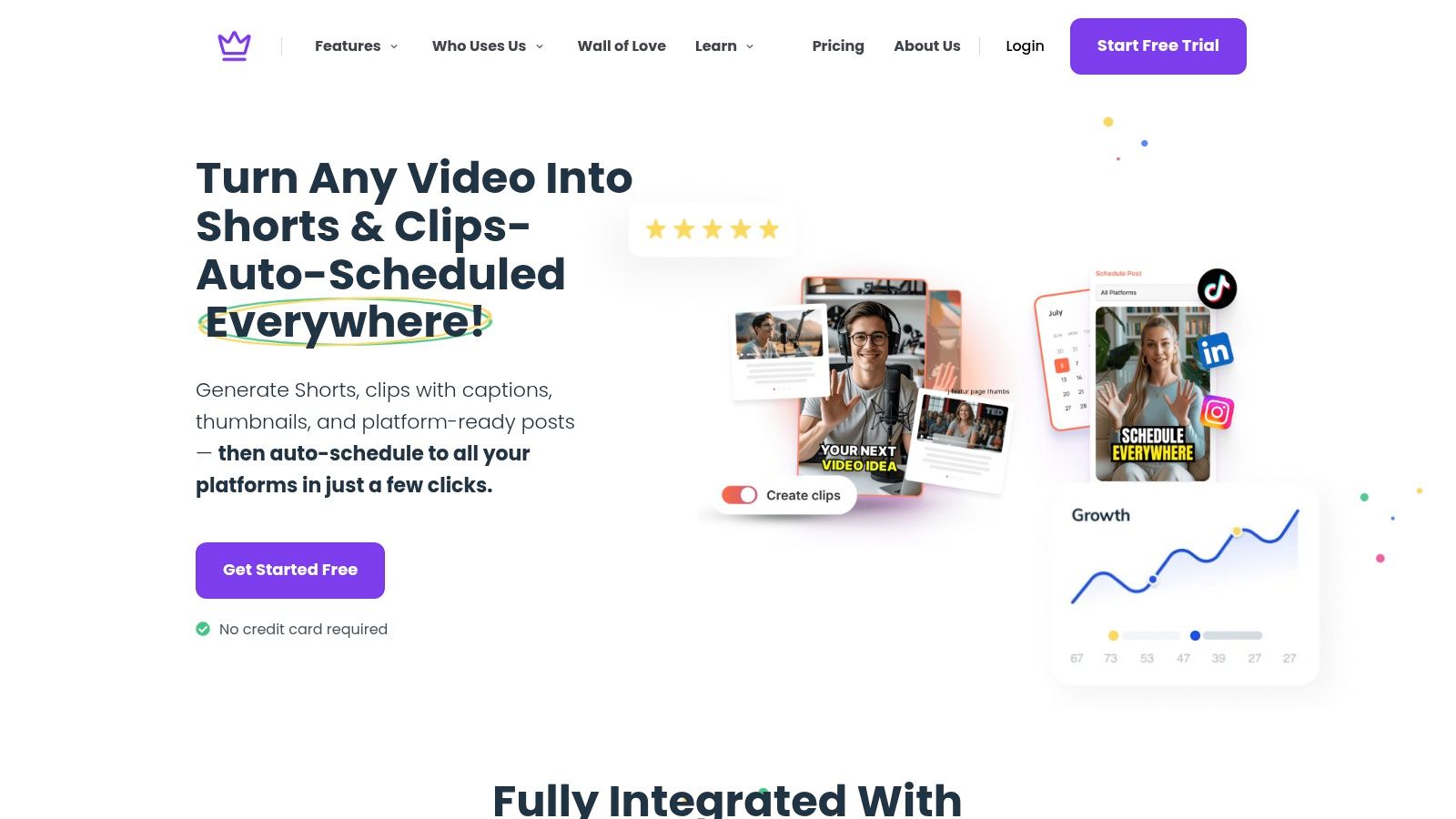
The source file goes into the platform first. From there, the system looks for usable moments, recurring themes, title angles, and format opportunities.
A tool like Taja AI is ideally positioned. It takes long-form video and turns it into shorts, captions, thumbnails, blogs, and platform-specific posts from one upload. The workflow matters more than the brand name though. The point is that one asset becomes many, and each output is built for a channel rather than copied blindly.
Effective distribution requires matching formats to platform behavior. Jasper's benchmark notes short videos are a fit for YouTube and TikTok, where the largest age segment is 25 to 34, while image-led formats can work better on platforms like Twitter and Facebook, as outlined in Jasper's content distribution guide.
A practical distribution stack from one video often looks like this:
Short vertical clips for TikTok, Reels, and Shorts
The system identifies the strongest standalone moments and trims them into clean segments.
Platform-specific social copy
A punchier caption for X won't read like a LinkedIn insight post. Good automation adjusts the framing.
Blog or article draft
The transcript becomes a useful written asset instead of dead text sitting under the video.
Thumbnail and title options
You don't need one default visual for every destination.
Scheduled distribution
The outputs move into a calendar instead of waiting in a folder for “later.”
If you're trying to connect this to actual business outcomes, this overview of video marketing ROI strategies adds useful context on why squeezing more value from one video matters.
One long-form recording should behave like a content source, not a single post.
The smartest workflow change for burned-out creators is often not “make more.” It's “reopen what already exists.”
Old webinars, podcast episodes, sermons, interviews, and tutorials usually contain plenty of clip-worthy segments. A good content distribution platform can surface those older assets, find reusable moments, and turn them into fresh short-form content without forcing you to start from zero.
That backlog boost approach is often more realistic for a busy operator than trying to increase recording volume every week. It also gives your older ideas a second distribution life.
For a more detailed look at practical distribution flow across channels, this guide on the best way to handle content distribution is worth reviewing.
A walkthrough helps make the process concrete:
When this workflow is set up well, your job changes. You still need the original insight, recording, or teaching. But you stop spending your best hours doing repetitive formatting work.
You sign up for a new platform hoping it will save your week. Two weeks later, you are still trimming clips, rewriting captions, exporting files in different sizes, and logging into five channels to publish. The software gave you another dashboard, not a better system.
That is the true buying test. Choose for workflow fit, not feature count.
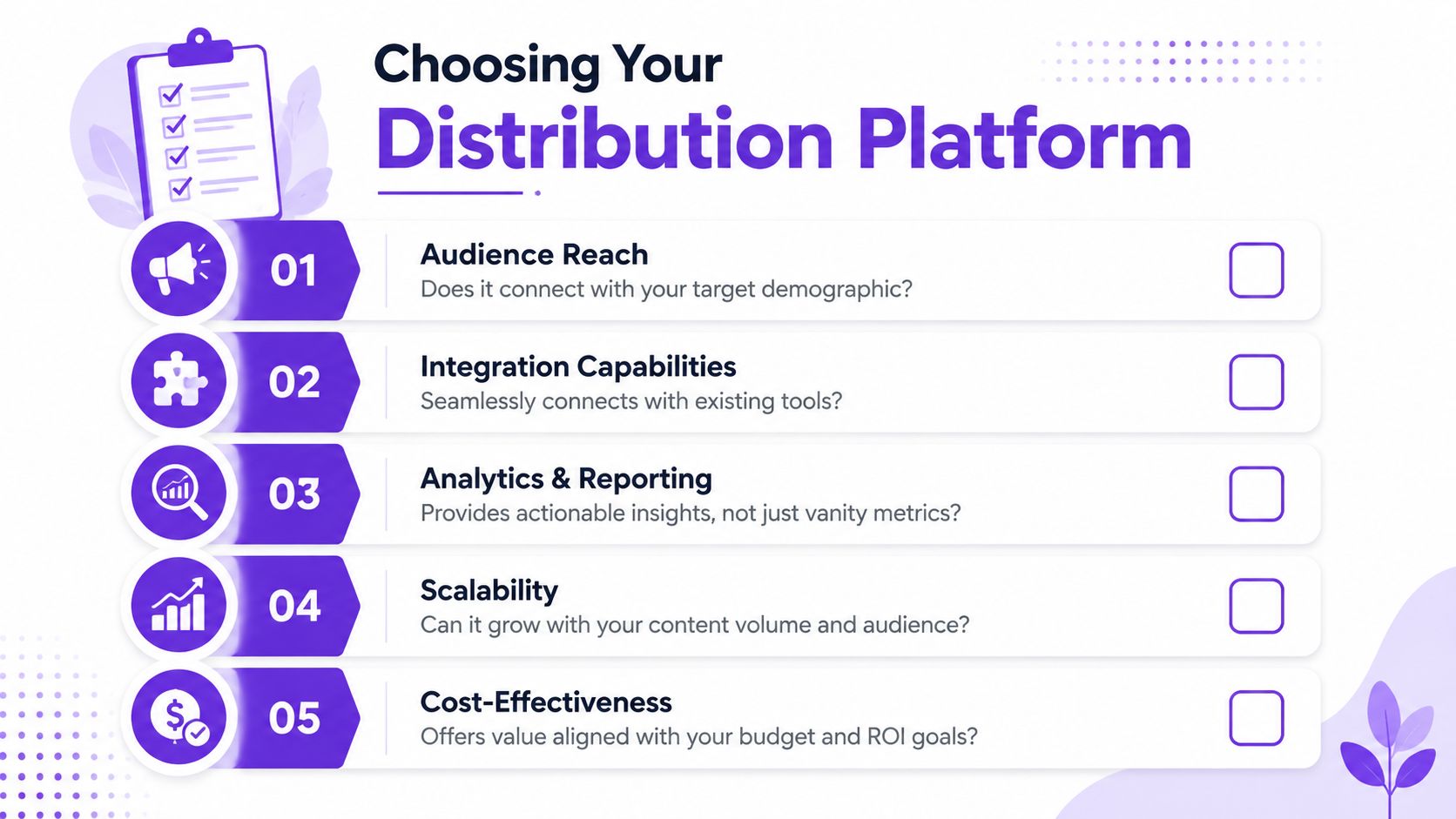
Does the platform help you turn one source asset into a batch of channel-ready content, or does it just help you publish what you already made?
That distinction matters more than slick AI copy features. For a solo creator or small team, the main bottleneck is usually the work between recording and publishing. Clipping, resizing, captioning, rewriting intros, adjusting hooks, and packaging the same idea for different channels eats the calendar fast.
A scheduler can still be useful. It just should not be mistaken for a repurposing engine.
Use a checklist grounded in the work you already do every week:
Can it repurpose natively
Look for clip extraction, transcript-based editing, caption generation, title support, and format adaptation from the same source file.
Does it support your actual channels
“Multi-channel” is too vague. Confirm support for the places you publish now, whether that is YouTube, Instagram, TikTok, LinkedIn, Facebook, or X.
Can it work with older content
If the platform only helps with new uploads, your archive keeps sitting there unused.
How much cleanup does the output need
Some tools produce rough drafts that still require a full rewrite. Better tools get close enough that you approve and adjust, rather than rebuild.
Will your team use it consistently
A feature list does not matter if the workflow is clunky, permissions are messy, or review steps happen outside the tool.
A related read on multi-channel content management workflows can help you pressure-test how the platform will hold up once one piece of content needs to feed several channels at once.
Strong platforms reduce handoffs. Weak ones give you isolated wins.
Use this comparison when you are evaluating demos or free trials:
| Buying question | Weak answer | Strong answer |
|---|---|---|
| What happens after upload? | “You can schedule your post” | “The platform creates multiple adapted assets for different channels” |
| How is old content used? | “Reupload manually” | “Existing assets can be searched, clipped, and reused” |
| What do analytics show? | Vanity metrics only | Performance data that helps you decide what to repurpose again |
| How much admin remains? | You still edit and publish in separate places | Review and distribution happen from one workspace |
Buying lens: Ask which manual steps disappear after upload.
Beware of tools that save time in one area while creating friction in others.
Common examples:
I usually tell clients to run a simple test. Upload one webinar, podcast, interview, or tutorial and see how far the platform gets you without extra tools. If your team still has to edit heavily, rewrite everything, and publish channel by channel, the platform is helping at the edges, not at the center of the workflow.
One more practical check. If Instagram matters to your business, use a free Instagram engagement calculator to benchmark whether the repurposed posts are producing real response, not just more output.
The right platform should feel like an operating system for repurposing and distribution. It should help you move from one long-form asset to a usable content batch with minimal cleanup, clear approvals, and less repetitive work.
If you only track likes, a content distribution platform will be hard to evaluate accurately.
Gains usually show up in efficiency first, then in reach and business outcomes. That means your dashboard should include metrics that connect content work to time, output, and action.
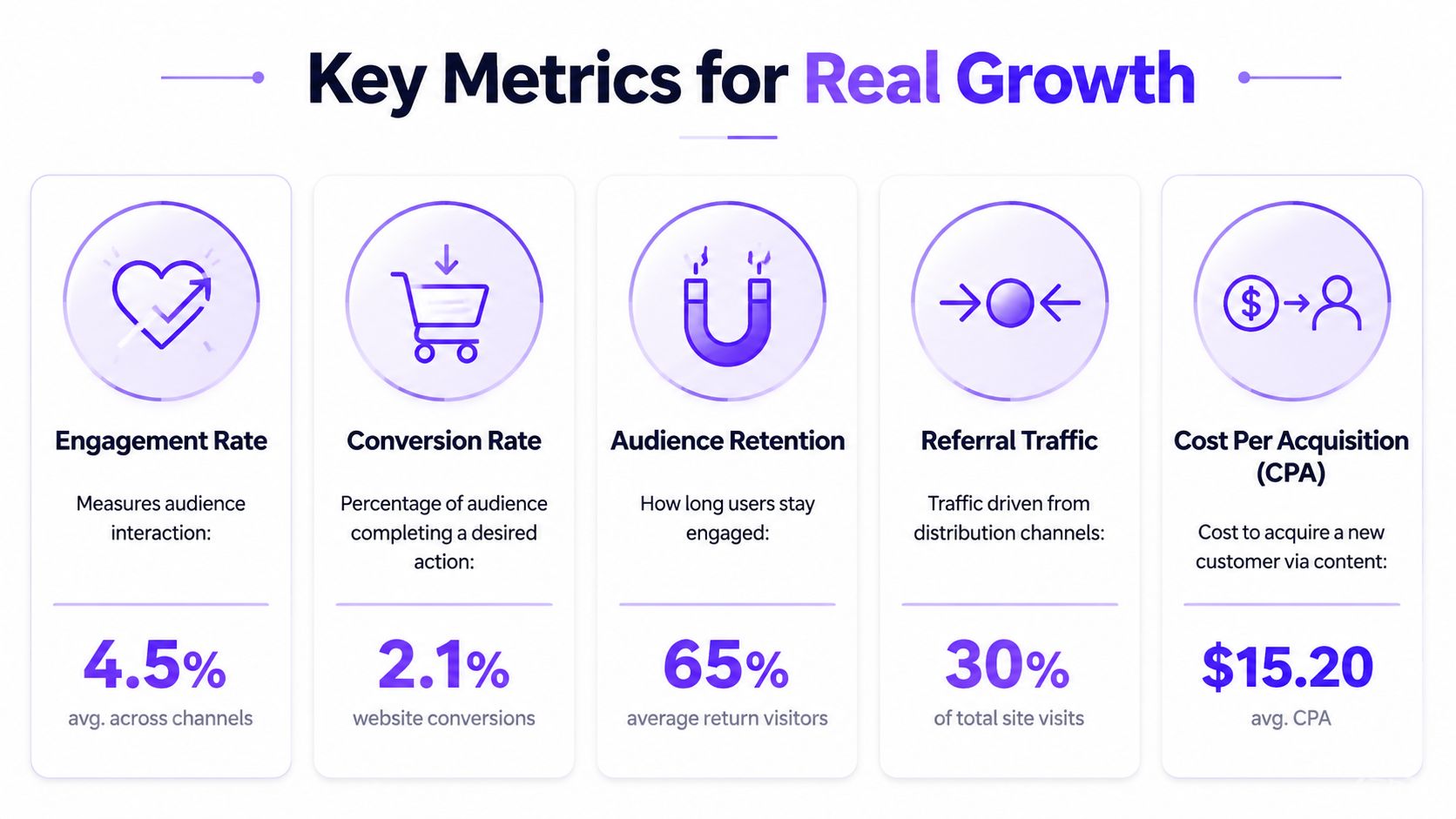
Time saved per source asset
This is the first proof point. If one recorded video now turns into a usable content batch in far less hands-on time, the platform is doing real work.
Output per long-form asset
Track how many publishable pieces come from each source file. Not drafts sitting in a folder. Publishable outputs.
Cross-platform reach quality
Look at whether one idea now gets traction in more than one channel. You're checking spread, not just volume.
Platform-specific engagement
A clip that works on Shorts may fail on LinkedIn. Judge each asset in the environment it was built for.
Leads, inquiries, or sales actions
The best-case scenario is not “more content.” It's more useful business activity from the same effort.
You don't need a giant analytics stack to start measuring well. For example, if Instagram is one of your major channels, a free Instagram engagement calculator can help you sanity-check whether repurposed posts are landing.
More output is only a win if the output earns attention and supports a business goal.
A content distribution platform earns its place when it shortens production time, extends the life of strong ideas, and creates a cleaner line between content and outcomes.
The shift that matters isn't from one tool to another. It's from manual creator mode to system-led operator mode.
Manual creator mode is exhausting. You record, edit, resize, caption, post, rewrite, and repeat. Every piece of content demands fresh labor. That works for a while, then it starts stealing time from strategy, client work, and the actual creative thinking only you can do.
A good content distribution platform changes your role. You still create the core insight. You still decide what's worth saying. But the repetitive production tasks stop eating the week.
That's the key upgrade in 2026. Not more content. More impact from the content you already make.
If your current process depends on you touching every caption, every crop, every clip, and every publishing step, you don't have a content engine yet. You have a content treadmill.
If you want to turn long-form videos into ready-to-publish shorts, captions, thumbnails, blog drafts, and scheduled multi-channel posts without adding more manual editing to your week, Taja AI is one option to explore. It's built around the workflow this article described: one upload, multiple platform-specific outputs, and less time lost to repetitive content tasks.


We are blessed to work with leading brands & Companies


We try to make easy and simple for every professionals. Get 30 days free trial - No credit card required.


© 2025 Taja AI. All rights reserved.