.jpeg)
Organic Growth Strategy That Scales Without Paid Ads
Build an organic growth strategy that compounds. Learn goals, content repurposing, SEO, distribution and a 90-day roadmap for small teams.
5 min read
September 21, 2026

Discover the best way distribution for your content. Our 2026 guide covers 10 proven methods for video distribution, repurposing, and maximizing reach.
Written by:


Your content can be strong and still get ignored. For distributors, the biggest barrier to advanced analytics adoption is staffing resources at 39.6%, according to an MDM survey summary. That matters because most solopreneurs and SMBs don't fail distribution from lack of ideas. They fail because they don't have enough time, people, or process to turn one asset into sustained reach.
That's why the best way distribution isn't posting everywhere and hoping. It's building a system that stretches every useful asset across search, social, email, communities, and partnerships without multiplying your workload. If you're still treating distribution as the final step after creation, you're forcing every new post to start from zero.
There's another problem. Channel overload burns people out fast. Research summarized in a digital distribution gap analysis notes that 68% of SMB creators report channel experimentation fatigue, while many are still guessing their ideal mix of platforms and formats, according to the distribution strategy research cited here. That fatigue is real. You can spend all week publishing and still have no repeatable engine.
The fix is practical. Pick a core format, repurpose aggressively, adapt by platform, automate what repeats, and judge every channel by business return rather than vanity metrics. The ten methods below work best when they connect to each other. Used together, they form a scalable distribution machine for creators and small teams that need reach without hiring a newsroom.
If you're publishing to one platform at a time, you're slowing down your own momentum. Most audiences don't live in one place. They split their attention across LinkedIn, TikTok, YouTube, Instagram, Facebook, and X, often consuming the same core idea in different formats.
The best way distribution starts with coordinated release, not scattered posting. Publish the same underlying message across several channels in one campaign window, but don't make the mistake of copying and pasting identical posts everywhere. That's lazy distribution, and audiences can feel it.
A podcast clip might become a YouTube Short, a LinkedIn text post, an Instagram Reel caption, and a Facebook summary. Same point. Different packaging. Gary Vaynerchuk's media approach made this mainstream long ago, and Morning Brew applies a similar playbook by turning newsletter ideas into social snippets adapted for each channel.
Use platform-native scheduling where possible, then stagger posts slightly so your brand doesn't look automated in a bad way. Many small teams get more mileage from one strong weekly campaign than from random daily posting.
A unified workflow matters here. Tools that centralize planning reduce friction, especially if you're handling several channels alone. If you want one dashboard approach, one app for all social media is the kind of setup that supports this model.
Practical rule: Simultaneous distribution works when the idea is shared across platforms, but the execution respects each platform's culture.
If you need help mapping workflow and staffing trade-offs, this 2026 social media management guide is a useful operational reference.
Long-form content has hidden value. A podcast, webinar, interview, sermon, training, or product walkthrough can feed your channels for weeks if you know how to cut it properly. If you don't, you're leaving your best distribution asset trapped in a single format.
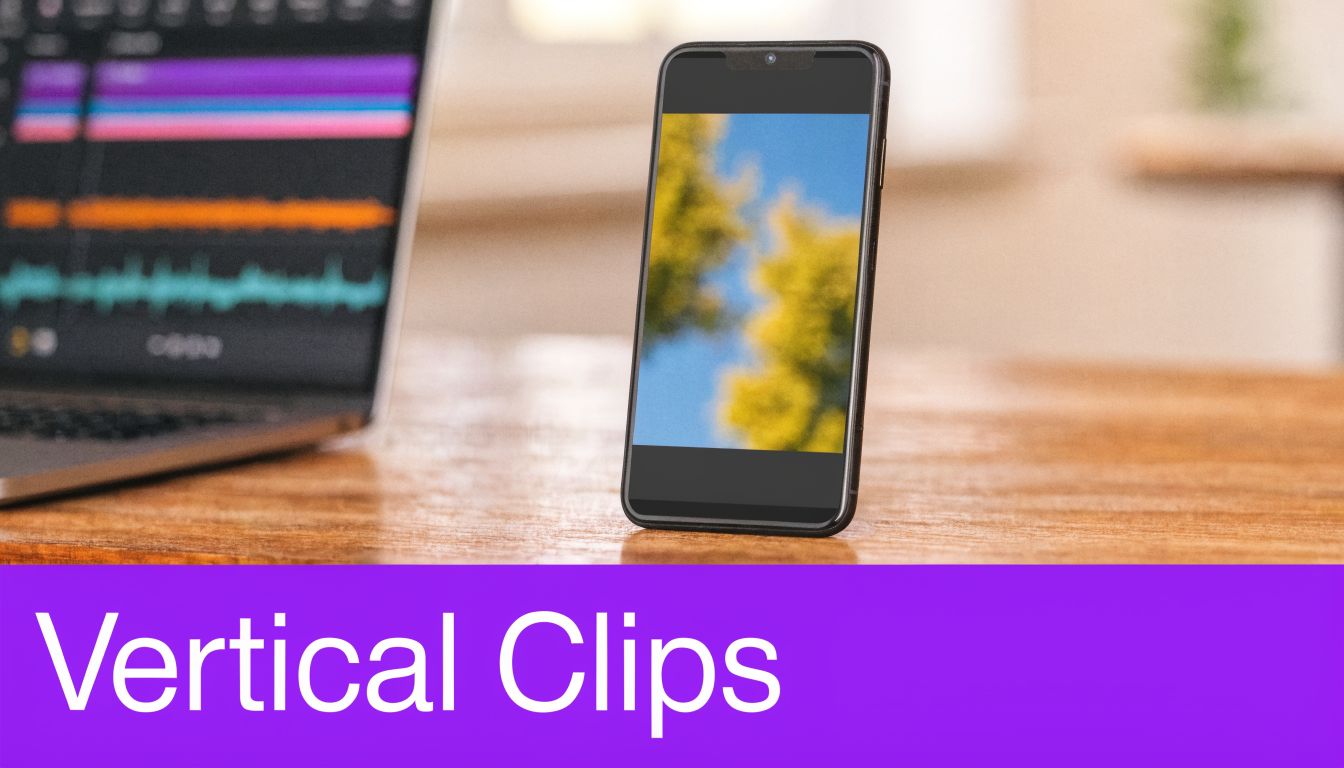
The strongest short clips aren't random highlights. They isolate one idea, one emotional turn, or one objection. Andrew Huberman, Alex Hormozi, and major podcast networks all rely on this principle. A good clip doesn't summarize the whole episode. It gives people a reason to care.
Vertical content works when it gets to the point fast. Start with tension, novelty, or a direct payoff. Then keep the pacing tight. Captions matter because a lot of social viewing happens with sound off, and extra visual support like zooms, B-roll, and on-screen text helps hold attention.
For creators with backlogs, repurposing also reduces burnout. Taja AI says users save 2.3 hours per optimized video, which is meaningful if you're trying to maintain output without turning into a full-time editor. That's one reason short-form repurposing belongs at the center of a small-team distribution system.
Here's an example of the format in action:
Many solopreneurs overcomplicate this. They think every short needs new filming. It doesn't. Usually, the best way distribution is extracting more value from footage you already recorded.
Social reach fades quickly. Search compounds. That's why search-driven distribution deserves a permanent place in your system, especially if you sell expertise, local services, education, or software.
Search optimization isn't just for blog posts. It applies to YouTube titles, descriptions, thumbnails, transcript cleanup, on-page content, internal links, and even how you cluster related ideas. A real estate agent targeting local searches, a consultant publishing niche explainers, and a coach answering recurring buyer questions can all build durable traffic this way.

A repurposed clip can win attention this week. A search-optimized article or video can keep bringing in qualified traffic long after publishing. That's the difference. Social is a spark. Search is infrastructure.
One practical way to improve fit is to treat optimization like a data problem instead of a guessing game. Statistical guidance from SPC for Excel on fitting data to distributions emphasizes using Maximum Likelihood Estimation with goodness-of-fit testing rather than relying on visual inspection alone. The content lesson is simple. Don't guess what works. Measure what fits your audience behavior and refine accordingly.
If you're publishing video, titles and metadata need to match real search intent, not clever wording that nobody types. That's where a dedicated SEO content optimization tool can support distribution by helping shape the packaging before the asset goes live.
Better distribution through search usually comes from tighter topic targeting, cleaner metadata, and stronger internal linking. Not from publishing more noise.
A small library of tightly connected posts or videos often outperforms a wide scatter of unrelated content.
Not every viewer should get the same message. That's one of the most expensive mistakes small businesses make. They build one generic content stream, then wonder why engagement feels shallow and conversion is inconsistent.
Segmentation fixes that. A real estate business might put neighborhood walkthroughs on Instagram and TikTok, mortgage education on Facebook, and investor analysis on LinkedIn. A faith-based organization might use YouTube for broad sermon reach and private Facebook groups for member-specific discussion. A B2B founder might post thought leadership on LinkedIn and product education on YouTube.
The best way distribution often looks smaller at first because it's more precise. That's fine. Hyper-specific distribution usually outperforms broad posting when you're trying to earn trust with a defined buyer.
The MVD idea, or minimum viable distribution, is useful here. The byFounders and Paul Graham style of thinking favors winning a few highly relevant users before chasing broad awareness. For solopreneurs and SMBs, that often means choosing one or two channels where your best-fit audience already pays attention, then shaping content by audience segment instead of blasting every update to everyone.
Try a simple split:
This doesn't require enterprise software. Most platforms already give enough behavioral clues to separate likely buyers from casual viewers. The key is acting on those clues.
Field note: If one audience segment keeps asking the same question, build a distribution lane around that question. Don't bury it inside generic content.
Targeted distribution feels slower than mass posting, but it usually creates better conversations and clearer path-to-sale signals.
Your backlog is probably more valuable than your next post. Most creators and SMBs underuse the content they already made, especially tutorials, educational explainers, FAQ videos, interviews, and foundational opinion pieces that stay useful over time.
Best way distribution stops being reactive by asking, "Which existing asset can we repackage for a new audience, a new format, or a new buying stage?" instead of, "What do we publish today?" That shift changes the economics of content.
A podcast episode from last year can become new shorts, quote graphics, an email lesson, a blog draft, a carousel, and a LinkedIn post. A YouTube tutorial can be refreshed with a new thumbnail, cleaner title, updated examples, and redistributed to audiences who never saw the original.
This is especially important because over-distribution without prioritization leads to burnout. One digital distribution gap summary notes that 42% of SMBs face burnout from poor channel prioritization. Backlog reuse helps because it reduces net-new production pressure and lets your team spend more effort on packaging and timing.
A structured backlog process usually looks like this:
If you want automation support for that workflow, automate content creation points to the kind of system many small teams now use to revive old assets instead of constantly filming new ones.
Most brands don't need more content. They need better reuse of the content already sitting in their library.
Algorithms change. Your email list is still yours. That's why email remains one of the most reliable distribution channels for small businesses that need consistent reach without platform dependency.
Email works best when it isn't isolated from your social and long-form content. The newsletter should act like a router. It can send readers to your newest article, clip, video, offer, event, or community discussion while also giving them enough standalone value to stay subscribed.
A good newsletter doesn't just announce content. It curates it. One issue might include a key lesson from your latest video, a short embedded clip summary, one strong opinion, and a clear path to a deeper asset. That's integrated distribution.
Morning Brew made this style familiar by turning newsletter ideas into social-ready snippets. Many creators and consultants now reverse the flow too. A strong social post becomes a newsletter section, then a blog topic, then a video segment.
Keep the structure simple:
If you're building for nonprofits or community organizations, this view of integrated marketing on the Alignmint platform is a useful example of how email can connect with broader outreach rather than sit in its own silo.
Email is where high-intent followers often become actual buyers, members, donors, or booked calls. Treat it like a primary distribution asset, not a side channel.
For many SMBs, the list becomes the most stable place to test messaging before rolling it out elsewhere.
Public social feeds can be noisy. Niche communities are where relevance does real work. Facebook Groups, LinkedIn groups, Discord servers, Slack communities, Reddit threads, local business forums, and private member spaces all give you something broad social usually doesn't. Context.
This method is slower than mass posting, and that's exactly why it works. Communities punish generic self-promotion fast. They reward useful contributions, specific answers, and content that fits the group's actual conversations.
A real estate agent can post local zoning updates or neighborhood guides in area groups. A fitness coach can answer recurring beginner questions in topic-specific forums. An educator can share one practical resource where peers already gather. Those examples work because the content is aligned with the room.
If you're new to a community, spend time reading first. Watch what gets ignored, what gets discussion, and what gets removed. Then contribute without dropping links in every comment.
A simple community playbook works well:
The trade-off is scale. Community distribution won't always generate massive impression numbers. It often creates better trust and stronger response from the right people, which matters more if you're selling services, expertise, memberships, or high-consideration offers.
One useful pattern is to create a community-specific version of a broader asset. The core idea stays the same, but the intro, examples, and call to action reflect the group's concerns.
Borrowed trust is powerful. When the right partner shares your content, appears in your video, joins your event, or co-signs your idea, your distribution gets stronger because the audience arrives pre-qualified.
This doesn't require celebrity influencers. In fact, smaller strategic partnerships often work better for SMBs. A mortgage broker and real estate agent can co-create buyer education. A podcaster and consultant can exchange interviews. A SaaS founder can join a niche creator for a tactical live session. Each side gets content and reach.
The best collaborations sit close to your audience, not directly on top of it. You want overlap, not duplication. A bookkeeping expert and a small business coach share buyers without selling the exact same thing. That's useful.
Partner selection matters more than follower count. Engagement quality, audience fit, and audience trust are what determine whether a collaboration distributes your message to people who care.
Use a practical filter:
Good collaboration distribution also creates reusable media. One interview can become clips for both brands, an email feature, quote graphics, and a search-friendly article recap. That's why partnerships are one of the fastest ways to multiply content without multiplying production effort.
The common failure point is weak framing. If the collaboration exists only to "cross-promote," it usually feels hollow. If it solves a real question for both audiences, distribution becomes easier because the content earns the share.
Distribution breaks down when every asset looks like it came from a different company. Consistency doesn't sound exciting, but it does heavy lifting. Familiar design, repeatable structure, and recognizable formatting help audiences identify your content before they read the caption.
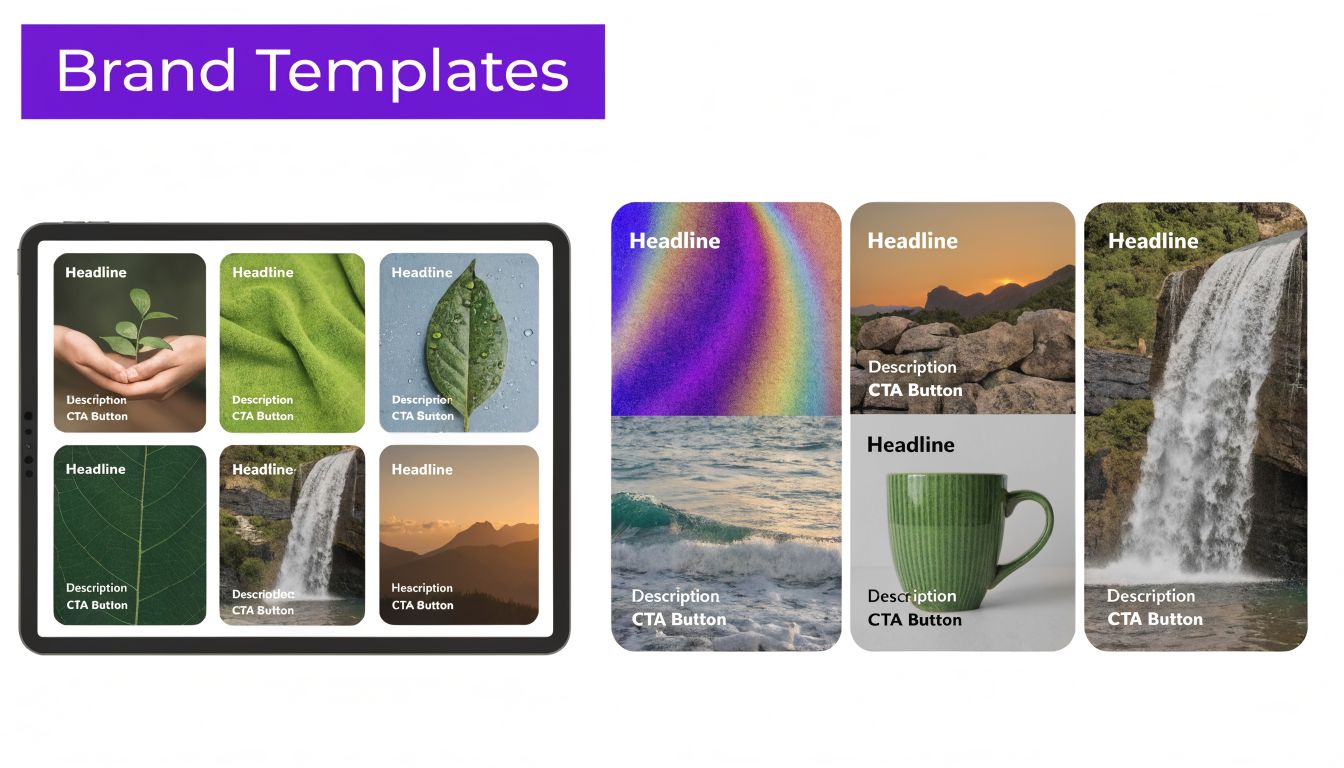
Gary Vee's visual system is easy to recognize. TED uses repeatable visual framing. Many brokerages, educators, and podcasts do the same with intros, lower-thirds, quote cards, cover art, and thumbnail styles. This isn't just branding. It's distribution efficiency.
When your team knows exactly how a quote graphic, Reel cover, carousel, newsletter header, or blog image should look, production gets faster and quality gets steadier. That's important if you're trying to publish consistently without hiring a designer for every asset.
A lightweight system is enough:
This also helps with platform adaptation. You can maintain the same brand identity while changing layout and copy style for LinkedIn, TikTok, YouTube, or email. Consistency gives your multi-channel system a center of gravity.
Strong templates don't make content perform on their own. They reduce friction, improve recognition, and make repurposing less chaotic. For a lean team, that's enough reason to build them early.
A content calendar shouldn't be a spreadsheet full of obligations. It should be a decision system. The whole point is to publish the right asset, in the right format, at the right time, based on what your audience has already shown you.
Too many SMBs schedule content because they feel they should. Better operators use past performance, search demand, audience behavior, and backlog strength to decide what deserves another push. That's the difference between activity and distribution.
Probability plots, especially Q-Q plots, are described as the most reliable visual method for identifying the best-fitting distribution in Statistics By Jim's distribution guide. You don't need to become a statistician to borrow the mindset. The point is to rely on clearer signals rather than visual guesswork.
For content, that means looking at patterns in watch time, clicks, replies, saves, qualified leads, and repeat topic performance. If a specific format keeps producing strong business outcomes, your calendar should reflect that. If a platform keeps soaking up effort without useful return, reduce it.
A practical calendar usually includes:
Your calendar should tell you what to publish next because the data earned that slot, not because the date on the grid is empty.
The best way distribution is measurable. A calendar informed by real performance turns distribution from a creative guessing exercise into an operating rhythm.
| Strategy | Implementation Complexity 🔄 | Resource Requirements ⚡ | Expected Outcomes ⭐📊 | Ideal Use Cases 💡 | Key Advantages ⭐ |
|---|---|---|---|---|---|
| Multi-Platform Simultaneous Distribution | Moderate–High 🔄🔄🔄 | Moderate (scheduling tools, asset variants) ⚡⚡ | Broad reach and consistent brand signals ⭐📊 | Solopreneurs and brands needing wide presence 💡 | Scale reach efficiently; centralized control ⭐ |
| Short-Form Video Repurposing (Vertical Content) | Moderate 🔄🔄 | Low–Medium (editing, captions, thumbnails) ⚡⚡ | High engagement and increased watch time ⭐📊 | Podcasters, long-form creators maximizing ROI 💡 | Extract many assets from one recording; cost-efficient ⭐ |
| SEO-Optimized Content Distribution | High 🔄🔄🔄 | Medium–High (SEO tools, ongoing optimization) ⚡⚡⚡ | Compounding organic traffic and authority over time ⭐📊 | Brands seeking sustainable discoverability 💡 | Lowers CAC; drives high-intent traffic ⭐ |
| Audience Segmentation and Targeted Distribution | High 🔄🔄🔄 | High (analytics, multiple content variants) ⚡⚡⚡ | Higher engagement and conversion rates ⭐📊 | Companies targeting diverse user groups and personas 💡 | More relevant messaging; improved conversions ⭐ |
| Evergreen Content Library and Backlog Repurposing | Low–Moderate 🔄🔄 | Low (auditing, periodic refresh) ⚡ | Steady traffic and reduced production pressure ⭐📊 | Creators with valuable archival content 💡 | Extends asset lifetime; lowers content churn ⭐ |
| Email Newsletter Integrated Distribution | Moderate 🔄🔄 | Medium (list building, deliverability tools) ⚡⚡ | Direct traffic with high ROI and owned audience growth ⭐📊 | Businesses building owned channels and funnels 💡 | Highest ROI channel; not algorithm-dependent ⭐ |
| Community-Powered Distribution (Niche Groups & Forums) | Moderate–High 🔄🔄🔄 | Low–Medium (time for genuine engagement) ⚡⚡ | High relevance, trust, and niche engagement ⭐📊 | Niche-focused brands, educators, local services 💡 | Authentic relationships and lower competition ⭐ |
| Influencer & Strategic Partner Collaboration Distribution | Moderate 🔄🔄 | Medium (partner coordination, cross-promotion) ⚡⚡ | Rapid audience expansion via partner networks ⭐📊 | Creators seeking fast reach or credibility boosts 💡 | Access to established audiences; social proof ⭐ |
| Branded Content Templates & Consistency Distribution | Low–Moderate 🔄🔄 | Low (template creation, design tools) ⚡ | Improved brand recall and faster production ⭐📊 | Small teams and solopreneurs prioritizing polish 💡 | Consistent identity; faster asset creation ⭐ |
| Data-Driven Content Calendar & Predictive Distribution | High 🔄🔄🔄 | High (analytics, historical data, tools) ⚡⚡⚡ | Optimized timing and topic performance; fewer failed experiments ⭐📊 | Scale-focused teams with 3–6 months of data 💡 | Better planning; identifies high-opportunity topics ⭐ |
The biggest mistake creators and businesses make is simple. They create first and improvise distribution later. That approach feels productive because you're shipping content, but it usually produces scattered results and a lot of wasted effort.
The better model is to treat distribution as the system and content as the input. One strong long-form asset should feed search, short-form video, email, community posts, and partner outreach. If it can't, the problem usually isn't volume. It's packaging, targeting, and workflow.
For time-strapped solopreneurs and small teams, the order matters. Start with one core format you can produce consistently. Typically, that's a long-form video, interview, podcast, webinar, teaching session, or founder explanation. Then build a repeatable repurposing path around it. Pull clips. Create one search asset. Write one email. Adapt for one niche community. Queue the best evergreen piece for future reuse.
Don't try to master all ten methods at once. That's how channel fatigue sets in. Pick three that reinforce each other. A strong starting stack is short-form repurposing, SEO distribution, and email. That combination gives you immediate attention, compounding discovery, and direct audience access.
Then clean up your operating habits.
There's also a hard truth here. Multi-channel publishing can hurt if you do it carelessly. A digital distribution research summary notes that over-distribution across many platforms can lead to engagement drops when the same content is pushed repetitively without adaptation, as discussed in this distribution strategy analysis. That's why the best way distribution isn't posting more. It's adapting more intelligently.
For many SMBs, single-channel mastery comes before multi-channel scale. That's often the right move. But once you know your message works, your next job is to amplify your efforts. Templates give you consistency. segmentation gives you relevance. a content calendar gives you rhythm. partnerships give you borrowed trust. communities give you context. email gives you ownership. repurposing gives you efficiency.
If you want one tool in the mix, Taja AI is relevant because it turns long-form video into shorts, clips, captions, thumbnails, blog drafts, and platform-specific posts, while also supporting backlog reuse, scheduling, and topic planning. That doesn't replace strategy. It reduces the manual work that usually keeps good strategies from getting executed consistently.
That's the primary goal. Not more content. More yield from the content you already know how to make.
If you're sitting on long-form videos, interviews, webinars, or podcasts, Taja AI can help you turn them into ready-to-publish shorts, captions, blog drafts, thumbnails, and platform-specific posts without rebuilding the workflow by hand each time. For solopreneurs and SMBs trying to create a practical best way distribution system, it's a useful option for repurposing, scheduling, backlog revival, and staying consistent with less manual effort.


We are blessed to work with leading brands & Companies


We try to make easy and simple for every professionals. Get 30 days free trial - No credit card required.


© 2025 Taja AI. All rights reserved.