.jpeg)
How to Schedule Instagram Reels: Creator Workflow Guide
Learn how to schedule Instagram Reels using native tools, Meta Business Suite, and AI automation. Master timing, captions, and bulk workflows
5 min read
October 1, 2026

Compare 10 ai tools for keyword research by features, use cases, limitations, pricing approach, and workflows for creators and businesses.
Written by:


The best keyword list is the one you can publish. More data doesn't automatically create better content. A spreadsheet full of phrases can still leave you without a realistic topic, a clear search intent, or a production plan.
The right choice depends on the decision you need to make. Are you trying to find low-competition opportunities, understand a competitor's strategy, build topical clusters, validate what searchers want, or turn one selected phrase into video and multi-platform content? Those jobs call for different tools.
This comparison evaluates AI tools for keyword research by the work they help you complete, not by feature count alone. I'm looking at research depth, AI assistance, clustering, audience fit, workflow integration, pricing approach, and practical limitations. That matters more now because keyword research has moved from small suggestion lists to enormous search-intelligence systems. Moz Keyword Explorer reports 110 billion discovered keywords, including 28.7 billion filtered keywords and 2.6 billion U.S. keyword entries, a scale that makes algorithmic discovery useful but also makes prioritization essential.
Keyword volume alone does not decide whether a video deserves production time. Taja AI is designed for the more practical question: which topic can become a publishable video and support consistent distribution? Its Keyword Research feature combines keyword discovery with channel and niche signals, showing high-volume, low-competition opportunities, competitiveness scores, related variations, and outlier videos that may reveal content gaps.
That focus changes how you evaluate an opportunity. A traditional SEO platform can identify a phrase, while Taja helps video-first creators assess whether it can support a title, thumbnail, and clear content angle. After choosing a keyword, you can review title and thumbnail previews, then move into Taja's repurposing and scheduling workflow.
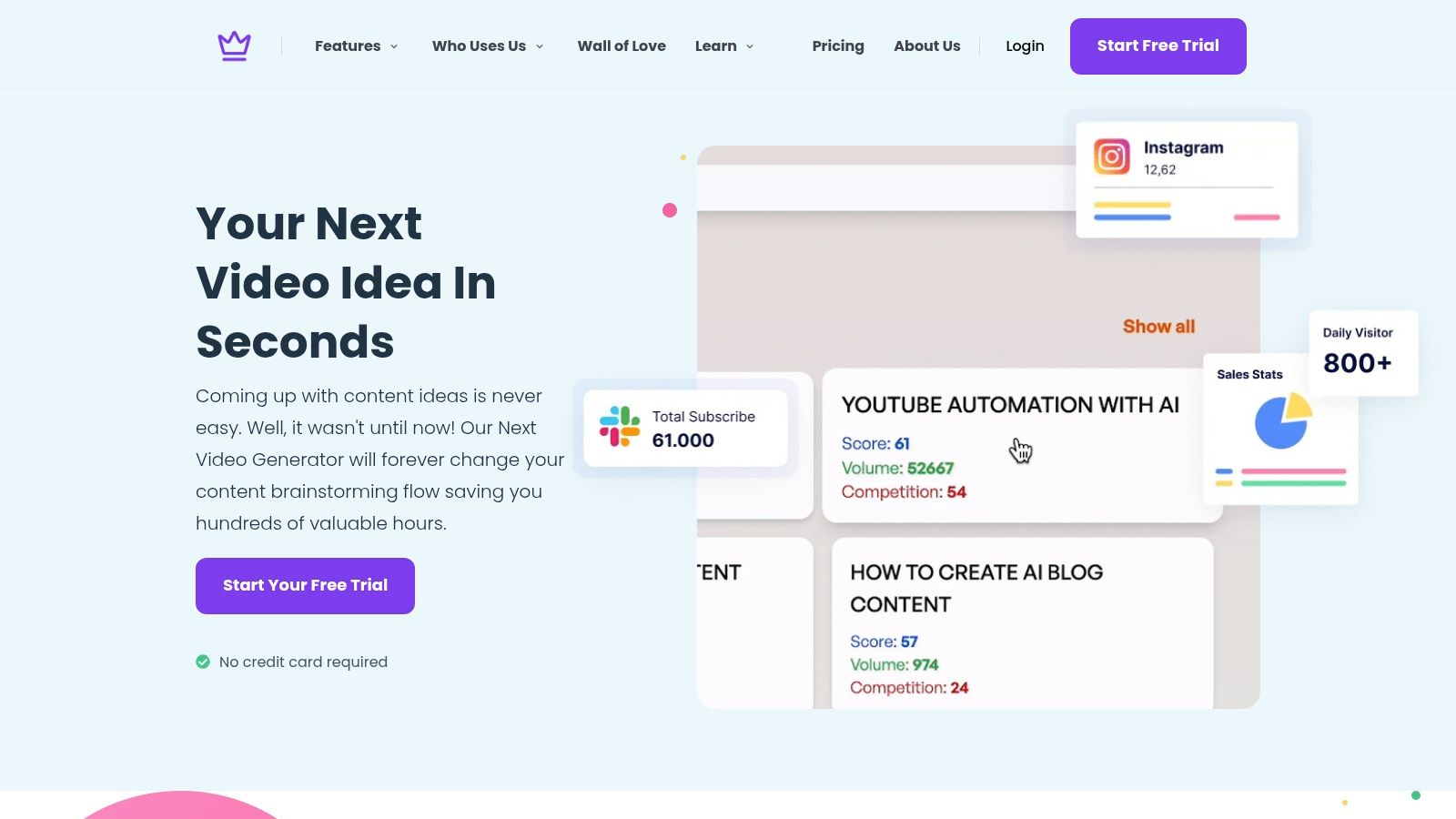
Choose Taja when the constraint is consistent execution after research. A creator, real estate professional, educator, or local business can test a topic visually before recording, then adapt the chosen idea into short clips, captions, platform-specific posts, and scheduled content.
Taja's publisher reports average savings of 2.3 hours per optimized video and an average of 27 short assets and text outputs from one long-form upload. These figures describe the broader platform, not a guaranteed result from every keyword search. The practical benefit is a shorter route from topic selection to distributed content.
Practical rule: Choose a keyword only when you can explain the video, its hook, the thumbnail promise, and the follow-up assets it can produce.
Taja has a narrower research scope than a full SEO suite. Its keyword results depend on the signals available for your niche, and it does not replace advanced backlink analysis, technical auditing, or domain-level competitor research. Sellers who need a dedicated keyword tool for Etsy sellers may need another product for marketplace-specific research.
For video-led publishing, that trade-off is intentional. Taja helps turn a promising topic into a repeatable content workflow rather than covering every SEO task. Review the Taja AI keyword research feature when production and distribution carry as much weight as keyword selection.
Semrush is the better decision engine when you need to understand a market before committing to a topic. Its Keyword Magic Tool lets you expand a seed term into related phrases, questions, long-tail variations, intent categories, keyword difficulty, and CPC context. From there, Keyword Strategy Builder can organize opportunities, while Position Tracking and competitive modules help you connect research with ongoing performance.
The platform's scale is useful for teams that don't want to jump between separate tools. You can investigate a competitor's visibility, compare keyword gaps, inspect search results, and carry selected terms into planning workflows. Semrush has also added AI visibility capabilities across its platform, which is increasingly relevant as search results include answer layers alongside traditional listings.
Choose Semrush when the question is which opportunity fits your wider SEO and competitive strategy. It works well for agencies, established businesses, and teams that need one environment for discovery, competitor research, content planning, and tracking.
The trade-off is complexity. New users can find the interface crowded, especially if they only need a short list of topics for a blog or channel. Semrush becomes more compelling when you adopt several modules, because its value comes from connecting keyword research with the rest of the SEO workflow.
Semrush's own Keyword Overview and research platform is a strong fit when you need broad market context, granular filters, and a mature handoff from research to measurement. It isn't the fastest choice for someone who only wants a few creative ideas, but it gives a serious SEO team room to investigate before publishing.
Ahrefs helps decide which topics deserve their own page by combining keyword ideas with SERP evidence, traffic potential, competitor pages, and parent-topic relationships. Keywords Explorer is most useful when search volume alone cannot show whether an opportunity is realistic.
Its AI features support intent grouping, brainstorming, and translation within keyword workflows. For a large keyword list, grouping similar phrases reveals which terms express the same search need. That prevents separate pages from competing for one intent and gives writers a cleaner cluster to plan.
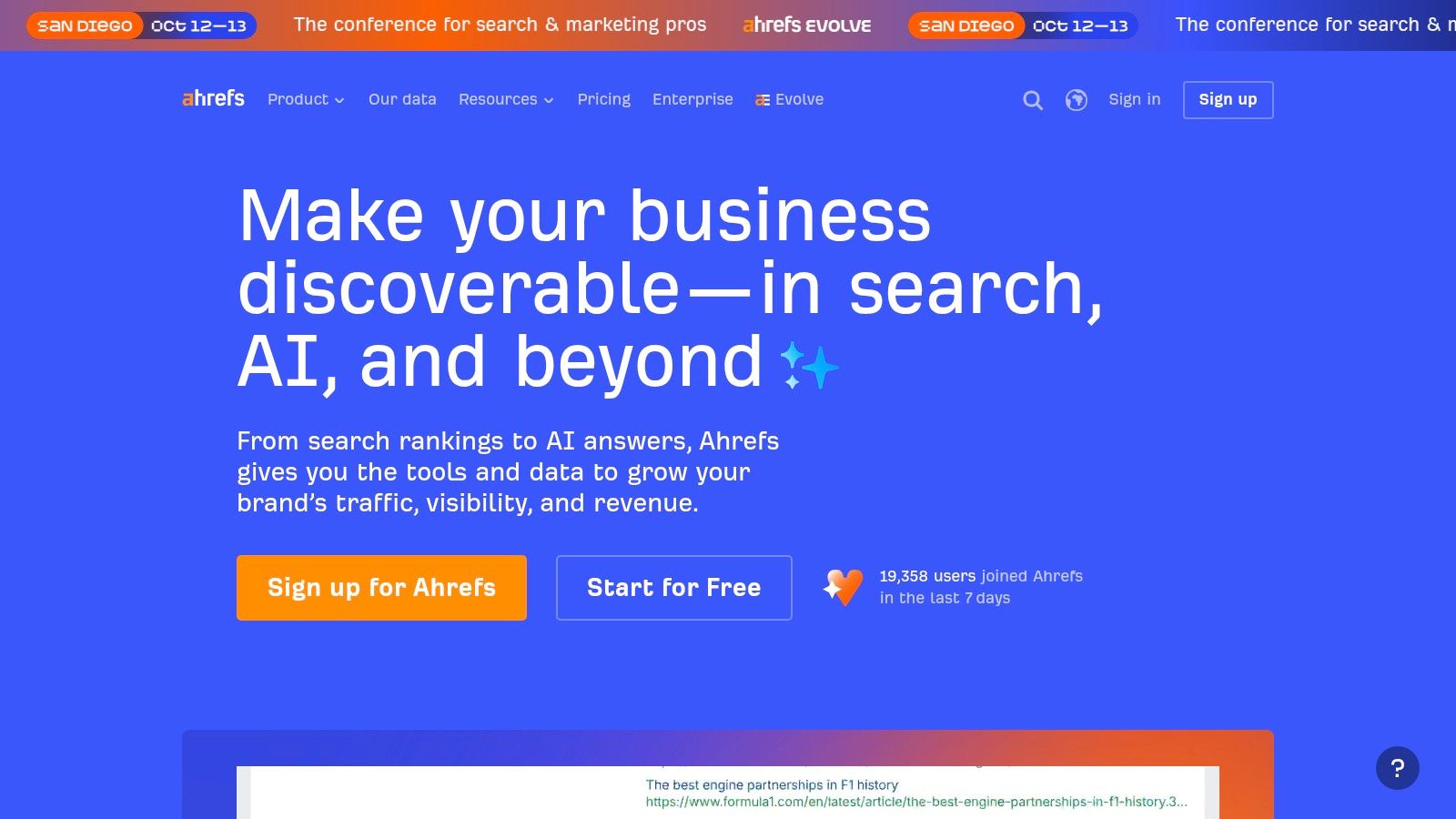
Use Ahrefs to answer “Can this topic earn a page, and what evidence supports that choice?” Review ranking pages, SERP features, backlink context, traffic potential, and parent topics before committing resources. Impact Marketer reviews keyword tools also provides useful context when comparing research platforms.
The trade-off is the learning curve. Non-SEOs may need time to understand how ranking pages, parent topics, traffic potential, and SERP features fit together. Ahrefs can also be more tool than you need if a workflow starts with a video idea and ends with a short publishing queue.
For teams building a structured plan, pair Ahrefs with a content gap analysis workflow to turn competitor findings into topic decisions. Choose Ahrefs when SERP quality and competitor depth matter more than a lightweight interface.
Surfer is strongest when you already have a topic and need to turn it into a structured content brief. Its Keyword Research and Topical Map features generate clusters, while Content Editor adds NLP-guided terms, structure suggestions, and on-page recommendations based on the search results you're targeting.
That makes Surfer less about hunting endlessly for ideas and more about deciding what a complete piece of content should cover. A content team can move from a seed topic to a cluster, select a supporting page, and use the editor to shape the draft around related concepts.
Choose Surfer when your main question is “What should this page include to satisfy the topic and the search intent?” It offers a tight discovery-to-brief workflow, which is useful for writers and editors who need practical guidance rather than a raw export of keyword suggestions.
Surfer also tracks AI visibility across ChatGPT, Perplexity, and Google AI experiences. That matters because modern visibility isn't limited to blue-link positions. Recent analysis notes that only some tools meaningfully track citation across AI answer surfaces, creating a blind spot for teams that measure traditional rankings alone. Surfer's platform is worth considering when cluster planning and AI visibility belong in the same workflow.
The limitation is plan dependence. Pricing and quotas change, and some capabilities may sit behind paid tiers, so verify current allowances before standardizing the tool. It can also overemphasize content structure if your real problem is weak positioning, poor original expertise, or an audience mismatch.
You can compare its content workflow with this SEO content optimization guide before deciding whether Surfer's recommendations fit your production process.
Keyword Insights focuses on the part of keyword research that often consumes the most manual effort, grouping a large list into usable content targets. It pulls live, country-specific SERPs, clusters terms by SERP overlap, assigns dominant intent, and exposes SERP features, including AI Overviews, at the cluster level.
That SERP-overlap approach is more practical than grouping terms by wording alone. Two phrases can share several words yet require different pages, while two less similar phrases may belong together because the same results rank for both. Keyword Insights uses the results themselves to inform that decision.
Use it when you need to answer “How many pages should I create, and which phrases belong together?” It is purpose-built for clustering, so it can be faster and clearer than manually sorting exports from a general SEO platform.
The tool also supports an API, credit-based processing, and subscription options for bulk work. That gives agencies and technical teams a way to insert clustering into custom workflows instead of treating it as a one-off spreadsheet task.
The limitation is scope. Keyword Insights isn't a full replacement for a platform that handles rank tracking, technical audits, backlink analysis, and broad competitor research. It works best beside a wider SEO stack, especially when the initial keyword list comes from first-party data, competitor gaps, or another research tool.
Its AI Overview visibility is especially useful for current planning. Google AI Overviews appeared in 6.49% of searches in January 2025 and 13.14% by March 2025, based on Semrush's analysis of more than 10 million keywords. That shift makes SERP-feature awareness part of the content decision, not an optional reporting detail.
WriterZen is designed for people who want a guided path from idea to outline without operating an enterprise SEO platform. Its Keyword Explorer combines keyword suggestions with volume and difficulty context, while Topic Discovery expands a seed into semantically related hubs. Automatic clustering then turns that research into a more manageable content structure.
The tool's Domain Focus perspective adds a useful prioritization layer. Instead of treating every discovered topic as equally valuable, you can relate clusters to your site's existing strengths and decide where a new piece fits your broader authority plan.
Choose WriterZen when the decision is “Which cluster can I turn into a clear brief without a technical SEO background?” It suits creators, small businesses, and content marketers who need a simple research, cluster, and outline workflow.
Its interface is more approachable than the heaviest all-in-one suites, and its topic modeling can help users move beyond isolated phrases. That simplicity is also the boundary. Competitive intelligence, backlink context, and advanced domain analysis are lighter than what you'd find in Ahrefs or Semrush.
WriterZen is a sensible fit when you value workflow clarity over exhaustive data depth. Validate its volume and difficulty signals against your own Search Console and analytics data, especially for local services or specialized audiences where valuable queries may be too specific to appear prominently in broad databases.
LowFruits answers a narrow but important question: “Where can a site with limited authority compete realistically?” Its AI-assisted workflow analyzes SERPs, identifies weak competing domains, and surfaces long-tail opportunities that larger tools may bury beneath broader terms.
That focus is valuable for newer sites, niche publishers, bloggers, and small businesses. Rather than chasing a keyword because the estimated demand looks attractive, you can inspect whether the current results include vulnerable pages or domains that don't fully satisfy the query.
Use LowFruits when you need practical entry points, not an exhaustive market map. Weak-domain detection, long-tail discovery, clustering, and negative-keyword tools help reduce the time spent filtering out topics that are technically relevant but strategically unrealistic.
Its credit-based bulk analysis and subscription options make it flexible for occasional research. The product remains narrower than a full SEO suite, though. It won't provide the same breadth of backlink, technical, tracking, and competitive features as Semrush or Ahrefs.
LowFruits works best as a complement. Start with a broad source of ideas, bring promising terms into LowFruits, then inspect the actual results before creating content. For a local service provider, that could mean prioritizing a specific problem or service query where the ranking pages are weak, rather than attempting to compete immediately for a generic category term.
The best low-competition keyword isn't merely easy to rank for. It must also lead to an offer, answer, or piece of content your audience genuinely needs.
SE Ranking gives teams a broad research toolkit without forcing them into a highly specialized clustering product. Its Keyword Research tool returns similar, related, question, and low-volume suggestions alongside keyword difficulty, volume, CPC, intent, and organic and paid SERP information.
That breadth makes it useful for deciding which research workflow deserves a place in the same operating system. You can explore terms, run bulk keyword analysis, connect results to rank tracking, inspect historical SERPs, and use the API for programmatic processes.
Choose SE Ranking when you need research plus ongoing SEO operations. It fits teams that want keyword discovery connected to tracking, audits, competitor context, and content tools, particularly when they don't want a separate tool for every stage.
The main caution is data methodology. Volume figures can differ from other platforms because providers use different sources and calculations. Don't treat a single number as a universal truth. Compare the tool's estimates with Search Console impressions, analytics behavior, current SERPs, and the commercial value of the query.
SE Ranking is a balanced option for teams that need breadth and a clear workflow. Its API and bulk features also make it more useful than a basic keyword suggestion tool when several people or systems handle research.
SpyFu approaches keyword research from the competitor's point of view. Its keyword overview combines volume, advertisers, and competitive insights, while Kombat compares domains to reveal terms competitors rank for or bid on. The platform also provides historical ad intelligence and an API for connecting keyword and ranking data to internal workflows.
That makes it particularly useful for a combined SEO and PPC decision. You aren't only asking which phrase could support an organic page. You're asking who already values this query commercially, how competitors position it, and whether the paid and organic opportunities reinforce each other.
Use SpyFu when competitor behavior is central to your planning. A marketing team launching a service, reviewing a competitor, or aligning content with paid search can use its domain comparisons to find gaps and inspect the language advertisers have used over time.
The limitation is verification. SpyFu's volume and accuracy can vary from other tools, so critical decisions deserve cross-checking against another data source and the live SERP. Its strongest value is directional competitive intelligence, not unquestioned precision.
SpyFu is a good fit for U.S.-focused SEO and PPC research, especially when ad history matters. It is less suitable as the only tool for a content team whose primary challenge is clustering or production.
MarketMuse is less like a traditional keyword database and more like a strategic topic-modeling environment. Topic Navigator maps a seed subject into related subtopics, keywords, questions, and content signals, helping teams understand what thorough coverage might require before they commission or write individual pages.
That makes it valuable for deciding which topic areas deserve an organized content investment. Rather than beginning with a list of disconnected terms, you can work from a top-down model of the subject, identify missing coverage, and develop clusters that support a broader editorial strategy.
Choose MarketMuse when you need to answer “What should our content ecosystem cover next?” Its research and optimization apps score topical coverage, while cluster-oriented workflows and training resources help teams turn broad strategy into briefs.
The trade-off is that MarketMuse doesn't feel like a conventional keyword-mining tool. If your immediate need is raw volume discovery or a quick list of long-tail phrases, another platform will feel faster. MarketMuse is better suited to planning and prioritization after you have a meaningful seed topic.
MarketMuse pairs well with an execution platform once the cluster is set. Teams can use its strategic model to decide what to create, then use AI-powered content generation and repurposing tools to turn selected ideas into finished assets.
| Tool | Core features ✨ | Quality ★ | Value / Price 💰 | Target audience 👥 |
|---|---|---|---|---|
| Keyword Research, Taja AI 🏆 | ✨ Channel-tailored high-volume/low-competition ideas; instant title & thumbnail previews; direct feed to repurposing + scheduling | ★★★★★ | 💰 Free trial; scalable paid (saves hours per video) | 👥 Creators, social teams, SMBs |
| Semrush | ✨ Massive keyword DB; intent, KD, CPC filters; cross-tool planning & tracking | ★★★★★ | 💰 Paid plans; best when full-suite adopted | 👥 SEOs, agencies, enterprises |
| Ahrefs | ✨ Keywords Explorer with traffic potential; SERP & backlink context; intent clustering | ★★★★★ | 💰 Paid (premium pricing) | 👥 Advanced SEOs, content strategists |
| Surfer | ✨ Topical Map + Content Editor with NLP guidance; on-page optimization | ★★★★☆ | 💰 Paid tiers; mid-range | 👥 Content teams, editors |
| Keyword Insights | ✨ SERP-similarity clustering; dominant intent & SERP feature exposure; API | ★★★★☆ | 💰 Credit-based / pay-as-you-go | 👥 Data-driven SEOs, analysts |
| WriterZen | ✨ Keyword Explorer + automatic clustering and topic discovery | ★★★★ | 💰 Affordable plans for SMBs | 👥 Bloggers, small teams, creators |
| LowFruits | ✨ Weak-domain detection for low-competition “quick wins”; long-tail focus | ★★★ | 💰 Credit/low-cost options | 👥 New sites, niche bloggers |
| SE Ranking | ✨ Keyword suggestions + KD/intent, bulk analysis, API & tracking | ★★★★ | 💰 Competitive pricing for teams | 👥 SMBs, agencies, in-house SEOs |
| SpyFu | ✨ Competitive PPC + organic keyword history; domain gap tools & ad intel | ★★★★ | 💰 Subscription; research-forward pricing | 👥 PPC + SEO teams, competitors analysis |
| MarketMuse | ✨ Topic Navigator & content-modeling; coverage scoring for cluster strategy | ★★★★☆ | 💰 Premium / enterprise-oriented | 👥 Content strategists, enterprise teams |
The best tool depends on the handoff after research. If a keyword stays in a spreadsheet, even accurate data has limited value. The strongest platform is the one that helps your team make a clear decision, create the right asset, and measure whether that asset deserves follow-up.
For video-first creators and businesses, choose Taja AI when you need topic discovery connected to titles, thumbnails, repurposing, and scheduling. Choose Semrush or Ahrefs for broad SEO and competitor depth. Choose Keyword Insights or MarketMuse when clustering and topical planning are the central decisions. Choose LowFruits when realistic, low-competition opportunities matter more than market-wide coverage.
The broader suites make more sense when you also need rank tracking, site audits, PPC context, historical SERPs, or APIs. Surfer and WriterZen suit teams that want research tied closely to briefs, while SpyFu is especially useful when paid and organic search decisions overlap.
A practical workflow starts with a focused topic set from your own performance data, competitor gaps, community questions, and a selected research tool. Validate intent against the live SERP, inspect competition rather than trusting one difficulty score, select one publishable angle, and then feed that topic into production. For video teams, that means developing the title and thumbnail promise, recording the long-form asset, creating clips and captions, and scheduling distribution. Don't leave the chosen keyword in a spreadsheet after the research is finished.
Taja AI connects keyword discovery with title and thumbnail validation, video repurposing, captions, short clips, and multi-platform scheduling. Visit Taja AI to turn a promising topic into a repeatable publishing workflow instead of another unused keyword list.


We are blessed to work with leading brands & Companies


We try to make easy and simple for every professionals. Get 30 days free trial - No credit card required.


© 2025 Taja AI. All rights reserved.