.jpeg)
Create Youtube Shorts from Youtube Video
Create youtube shorts from youtube video. Create YouTube Shorts from a YouTube video with this practical 2026 guide. Learn clipping, captions, thumbnails
5 min read
October 17, 2026

Explore YouTube video optimization services to boost views, watch time & ROI. Compare agency, SaaS & DIY options and learn what to look for in 2026.
Written by:


Most creators don't have a content problem. They have a distribution problem.
A strong video goes live, gets a small push from subscribers, maybe catches a few suggested impressions, then the graph flattens. The instinct is to blame the topic, the algorithm, or your editing. Sometimes that's true. More often, the video never had a real optimization system behind it.
That's why youtube video optimization services matter more now than they did a few years ago. They aren't just about cleaning up a title or stuffing keywords into a description. Done well, they turn one upload into a repeatable publishing asset. Done poorly, they waste time, distort your messaging, and burn you out faster.
A familiar pattern shows up on small business channels, podcast channels, and creator brands. You spend days recording, editing, and publishing a video you know is useful. The first day looks promising. Then impressions stall, suggested traffic dries up, and the video enters the archive before it ever found the right audience.
That stall feels personal, but usually it isn't. It's structural.
YouTube has over 2.5 billion monthly users, and creators upload 500 hours of video every minute, or 720,000 hours a day according to WordStream's YouTube statistics roundup. In that environment, a good video without strong packaging and post-publish optimization doesn't just underperform. It gets buried.
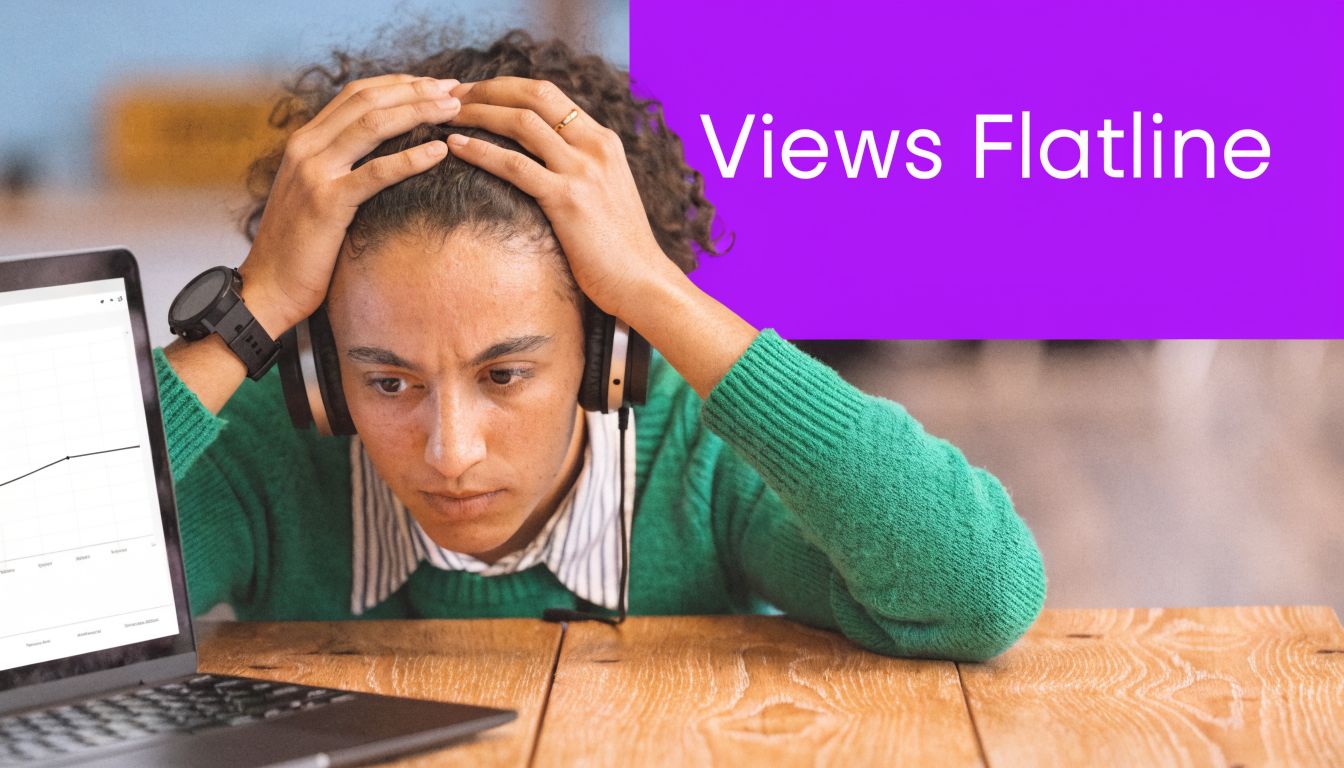
A lot of creators still think YouTube works like a meritocracy. Make the best video, then wait. But YouTube doesn't watch your intentions. It reads signals.
If your title doesn't match search intent, your thumbnail doesn't create curiosity, and your opening doesn't hold attention, the platform gets weak evidence that viewers want more of that video. At that point, even a helpful, well-produced upload can lose momentum fast.
Good content is the entry ticket. Packaging and retention decide whether YouTube keeps showing it.
This is the shift that needs to be made. Stop thinking like someone who merely uploads. Start thinking like a publisher building a system for visibility.
When a video dies early, the problem is often one of these:
A youtube video optimization service should fix those operational gaps. Not with gimmicks. With process.
The cleanest way to think about optimization services is this: they act as a translator between your content and YouTube's decision system.
You make the video. The service helps YouTube understand what the video is about, who it's for, and whether viewers are likely to respond well to it. That work touches creative packaging, search relevance, retention analysis, and sometimes repurposing workflows.
YouTube doesn't reward videos because they contain certain buzzwords. It rewards videos that get chosen and watched.
YouTube prioritizes click-through rate (CTR) and average view duration (AVD), and while a healthy engagement benchmark is 4 to 5 likes per 100 views, the platform cares more about watch time because it aligns with user satisfaction and session duration, as explained in Zapier's guide to YouTube metrics.
That means a real optimization service isn't trying to "game the algorithm." It's trying to improve the exact signals YouTube already values.
That usually looks like this in practice:
Increase the chance of a click
Better titles, stronger thumbnails, tighter topic positioning, and cleaner audience targeting.
Increase the chance of continued watching
Better hooks, stronger editing decisions, cleaner pacing, and fewer mismatches between promise and delivery.
Increase the chance of broader distribution
Better metadata, stronger audience alignment, and a clearer content pattern across the channel.
If you want a broader growth playbook beyond service selection, this guide on how to get more views on YouTube is a useful companion because it ties optimization to the rest of channel strategy.
A competent provider should improve clarity. A bad one usually increases noise.
Practical rule: If a service talks mostly about hacks, secret tricks, or guaranteed virality, walk away.
Useful youtube video optimization services often include:
What they shouldn't do is promise instant growth from tags alone, push generic clickbait across every video, or optimize each upload in isolation without understanding the business goal behind it.
For a creator, this work can feel invisible. For the platform, it isn't.
The title frames expectation. The thumbnail earns curiosity. The intro validates the click. The structure keeps people moving. The description gives context. The clips and shorts extend the life of the asset. Together, those pieces create stronger evidence that the video deserves more distribution.
That's the point of optimization. Not decoration. Signal quality.
A fully optimized video isn't just "SEO added after upload." It's a package. Every visible and invisible element supports discoverability, click appeal, viewer clarity, and downstream repurposing.
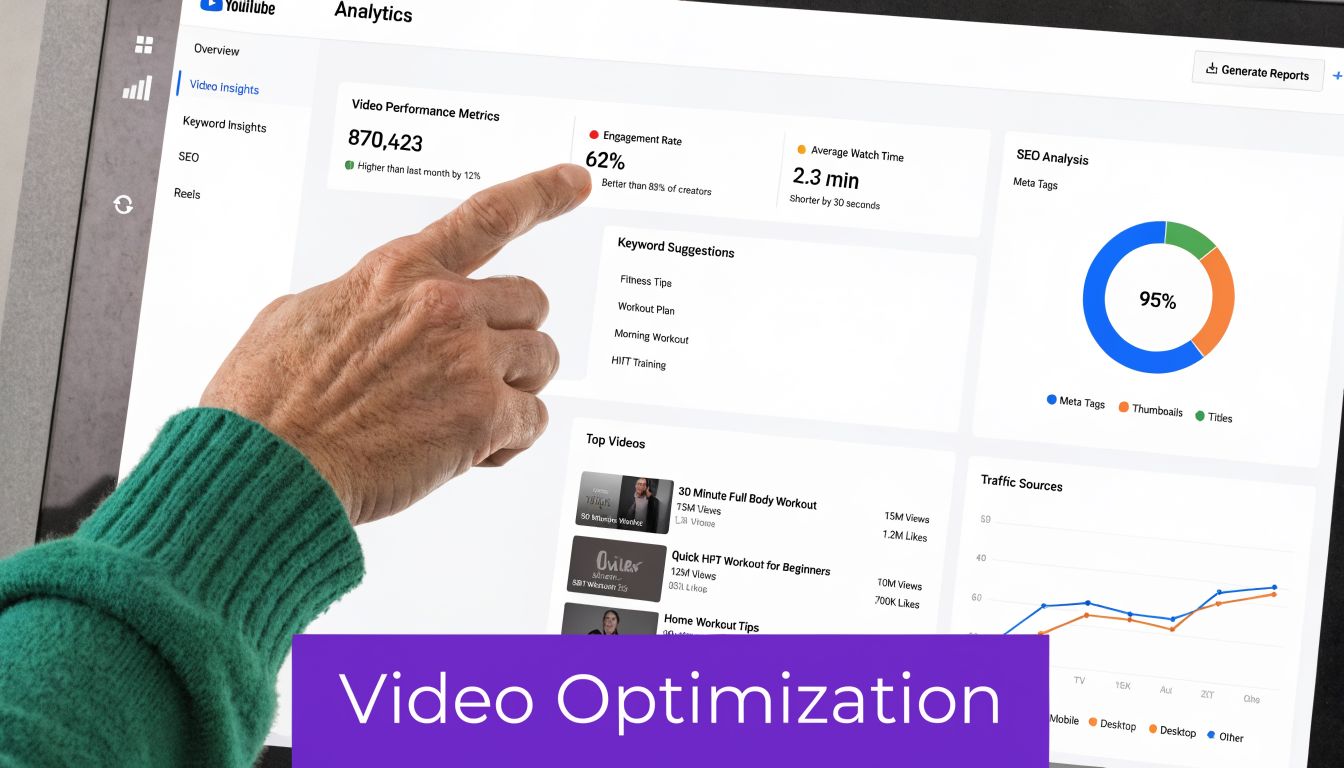
One of the clearest technical levers is metadata. YouTube gives far more weight to primary keywords in the title and the first two sentences of the description, and a description with 150+ words gives the platform stronger context for related long-tail queries, according to HashMeta's video SEO guide.
That changes how a good service writes copy. The goal isn't to jam every keyword variation into a block of text. The goal is to front-load the main topic, explain the video naturally, and widen the query net without making the description unreadable.
A strong metadata package usually includes:
Many creators treat thumbnail design and title writing as separate tasks. They shouldn't.
The title carries the explicit promise. The thumbnail carries the emotional trigger. When they repeat each other word for word, they waste space. When they contradict each other, viewers get confused. The best youtube video optimization services handle these together.
For example, if the title states the practical outcome, the thumbnail can highlight tension, urgency, or a before-and-after idea. That pairing often improves click quality because the viewer understands both the topic and the reason to care.
The best thumbnail isn't the prettiest one. It's the one that makes the right viewer stop.
Optimization also includes several supporting elements that don't get enough attention:
| Element | What it improves | Common mistake |
|---|---|---|
| Chapters | Navigation, usability, and clearer topic segmentation | Adding vague labels that don't help search or viewers |
| Captions | Accessibility and text relevance | Leaving auto-captions unreviewed |
| End screens | Session continuation | Pointing viewers to unrelated videos |
| Pinned comment | Action path and context | Wasting it on a generic self-promo message |
| Playlist placement | Session flow and thematic grouping | Leaving high-value videos ungrouped |
These aren't glamorous tasks, but they change how usable the video feels. Better usability often supports stronger viewing behavior.
Modern optimization has undergone its most significant transformation. The video is no longer the final deliverable. It's the source file for a wider distribution system.
A practical workflow might turn one long-form upload into shorts, quote clips, text posts, email snippets, blog support content, and channel community material. If you're scripting or clipping vertical content, this piece on leveraging YouTube Shorts transcripts is a useful reference for turning spoken content into reusable assets.
Tools can speed this up, but they need structure behind them. A platform such as end-to-end YouTube video optimization with AI shows the kind of workflow many teams now want: metadata generation, clipping, packaging help, and distribution support tied together rather than handled in separate apps.
Here's a simple visual example of how creators think about video optimization today:
If a provider says a video is optimized, you should expect more than "we added tags."
A finished package usually means:
That's the difference between optimization as a task and optimization as an operating system.
There isn't one correct way to handle youtube video optimization services. The right choice depends on how much time you have, how much control you want, and whether you need a process that scales with regular publishing.
Some creators need a partner who can take work off their plate. Others need software that helps them produce and distribute more efficiently. Some should stay DIY for a while because they still need to learn what their audience responds to.
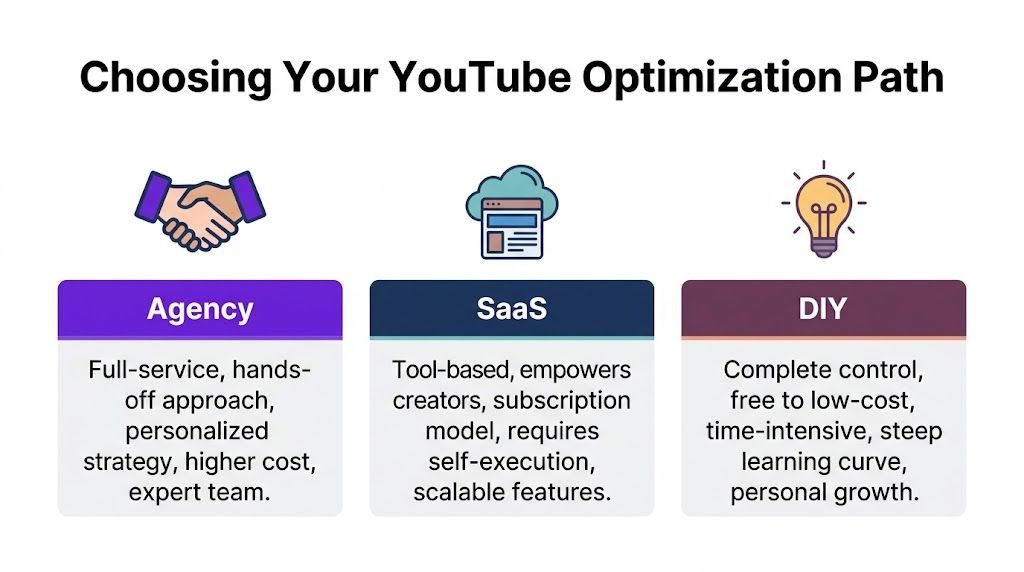
An agency makes sense when your team is too busy to build the machine internally. That's common for founders, local service businesses, and teams where video matters but nobody owns the channel full time.
The upside is obvious. You get outside expertise, creative support, and someone who should be thinking about packaging, distribution, and reporting consistently.
The downside is also obvious. Agencies can become expensive, slow, and dependent on approvals. They also vary wildly in quality. Some are genuine operators. Others are thumbnail vendors with nicer slide decks.
A software platform makes more sense when you already create source content but need speed, consistency, and repeatable optimization. This model works especially well for podcasters, educators, consultants, real estate teams, and solo brands publishing long-form content on a regular schedule.
That fit matters because AI tools aimed at niche creators can automate up to 27+ assets per video and save an average of 2.3 hours per optimization, according to 247 Virtual Assistants' write-up on YouTube optimization and marketing. For a small team, that's not a novelty. That's operational relief.
A platform like Taja AI is one example of this category. It turns long-form video into clips, captions, thumbnails, blog-style outputs, and scheduled platform-specific posts from one workflow. For teams comparing tool stacks, this kind of SEO content optimization tool model is often more useful than buying separate apps for metadata, clipping, thumbnails, and scheduling.
If you publish often, the winning system is usually the one you'll still be able to run three months from now.
DIY isn't wrong. In many cases, it's the best starting point.
If you're early in your channel journey, doing the work yourself teaches pattern recognition. You start seeing which thumbnail styles attract the right viewers, which topics create stronger watch behavior, and which opening structures lose people. That learning is valuable.
But DIY has a hard ceiling. At some point, you become the bottleneck.
| Path | Best for | Main advantage | Main risk |
|---|---|---|---|
| Agency | Businesses needing hands-off support | Strategy plus execution | High cost and mixed quality |
| SaaS | Creators and SMBs with repeatable content | Speed, scalability, workflow efficiency | Requires some self-direction |
| DIY | Early-stage creators and learners | Maximum control and low tool dependency | Time drain and inconsistent output |
Choose based on your current constraint.
The mistake is choosing based on image instead of workflow. Many creators purchase services that sound advanced but don't match their real publishing methods.
If you record one long podcast a week and need clips, descriptions, and cross-platform distribution, your solution should reflect that. If you're a local business publishing occasional educational videos and need stronger search visibility, your solution should reflect that too.
The best path is the one that removes your real bottleneck, not the one with the fanciest pitch.
The initial question posed is often misguided. That question is, "How much do youtube video optimization services cost?" The better question is, "What business result am I expecting this system to improve?"
Without that second question, every option looks expensive.
Agency pricing usually shows up as a monthly retainer or a per-project engagement. SaaS pricing usually shows up as a recurring subscription, sometimes tiered by output volume or features. DIY looks cheaper on paper, but it carries a hidden cost in production drag, inconsistent publishing, and delayed learning.
That doesn't mean the lowest invoice is the cheapest option. It means you need to account for labor, content reuse, and whether the work keeps happening when your week gets busy.
Views matter, but they don't pay the bills by themselves.
For a business owner, ROI usually ties back to one of these outcomes:
If you're trying to get more disciplined about that tracking, this guide on turning YouTube Studio analytics into channel growth decisions is a helpful way to connect platform metrics to actual decisions.
A video with modest views can outperform a high-view video if it attracts the right buyer and creates the next step.
Use a simple scorecard for each video or monthly batch.
Publishing efficiency
Did optimization reduce time spent on packaging, clipping, and distribution?
Performance quality
Did the video earn stronger clicks, better watch behavior, or more relevant engagement?
Business action
Did viewers take the next step you care about?
Asset multiplication
Did one source video generate reusable content across more than one channel?
This is why system thinking matters. The return often comes from the compound effect of better packaging, stronger retention, more reuse, and clearer calls to action. A provider doesn't need to promise miracles. They need to show that the content is becoming more efficient and more useful to the business over time.
The fastest way to waste money is to hire a service before you know how to evaluate it.
A polished proposal doesn't tell you much. You need to know how the provider thinks, what they measure, and whether they can connect optimization work to your niche, your audience, and your actual content workflow.
One of the clearest warnings is overpromising. Channels that stay consistent within a niche can see 2 to 3 times higher recommendation rates, and a major red flag is any service that can't show proof tied to watch time, subscriber growth, or ROI, as noted by Augurian's video SEO services overview.
That matters because weak providers tend to sell excitement instead of fit. They'll talk about growth in general terms, but they won't explain how your channel should be packaged, what metrics matter for your format, or how they handle underperforming backlog content.
Use these in calls or email. A capable provider should answer clearly.
How do you define success for my channel?
If they only mention views, that's too shallow.
What metrics do you monitor after publishing?
Look for discussion of CTR, retention patterns, watch behavior, and conversion paths.
How do you optimize for my niche instead of using the same template for every client?
This matters a lot for local businesses, podcasters, educators, and faith-based organizations.
What do you deliver for each video?
You want specifics, not "full optimization."
How do you handle older videos that already exist on the channel?
A provider who ignores the backlog may be leaving useful assets untouched.
Can you show examples of before-and-after packaging decisions?
Not just final thumbnails. The reasoning behind them.
Who does the work?
Sales teams often promise strategy that the production team never executes.
Ask for process, not promises. Process is what repeats.
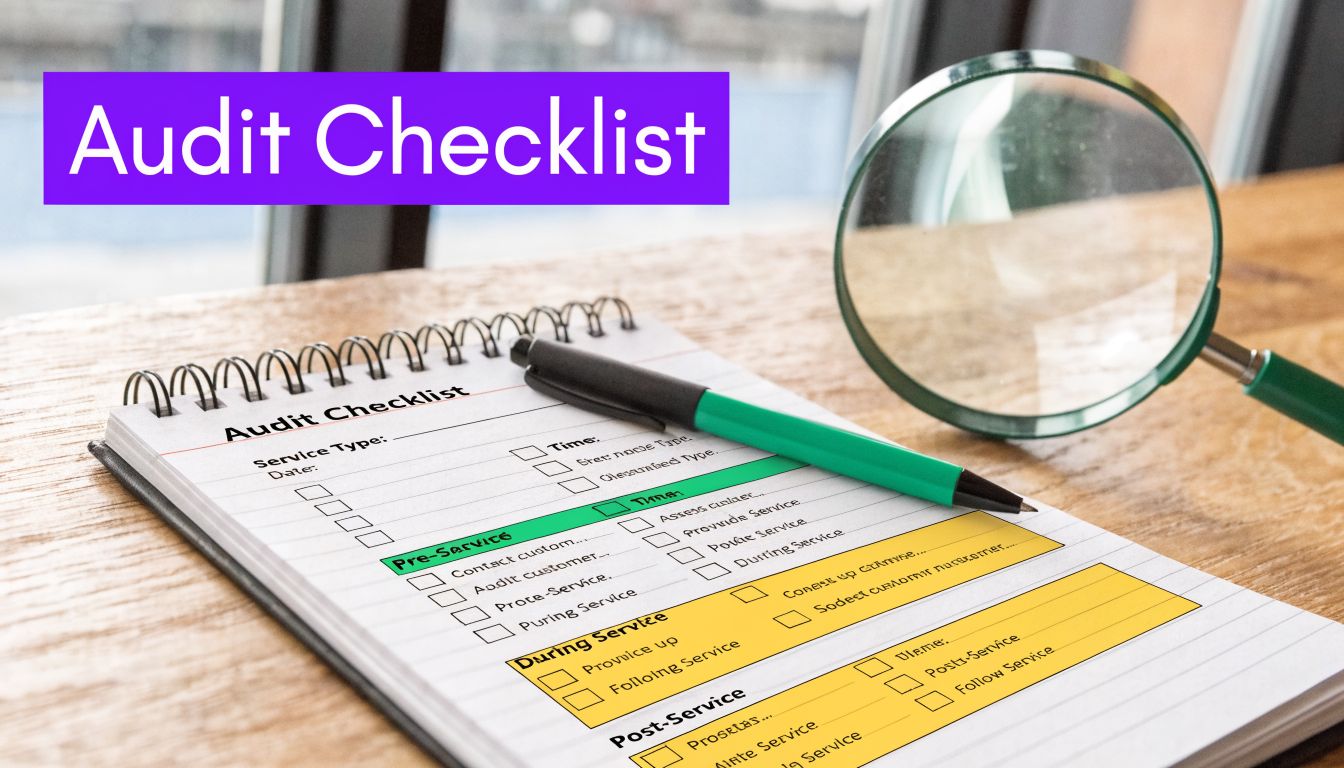
Pick one video that you believe deserved better performance. Review it using this checklist.
| Checkpoint | Yes or no |
|---|---|
| The title targets one clear topic or outcome | |
| The thumbnail and title complement each other instead of repeating | |
| The first lines of the description explain the topic clearly | |
| The full description adds useful context | |
| The first moments of the video deliver on the title promise | |
| The video has chapters if the format needs them | |
| The end screen points to a relevant next video | |
| A clipped or repurposed version exists for other channels | |
| The pinned comment supports a next action | |
| The topic fits the rest of the channel's niche |
If you mark several boxes "no," you probably don't need more filming. You need a stronger optimization workflow.
A reliable service usually talks in concrete terms. They discuss audience fit, packaging tests, retention issues, metadata structure, content reuse, and reporting rhythm. They ask for channel context before they recommend changes.
What they don't do is guarantee rankings, obsess over tags as if it's still 2016, or insist that one viral thumbnail formula will work for every niche.
The goal isn't to find a flashy partner. It's to find a system builder.
The biggest shift in YouTube growth isn't a new trick. It's a new operating model.
Creators who still treat optimization as a final checklist item usually stay stuck in a loop. Record. Edit. Upload. Hope. Then start over. That cycle is exhausting because every video has to succeed on its own.
A better approach treats each upload as the center of a wider content system. The long-form video becomes the source asset. Optimization shapes how it's discovered. Repurposing extends how it's distributed. Scheduling controls how consistently it reaches people. Backlog work keeps older content from going dark. That's how content starts compounding instead of expiring.
A simple before-and-after scenario makes the difference clear.
Before
One long video gets uploaded with a decent title, a short description, no chapters, no clipping plan, and no distribution beyond YouTube. The creator checks views for two days, sees a plateau, and moves on.
After
That same source video gets a search-aligned title set, stronger metadata, better thumbnail positioning, cleaner chapters, several short clips, written post variations, and a scheduled cross-platform rollout. The asset keeps working after publish day because the workflow was built for reuse, not just release.
This is the true value of youtube video optimization services. They don't just improve one upload. They provide a lasting advantage.
What works:
What doesn't:
The winning move isn't making more content at any cost. It's getting more value from the content you already make.
For solopreneurs, small teams, and service businesses, this matters even more. You're not trying to become a full-time media company. You're trying to generate reach, trust, and leads without hiring a large production staff. That makes systems more valuable than one-off wins.
Optimization, at its best, is operational. It reduces waste. It shortens the path from recording to publishing. It helps each video feed the next one. And it gives you a realistic way to stay consistent when time is tight.
If your channel feels heavier every month, don't assume you need more effort. You may just need a better system.
If you want that system without juggling separate tools for SEO, clipping, thumbnails, posts, and scheduling, Taja AI is built for that workflow. It helps turn long-form videos into ready-to-publish assets, supports YouTube optimization and repurposing, and gives busy creators and small teams a practical way to stay consistent without becoming full-time editors.


We are blessed to work with leading brands & Companies


We try to make easy and simple for every professionals. Get 30 days free trial - No credit card required.


© 2025 Taja AI. All rights reserved.