10 Facebook Video Best Practices for Creators in 2026
Facebook video best practices for creators: master hooks, specs, captions, distribution, Reels, Stories, boosting, and analytics in 2026.
5 min read
October 22, 2026

Master LinkedIn content strategy in 2026: actionable tips to grow your audience, boost engagement, and convert leads for your SMB.
Written by:


Most LinkedIn content strategy advice still pushes the same shallow playbook, post consistently, use a few hashtags, and optimize for likes. That's the wrong target. LinkedIn has become a large-scale professional publishing channel with more than 1.3 billion members worldwide and a cadence environment where large accounts publish an average of 43 posts per month (Hootsuite LinkedIn statistics), so the question isn't whether you can fill the feed. It's whether your content earns trust, starts conversations, and moves people toward a profile visit, inbound DM, booked call, or assisted sale.
That shift matters because the platform now rewards native, expertise-led, conversation-driven content much more than polished corporate updates. Recent benchmarking shows an average 3.85% engagement rate, up 44% year over year, with carousel posts at 6.60% and video views up 36% year over year (Hootsuite LinkedIn statistics). But engagement only matters when it reaches the right buyers. If your posts attract peers, bots, or casual scrollers, you've built activity, not pipeline.
The biggest mistake is treating LinkedIn like a generic attention engine. Plenty of teams still chase impressions, likes, and follower growth, then wonder why sales conversations stay flat. That gap shows up because the platform has moved toward expertise, comments, and native formats, while many content plans still look like repackaged status updates.
A stronger LinkedIn content strategy treats the platform as a trust layer and a demand-capture channel. People don't usually buy after a single post. They notice your thinking, they inspect your profile, they watch how you respond in comments, then they decide whether to message you. That path is why engagement only matters when it connects to a buying stage or an ICP.
Practical rule: if a post didn't create a meaningful profile visit, DM, or sales conversation, it may have entertained people without helping the business.
The old corporate-page mindset fails too. Recent guidance and platform behavior point toward human, expertise-led publishing, and data shows employee posts get 2x more engagement than corporate posts (ConnectSafely AI LinkedIn statistics 2026). That doesn't mean company pages are useless. It means your strongest signal usually comes from a real person with clear point of view, not a logo talking in broad slogans.
The other common failure is copying tactics without measurement. People repeat cadence rules, topic pillars, and hashtag habits, but they don't build a model that links content to actual business outcomes. LinkedIn's own advice emphasizes audience pain points, timely updates, authentic voice, and tracking so you can adapt, which is useful only if you define what success means in business terms (LinkedIn content creation and engagement techniques). Without that, you end up with a busy feed and an empty pipeline.
Start with one business outcome, maybe two. A real estate agent might want inbound leads from local buyers. A podcaster might want guest requests or audience growth. A SaaS founder might care about demo requests or qualified conversations. If you try to optimize for everything, the content loses shape fast.
Your goal decides what gets published. A podcaster doesn't need the same LinkedIn content strategy as a local service provider, even if both are posting three times a week. The podcaster can build around interview insights, contrarian takes, and behind-the-scenes production lessons. The local provider can build around customer questions, before-and-after reasoning, and proof of process.
Then define the ICP in plain language. Not “mid-market decision makers.” Say who they are, what they're trying to solve, what they already believe, and what makes them hesitate. If you can't describe the buyer's pain points without jargon, the posts will drift into generic advice.
Three to four pillars is usually enough. More than that, and your feed starts to feel random.
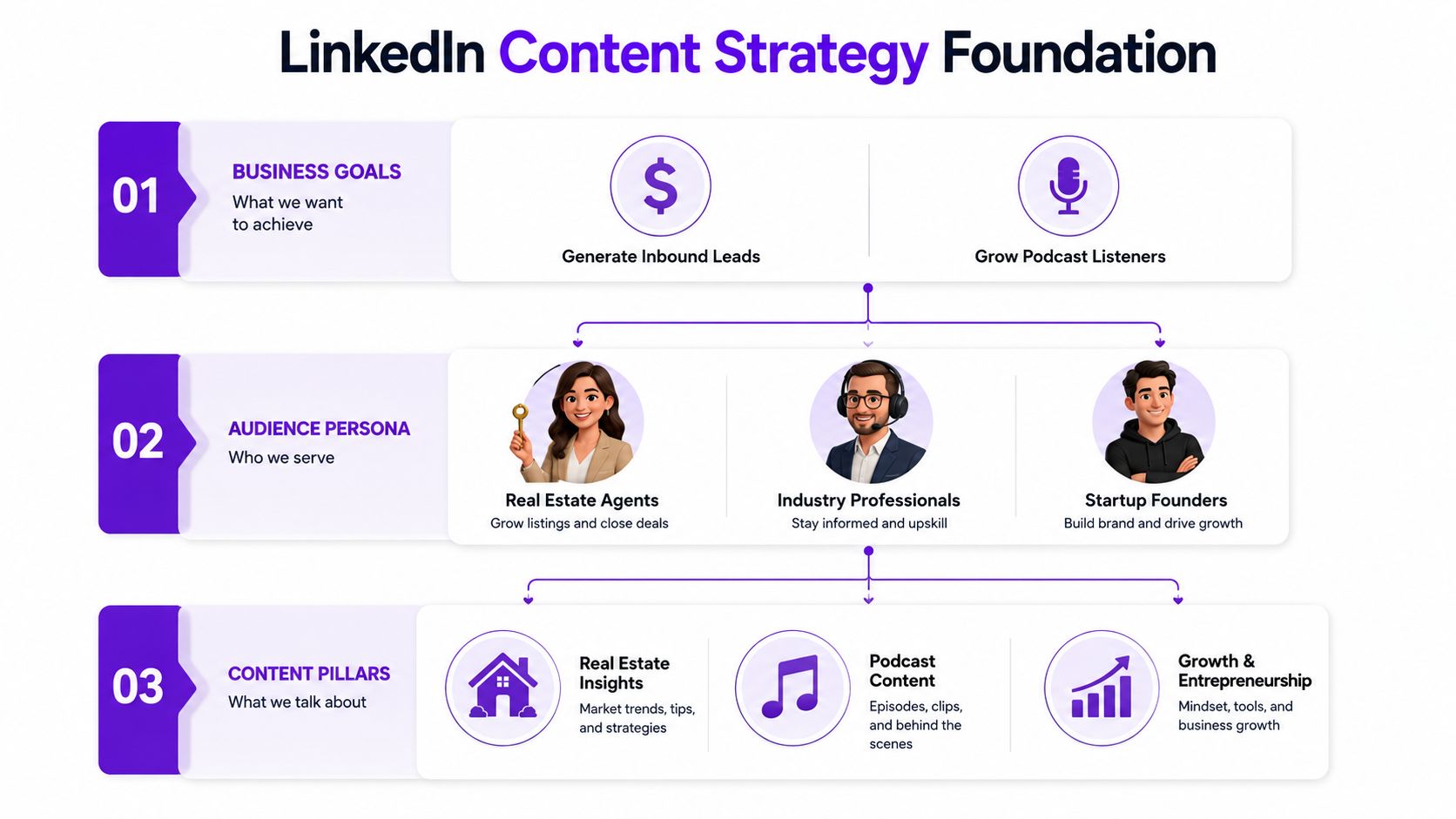
Keep one written page that links each pillar to a buyer question and a business outcome. That page becomes your weekly filter. If a post idea doesn't fit a pillar, help a buyer, or advance the goal, it doesn't need to be published.
The format mix matters because LinkedIn doesn't reward every content type equally. Large-scale benchmarking shows carousel posts reach 6.60% engagement, the highest of the major formats, while video views are up 36% year over year and CEO posting is up 52% in Q3 2026 (Hootsuite LinkedIn statistics). That tells you two things. First, native visual content is still strong. Second, thought leadership from real people is getting more attention than generic brand output.
A good LinkedIn content strategy uses format as a distribution choice, not decoration. Carousels work well for step-by-step teaching, framework breakdowns, and opinionated lists. Native video is better when tone, delivery, and face time matter. Plain text posts are still useful when the goal is a conversation, especially if the topic invites disagreement or a question.
For many creators and teams, 2–5 posts per week is enough to stay visible without burning out (ConnectSafely AI LinkedIn statistics 2026). That cadence also leaves room to comment, message, and refine. Overposting weak material is a real trade-off. More frequency can create more surface area, but only if the ideas are strong.
If the weekly pipeline depends on LinkedIn, consistency matters more than intensity. A steady rhythm beats a chaotic burst followed by silence.
Employee-led and personal profiles usually outperform corporate pages because people trust people. That doesn't mean the company should disappear. It means the brand should support experts, founders, or practitioners who can speak with a clear voice. Comment quality matters too. Meaningful comments from prospects are worth more than a pile of generic reactions.
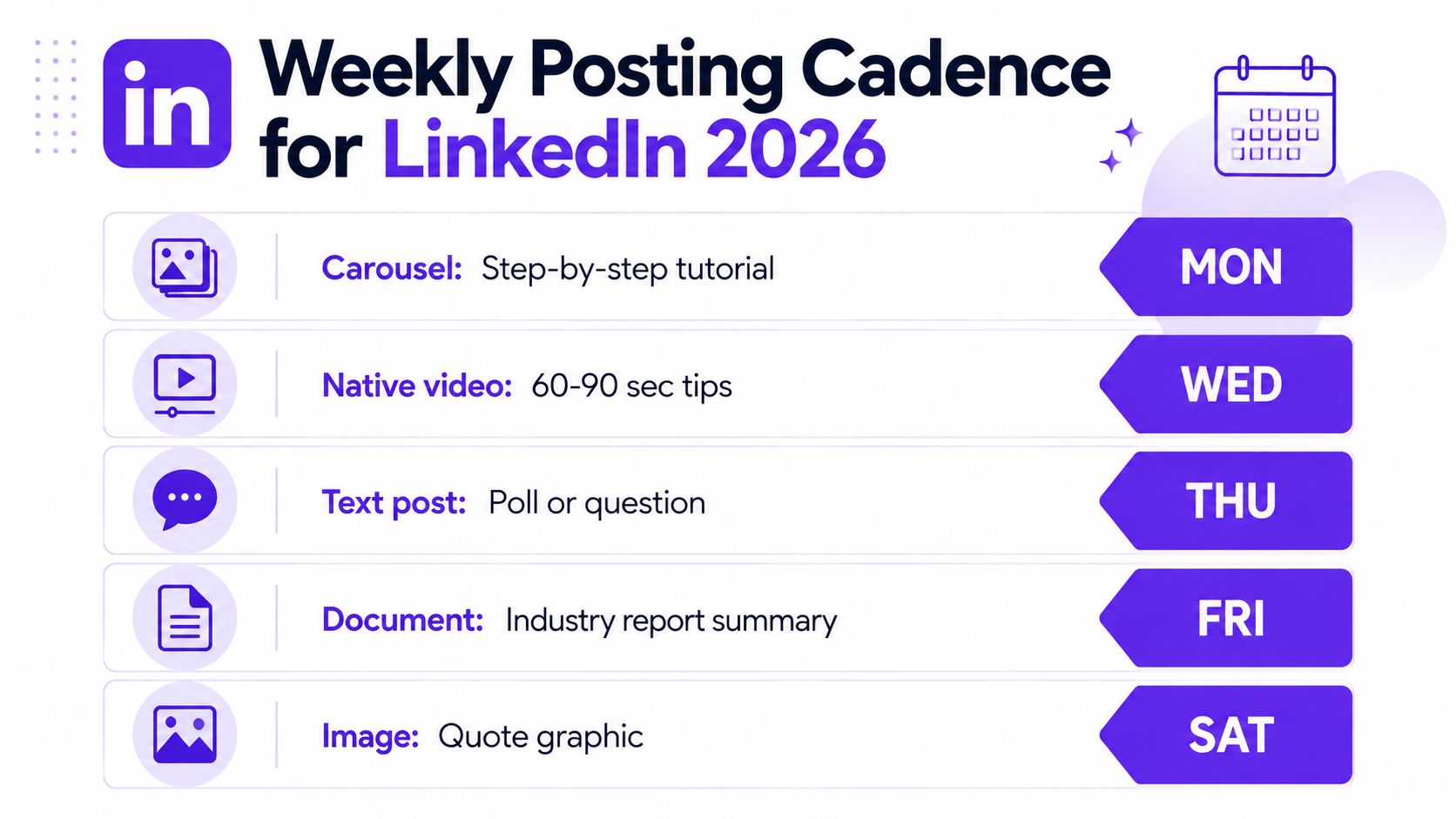
Skip the habits that inflate noise. Too many hashtags, too many recycled promotional graphics, and too many external links can all weaken how native the post feels. A clean weekly rhythm usually beats a crowded one.
For LinkedIn video specs, keep the technical basics tight and practical with this LinkedIn video specifications guide.
One strong long-form recording can become a full week of LinkedIn assets if you stop thinking of content as one finished post. A podcast episode, webinar, or tutorial already contains hooks, objections, and quote-worthy moments. The work is pulling those moments out in formats LinkedIn prefers, then writing captions that invite response instead of pushing a link.
Upload the recording into Taja AI, then let it analyze the channel, niche, and brand voice. From there, generate short clips, captions, and text posts that are shaped for LinkedIn instead of adapted clumsily from another platform. Taja AI can also produce LinkedIn updates from uploaded video content and supports direct publishing to LinkedIn through its scheduling workflow.
Use the strongest 20 to 60 second moments for authority. That usually means a clear point, a surprising lesson, or a customer problem being answered directly. Then pair the clip with a text post that adds context, not clutter. The caption should do one of three things, set up the disagreement, summarize the lesson, or ask a sharp question.
The built-in editor and brand templates matter because LinkedIn punishes content that feels pasted together. If the clip sounds like a webinar and the caption sounds like a sales page, people move on. Keep the visual tone and written tone aligned so the post feels native to the feed.
If your workflow is still manual, the bottleneck isn't creativity, it's time. A repurposing system helps one recording generate multiple assets without turning every week into an editing project. For a broader automation view, this guide to automate content creation is useful context.
A practical pattern is to publish the clip early in the week, then follow with a text post that expands the lesson, and a question post that pulls the audience into the conversation. That sequence gives the content more than one chance to surface, without feeling repetitive.
The measurement problem is where most LinkedIn guides go soft. Likes are easy to count, but they don't tell you whether the content moved a buyer closer to action. A better model starts with the signals that matter in a real pipeline, profile visits, inbound DMs, booked calls, and assisted conversions.
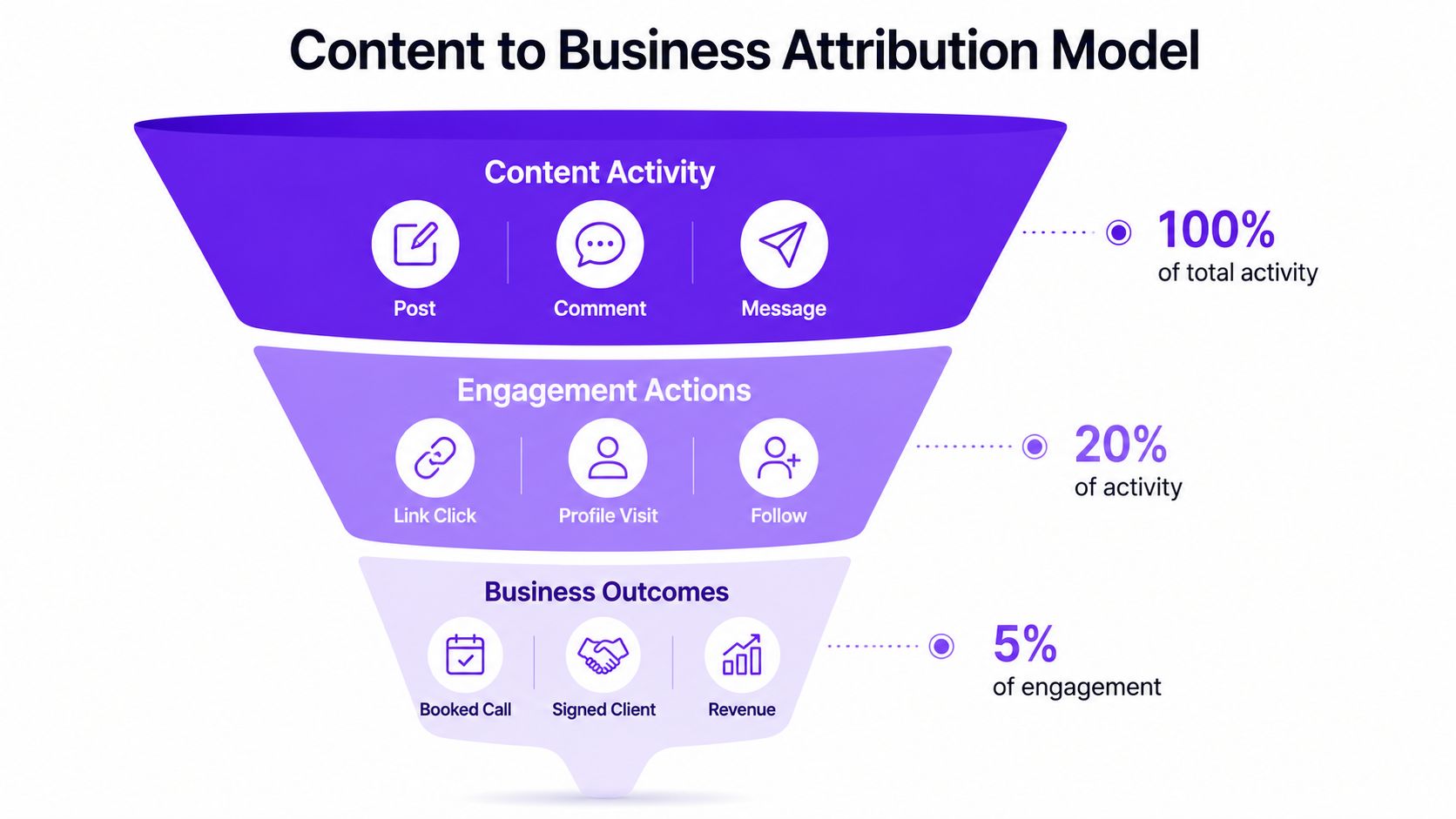
Track every post against three layers. First, content activity, what you published and what format you used. Second, engagement actions, such as profile visits, follows, link clicks, and meaningful comments. Third, business outcomes, such as booked calls or client starts. You don't need a complex dashboard to do this well.
The useful question is not “Which post got the most likes?” It's “Which pillar produced the most qualified conversations?” A post that gets fewer reactions but brings in three serious DMs is more valuable than a post that attracts passive applause.
Practical rule: measure the path, not just the reaction. If engagement never turns into a conversation, it's a weak signal.
Look at who commented. Did the comment come from a buyer, a peer, or someone outside the market entirely? Did the post cause someone to view your profile, send a message, or mention it on a sales call? That's where LinkedIn content strategy starts resembling revenue operations instead of social posting.
For a fuller lead-gen lens, the LinkedIn lead generation playbook offers a useful companion framework. The point isn't to copy another dashboard. It's to connect content activity with a business motion you can defend in a meeting.
Use a monthly review with three questions. Which posts led to real conversations? Which pillar kept getting ignored? Which format helped people understand your expertise fastest? That's enough to keep the strategy honest and keep vanity metrics in their place.
A good week of LinkedIn content doesn't need to feel elaborate. It needs to feel specific. The best posts sound like someone explaining something useful to one buyer, not broadcasting to a crowd.
For a real estate professional, one post could open with a buyer question, then break down the two or three signals that matter before a tour. Another post could be a short story about a deal that looked simple on the surface but needed more careful due diligence. The call-to-conversation can be as simple as inviting people to ask their own local-market question.
For a podcaster, a strong post might pull one contrarian line from an interview, then explain why it changed the way the host thinks about the topic. Another can summarize a guest lesson in plain language and ask what the audience would challenge. That gives the feed a point of view without turning every post into promotion for the show.
For a B2B service provider, one post can be a mini teardown of a common client mistake. Another can show the before-and-after of a process decision, without promising a dramatic transformation. The third can be a customer-question post that addresses a concern prospects hesitate to raise in calls.
The comments section is part of the content. Answer quickly, ask follow-up questions, and keep the conversation on the thread when it's useful. That habit turns one post into multiple touchpoints without adding much creation time.
A strong reset starts with focus, not volume. Days 1 to 3, define your goal, audience, and three content pillars. Days 4 to 10, build a backlog by repurposing one long-form recording into clips, captions, and text posts with Taja AI. Days 11 to 20, publish on a steady cadence and spend real time in comments and DMs. Days 21 to 30, review which posts produced profile visits, conversations, and calls, then cut what didn't.
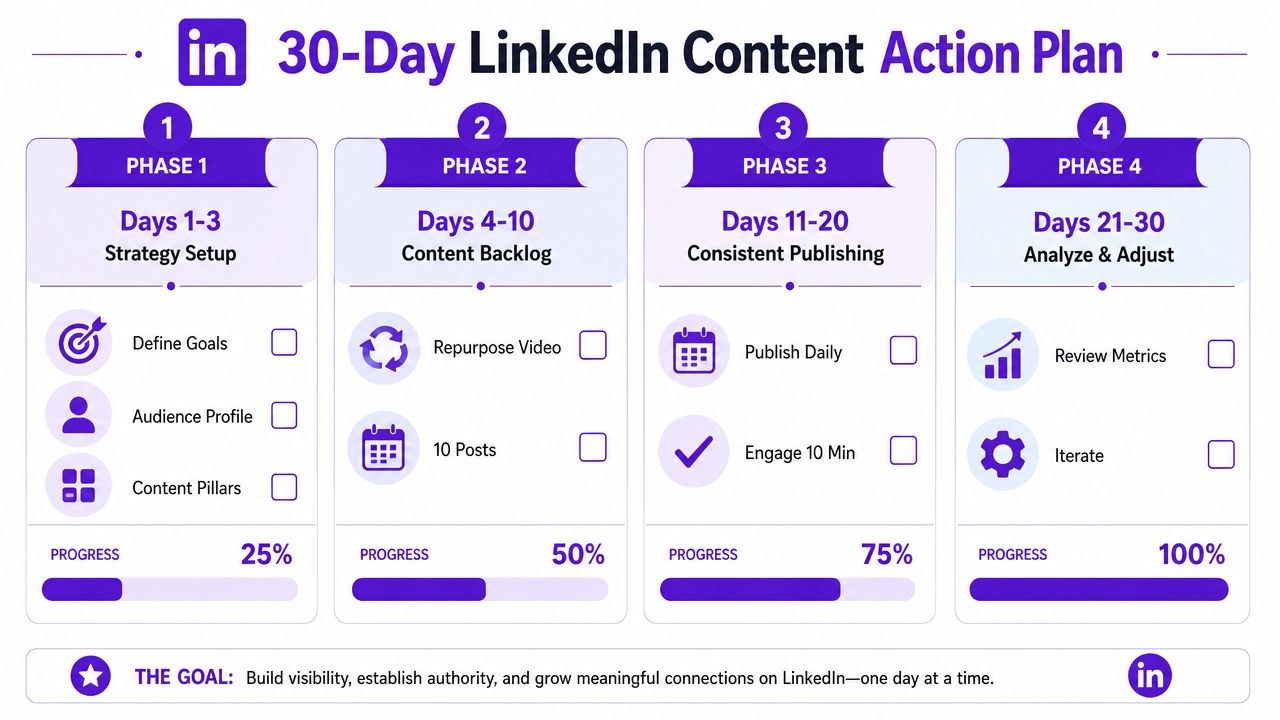
The work is less about publishing every day and more about building a repeatable system. If you want a practical publishing companion, the earlier examples and the LinkedIn lead generation playbook pair well with a simple reporting rhythm. Use that month to build authority, then keep only the habits that lead to real business conversations.
A CTA for Taja AI. If you want to turn long-form video into LinkedIn-native posts, clips, and captions without rebuilding the workflow from scratch, try Taja AI, upload one recording, repurpose it into multiple assets, and use the results to publish with more consistency and less manual editing.


We are blessed to work with leading brands & Companies


We try to make easy and simple for every professionals. Get 30 days free trial - No credit card required.


© 2025 Taja AI. All rights reserved.