.jpeg)
Content Calendar Creation for Small Teams
Master content calendar creation without burnout. Learn to map platforms, set realistic cadences, and automate repurposing with AI tools like Taja AI.
5 min read
October 14, 2026

Looking for ideas for a documentary? Explore 10 unique, fundable concepts for 2026, complete with loglines, interview subjects, and production angles.
Written by:


Your story is brilliant. That's not the problem.
Most advice about ideas for a documentary is useless because it stops at the premise. “Follow your passion.” “Find a compelling subject.” “Tell an untold story.” Fine. But how will anyone see it? Who's going to fund it, share it, clip it, program it, or care enough to watch past the trailer?
That's where most documentary projects die. Not in production. In planning.
You can't treat distribution as something you figure out after picture lock. Documentary creators already face a crowded market, and there's a supply overhang with a 2026 supply-to-demand ratio of 2.3:1, meaning far more titles are produced than audiences actively seek, according to documentary marketing statistics compiled by AMRA and Elma. If your idea doesn't come with a path to access, audience, and repurposing, it's not a strong idea yet. It's a wish.
That's why this list is built differently. These aren't vague loglines. They're mini-pitches you can film in 2026 with practical subjects, realistic access, and a built-in strategy for clips, trailers, social content, partnerships, and platform fit.
The documentary market is also growing. The global Documentary Film and TV Show Market reached USD 13.64 billion in 2025 and is projected to reach USD 22.96 billion by 2035 at a 5.3% CAGR, with North America leading in 2026, according to Business Research Insights' documentary market report. That means there's demand. But demand doesn't reward lazy development.
Pick an idea that gives you access, repeatable footage, and a clear marketing engine. Then build the film and the audience at the same time.
Stop filming creators who “go with their gut.” Film the people who open YouTube Studio, Google Trends, TubeBuddy, or VidIQ before they touch a camera. That gives you a documentary with visible action, built-in tension, and a clean before-and-after structure. One creator bets on instinct. Another bets on search behavior, retention data, and topic demand. That's a movie.
The strongest version follows two or three creators over a defined period. One is a solo educator. One is a podcast host. One is a small business owner trying to stop guessing. Make the dashboards part of the visual language. Show keyword screens, thumbnail tests, topic boards, and the emotional swing when a creator realizes the audience had been telling them what it wanted all along.
Use screen recordings, editorial meetings, phone-shot setup footage, and publish-day check-ins. You don't need expensive verité access if the process itself is visual. Creator businesses are already documented by default.
Bring in practical examples people recognize. TubeBuddy and VidIQ are useful because viewers immediately understand what's happening when a creator compares search terms or topic opportunities. Pair that with analysis from this YouTube Studio deep dive on turning analytics into channel growth to anchor the workflow in something concrete.
Practical rule: Don't profile creators who talk abstractly about strategy. Profile creators who can show the spreadsheet, dashboard, and publishing calendar on camera.
This one repurposes itself.
This idea works because it serves two audiences at once: documentary viewers who like process stories, and creators who need tactical help.
Creator burnout is documentary gold because it's real, visible, and easy to relate to. The mistake is making it a vague essay about internet exhaustion. Make it operational. Follow creators who are drowning in editing, clipping, captions, scheduling, and platform upkeep, then show what changes when they automate the repetitive work.
That gives you conflict with stakes people understand. Missed uploads. Stalled growth. Late-night edits. Friction at home. The emotional material is already there if you stay close to daily routines instead of collecting generic talking heads.
The best characters aren't famous creators. They're working creators. The business coach recording webinars after client calls. The podcaster publishing inconsistently because post-production takes too long. The educator who has a library of long-form content but no time to turn it into Shorts, Reels, or posts.
Use therapists or productivity professionals carefully and only as support, not as the spine of the story. The backbone should be behavior change on camera. A creator records once, then uses a production-ready YouTube API guide or other workflow tools to streamline ingestion, clipping, and publishing around that core asset.
The financial angle matters too. Documentary filmmakers need to reserve at least 35% of the total production budget for marketing and distribution, and on a $10,000 project that means at least $3,500 must go to promotion, trailers, social campaigns, and festival submissions, according to this documentary budgeting discussion on YouTube. Burnout gets worse when filmmakers spend everything making the film and nothing getting it seen.
You're not just filming exhaustion. You're filming a broken workflow, then showing the fix.
Release this in layers. Cut confessional moments for Instagram and TikTok. Publish practical snippets for YouTube. Build a longer trailer around a simple promise: creators don't need more hustle, they need fewer manual steps.
This idea monetizes well because software companies, creator communities, and mental wellness podcasts all have a reason to share it.
Most creators are sitting on unfinished value. They filmed strong material when they had no audience, published it badly, then buried it. That's a documentary.
The emotional engine here is regret turning into recovery. Follow creators revisiting old uploads, dormant interviews, forgotten webinars, stale tutorials, and early podcast episodes. They aren't chasing something new. They're learning that the content they already made still has life if they package it properly.
Here's the image that captures that pressure:

Film the archive hunt. That's the story. A creator scrolls through old uploads and realizes an overlooked video still solves a real problem. Then you document the rebuild: new thumbnail, tighter intro, fresh caption set, Shorts pulled from the original, maybe a newsletter resend or podcast rerun.
This works especially well with educators, coaches, and interview-based creators because evergreen material ages better than trend content. Show side-by-side packaging updates on screen. The visual contrast gives you production value without expensive shooting.
Use real-world comparisons viewers already understand. Streaming platforms regularly resurface older catalog titles for new viewers. Podcasters rerun standout interviews during breaks. YouTube creators often have hidden assets in low-view tutorials that were published before the channel had momentum.
This documentary should behave like its subject.
The beauty of this idea is budget efficiency. You're documenting a process built on existing footage, which means your subjects already carry part of the production load.
Podcasts don't have a content problem. They have an extraction problem. One long interview can feed every platform if someone knows how to carve it up. That's the story.
A strong documentary here follows one or two podcasters, plus the editors or producers who turn a single recording session into a clip ecosystem. The subject is bigger than podcasts. It's about how one conversation becomes dozens of touchpoints across YouTube, Instagram, TikTok, LinkedIn, and X.
This image sets the tone well near the top of the segment:
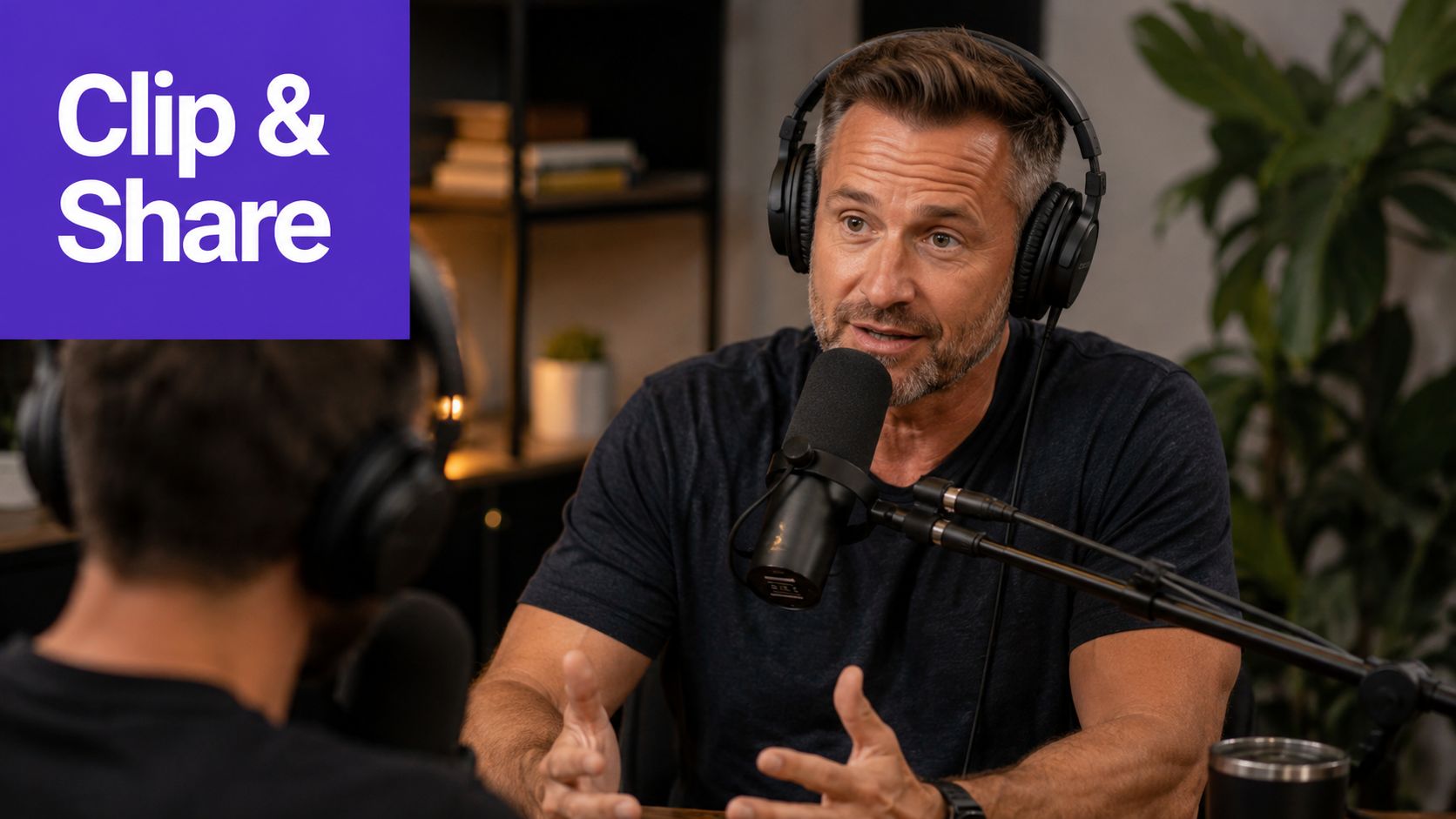
Don't make it a gear documentary. Skip the microphone worship unless it serves the workflow. Action is primarily in selection, reframing, and distribution. Which moment becomes the clip? Which quote becomes the caption? Which guest insight belongs on LinkedIn versus TikTok?
Use recognizable reference points like The Joe Rogan Experience clip ecosystem, The Tim Ferriss Show's segmented distribution, and Lex Fridman's cross-platform conversation footprint. Not to cite stats. To show that modern interview media doesn't live in one file.
A simple structure works best:
A podcast episode isn't one asset. It's raw material.
This documentary naturally generates promotional fragments. Every interview about interviews creates nested clips. Use that. Release micro-scenes showing the exact moment a producer identifies a quotable line. Publish behind-the-scenes edits for podcasters. Cut educational snippets for creators who don't even watch documentaries.
This is one of the cleanest ideas for a documentary because the format already contains its own marketing pipeline.
Creators complain about algorithms because they're usually making the wrong film. Don't make a documentary about algorithm panic. Make one about adaptation.
The conflict is simple. Long-form builds trust and depth. Short-form drives discovery and repeat exposure. Most creators think they have to choose. Your documentary shows the creators who stop choosing and start building both from the same source material.
Show one original long-form asset moving through a system. A YouTube interview becomes vertical clips. A tutorial becomes three myth-busting Shorts. A sermon becomes quote cards and reels. The audience doesn't need another expert telling them short-form matters. They need to see the edit decisions.
Use creators who are already native to different formats. A YouTuber with strong long-form retention. A TikTok educator who wants more depth. A strategist who can explain why some moments travel and others die. You want friction between formats, not abstract commentary.
The wider production environment supports this angle. The documentary production services market is valued at $1.268 billion in 2025 and projected to reach $2.36 billion by 2033 with a 6.23% CAGR. The broader film and video production market is valued at $46.2 billion in 2025 and projected to grow at 7.2% CAGR through 2034, according to Data Insights Market research on documentary production services. That's why format flexibility matters. The people funding and distributing work increasingly expect multi-channel output.
A practical companion reference is this piece on how teams automate church social media with AI, because it shows how long-form messages can become platform-native short-form content without rewriting the entire production process.
This one should launch as a hybrid package. Release the feature or mid-length film on YouTube or a streamer-friendly platform. At the same time, seed dozens of vertical clips from the very process the film is examining.
Your marketing proves the thesis. If the promo strategy doesn't repurpose aggressively, the film undermines itself.
There's a documentary hiding inside every overstretched marketing team. Not the polished brand campaign. The actual team. The person juggling approvals, platform specs, deadlines, and executives who all want “just one quick edit.”
Small businesses and startups are perfect subjects because constraints are visible. Limited headcount. Constant platform churn. Brand consistency problems. Too much content trapped in webinars, founder videos, customer calls, and product demos. That's a real operational drama.
Pick two or three teams with different pressure points. A startup marketer handling everything alone. A small in-house team at an agency or software company. Maybe a local business with no dedicated editor. Follow campaign cycles, not just interviews. You want planning meetings, rewrite debates, and platform-specific adaptation on screen.
The best scenes usually happen in review. Someone approves the LinkedIn cut, rejects the Instagram caption, and asks for a shorter YouTube version. That's where viewers understand the labor hidden inside “posting consistently.”
A smart supporting resource here is AI for social media marketing, especially if you want to ground the story in practical systems rather than generic productivity talk.
This film has obvious B2B reach if you package it correctly.
Field note: If your subject can't show their actual workflow, pick a different subject. Invisible process makes a weak documentary.
This is one of the most commercial ideas for a documentary on the list because the audience already buys software, training, and services.
You want a documentary with obvious revenue logic. Film local professionals who need trust more than fame.
Real estate agents, contractors, med spas, financial advisors, home service businesses, and legal practices all live or die on credibility. Video helps them build it, but most don't have time to become full-time creators. That tension is your narrative spine. They know they should publish. They don't have a workable system.
Local service providers are cinematic because their work happens in the physical world. House walkthroughs. Job sites. Client consultations. Neighborhood landmarks. Before-and-after transformations. You're not forcing visuals out of thin air. Their business already generates them.
The best character is someone with a clear professional reputation and a weak content engine. A real estate agent with great listings but inconsistent video. A contractor whose craftsmanship is strong but whose online presence looks dead. A service business owner trying to stay visible across Facebook, Instagram, YouTube, and Google Business content.
Use recognizable references like Gary Vaynerchuk's advice around documenting expertise and the way property professionals use tours, neighborhood explainers, and market commentary to stay top of mind. Keep the examples practical, not celebrity-driven.
Film once, distribute forever.
This one has a clear buyer on the back end too. Software tools, agencies, local business groups, and franchise networks all understand the problem immediately.
Faith-based media is often treated as a livestream problem. It's bigger than that. Ultimately, it's about connection. Congregations are trying to serve members who miss in-person gatherings, reach younger audiences on social platforms, and equip volunteer teams who don't have broadcast-level time or staffing.
That gives you a documentary with both emotional depth and practical relevance. Film churches, synagogues, mosques, or ministry teams that are figuring out how to turn weekly messages, music, testimony, and education into steady digital communication.
This subject works only if trust is real. You need leaders, media volunteers, and community members who will let you see the planning, not just the polished final stream. Capture the pressure before the service, the volunteer scramble, the discussion about what should become clips, and the reason they keep showing up to do it.
The ethical side matters too. Mainstream documentary advice often pushes filmmakers toward whatever topic feels urgent, but access is what determines whether a project can be made. One source notes that 74% of failed documentary projects cite lack of access as the root cause, according to this documentary ideation discussion on YouTube. If you already have community ties to a congregation or faith network, that's not a compromise. That's an advantage.
Start where you already have trust. Access beats trend-chasing every time.
Faith communities already know how to distribute messages. Your film plugs into that infrastructure. Short testimony clips work on Instagram and Facebook. Volunteer-focused scenes work on YouTube. Leadership excerpts can travel through email newsletters and community groups.
The audience is larger than faith media insiders. This can also speak to nonprofits, community organizers, and anyone building mission-driven content with small teams.
Inconsistent creators don't usually have a motivation problem. They have a systems problem. That's where the documentary lives.
Follow creators or organizations trying to publish on a reliable schedule for the first time. Don't frame consistency as moral virtue. Frame it as an agreement with the audience. If you say you'll show up weekly, what does it take operationally to keep that promise when life, client work, or production delays hit?
This image helps reinforce the idea of planning, archives, and maintaining a publishing rhythm over time:
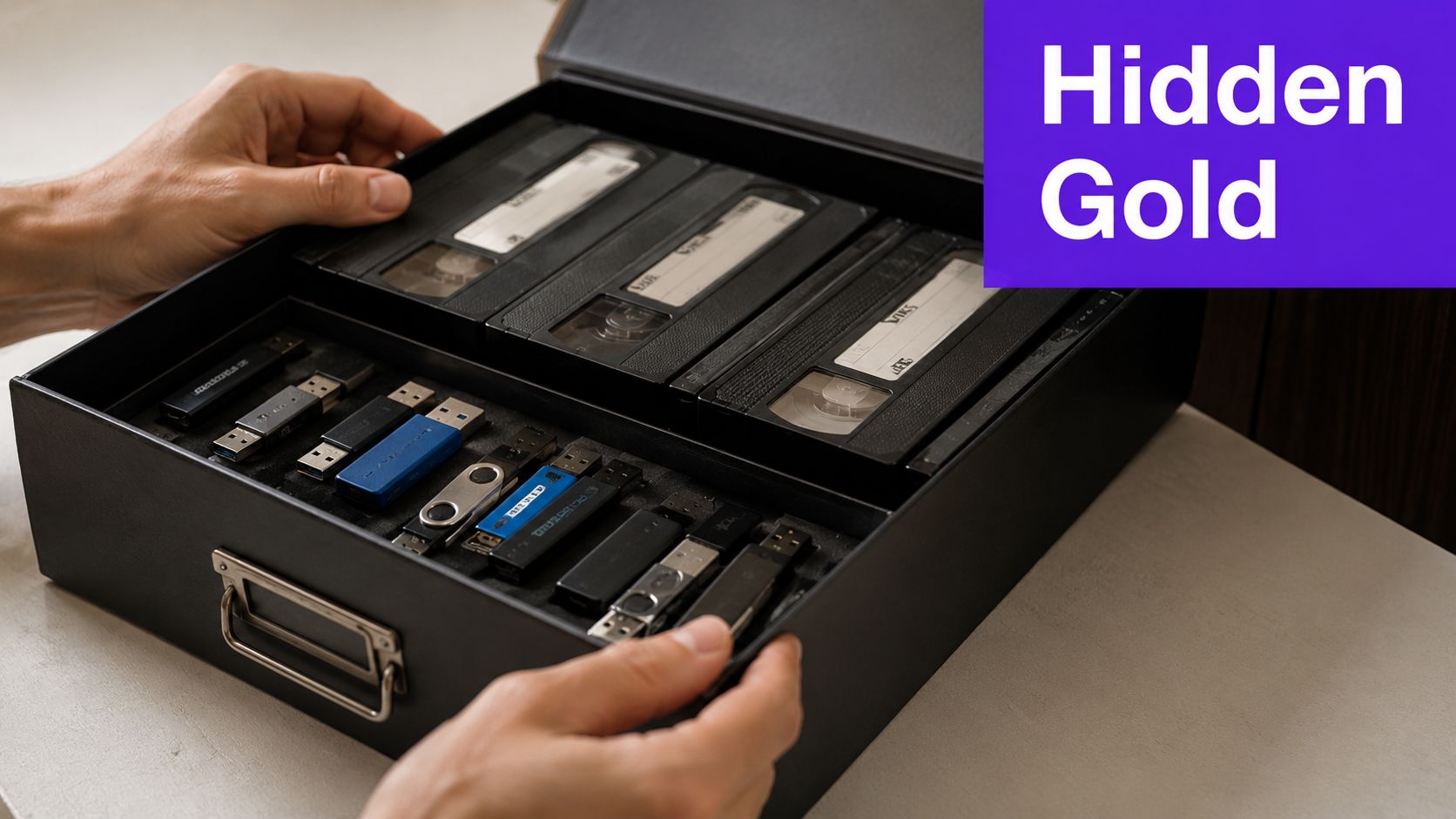
Use calendars, whiteboards, and content banks as recurring visual motifs. A creator misses a deadline. Another builds a backlog. Someone learns to batch. Someone realizes that posting sporadically keeps resetting audience expectations.
This is also where you can show archive use, scheduling tools, and editorial discipline without making the film feel like software marketing. The story is commitment under pressure. Calendar systems are the evidence.
Keep the cast varied. A YouTube educator. A nonprofit communications lead. A small business owner. A congregation media volunteer. Consistency means something different to each one, and that contrast gives the film texture.
This idea sells well because the clips are motivational and practical.
This is less flashy than some concepts, but it's strong because people don't just watch it. They use it.
This is the cleanest commercial concept on the list because it combines struggle, transformation, and visible output. Follow solopreneurs or small business owners who start with one long-form video and learn to turn it into a full content system.
The premise is simple enough to explain in one sentence and rich enough to carry a full documentary. One founder records a webinar. One coach records a client lesson. One podcaster records an interview. Then each person discovers they can build weeks of platform-ready content from that single recording instead of starting from zero every day.
Use people who are good at their business but weak at media operations. That gap makes the shift dramatic. Capture them at the point of frustration first. Missed posting windows. Half-finished drafts. Strong ideas trapped in long videos nobody repackaged.
Then document the turning point. They adopt a workflow that creates clips, captions, blog drafts, thumbnails, and scheduled posts from one source asset. A useful reference point is how to automate content creation, especially if you want to show an actual before-and-after process rather than hand-wavy “AI will help” narration.
There's also a funding and ethics angle worth building in. The industry is shifting away from top-down storytelling. According to the International Documentary Association feature on avoiding extractive filmmaking, 52% of funders now reject projects lacking demonstrated community collaboration, and 68% of new documentary pitches still rely on top-down narratives that ignore community input. So if you film entrepreneurs, educators, or communities transforming their own media workflows, let them shape how the story is told.
Don't just document people. Build the film with them.
The promo plan writes itself because the film demonstrates its own engine. Release the feature, then release platform-specific outputs generated from the same production archive. Publish educational clips, founder stories, process posts, and visual snippets suited to each network.
That makes this one of the smartest ideas for a documentary if you want a project that doubles as an ongoing content business.
| Title | Implementation Complexity 🔄 | Resource Requirements 💡 | Expected Outcomes ⭐📊 | Ideal Use Cases 💡 | Key Advantages ⚡ |
|---|---|---|---|---|---|
| The Data-Driven Creator: How Analytics Are Replacing Guesswork | Moderate–High 🔄, analytics pipelines, A/B workflows | High, analytics tools, access to creator dashboards | High ⭐, predictable topic wins and measurable growth 📊 | Data-driven channels seeking scalable topic discovery | Forecasting + metric-driven planning for steady growth ⚡ |
| Reclaim Your Time: How Creators Are Beating Burnout with Automation | Moderate 🔄, integration of automation + sensitive storytelling | Medium, automation tools, editorial partners, mental-health advisors | Strong ⭐, time recovery and improved wellbeing 📊 | Burnt-out creators or teams needing sustainable workflows | Positions automation as wellness solution; reduces routine load ⚡ |
| The Backlog Resurrection: Turning Old Videos Into New Audiences | Low–Moderate 🔄, analytics + metadata updates | Low, analytics access, modest editing/SEO work | High ⭐, improved ROI and renewed viewership from old assets 📊 | Creators with sizable backlogs or content droughts | Cost-effective reuse; fast returns on past investments ⚡ |
| From Podcast Studio to Social Media Empire: The Repurposing Revolution | High 🔄, complex audio-to-clip workflows and storytelling | High, clipping/transcription tools, editors, platform tooling | High ⭐, broadened reach and guest exposure across platforms 📊 | Podcasters and long-form interview shows | Turns long-form episodes into discovery engines across platforms ⚡ |
| The Long-Form to Short-Form Paradox: How Creators Are Winning Algorithm Wars | High 🔄, platform-specific optimization and algorithm analysis | High, cross-platform analytics, format conversion tools | High ⭐, algorithm wins when optimized across formats 📊 | Creators targeting both long- and short-form audiences | Simultaneous platform strategy to maximize recommendation reach ⚡ |
| The Social Media Manager's Secret Weapon: Enterprise Content Distribution at Startup Speed | Moderate 🔄, team workflows, approvals, multi-platform mapping | Medium–High, scheduling tools, collaboration platforms, brand guidelines | Strong ⭐, consistent brand presence and campaign scalability 📊 | SMBs and startups needing multi-platform consistency | Scales output without headcount; preserves brand voice ⚡ |
| The Local Service Provider's Advantage: Video Marketing Without the Time Cost | Low 🔄, straightforward repurposing and localized messaging | Low, simple production, lead-tracking tools, client testimonials | Solid ⭐, measurable lead generation and local credibility 📊 | Real estate agents, contractors, local service providers | Direct ROI and community trust via consistent video presence ⚡ |
| The Faith Factor: How Congregations Are Growing Community Through Consistent Video Content | Low–Moderate 🔄, volunteer workflows + content sensitivity | Low, volunteer teams, basic production tools, platform accounts | Positive ⭐, deeper engagement and inclusion; social impact 📊 | Churches and faith-based organizations with volunteer staff | Extends ministry reach; meaningful engagement with limited resources ⚡ |
| The Consistency Covenant: How Scheduled Content Keeps Audiences Engaged | Low 🔄, scheduling discipline and calendar management | Low, scheduling/automation tools and planning time | Strong ⭐, improved retention, subscriber growth, algorithm favorability 📊 | Creators focused on growth and audience reliability | Enables predictable growth without ad-hoc publishing ⚡ |
| The Content Creator's Journey: From One Video to 27 Assets | Moderate 🔄, AI-driven repurposing workflows and longitudinal stories | Medium, AI repurposing tools, testing time, cross-platform outputs | High ⭐, dramatic time savings and multi-week content supply 📊 | Solopreneurs and small businesses needing consistent output | Multiplies single assets into many; solves time-scarcity problem ⚡ |
The best documentary idea isn't the most profound one in your notebook. It's the one you can access, finish, and distribute without pretending the audience problem will solve itself later.
That's the flaw in most advice about ideas for a documentary. It treats the film as the product. In 2026, the film is only the center asset. Around it, you need clips, trailers, stills, short vertical edits, newsletter angles, partner-ready excerpts, and a release plan that starts before principal photography. If your concept can't support that ecosystem, the idea is weaker than it looks.
That doesn't mean every project has to feel commercial or cynical. It means you need to think like a producer. Access first. Repeatable scenes second. Clear audience third. Distribution mechanics from day one. If you can answer those four questions, you're no longer fantasizing about a documentary. You're developing one.
The strongest concepts on this list share one trait. They're built around behavior you can film. Planning sessions. Editing decisions. volunteer coordination. archive recovery. publishing systems. client-facing video use. creator burnout. workflow transformation. Those aren't abstract themes. They're visible actions. Visible actions give you scenes. Scenes give you story. Story gives you a film people can follow.
There's also a business reason to be this disciplined. You don't need a giant crew to build something meaningful, but you do need to respect how crowded factual content has become and how much effort it takes to get attention after launch. That's why the smartest filmmakers now build a repurposing strategy into development, not post.
A lot of creators waste months chasing “important” subjects they can't reach, can't sustain, or can't market. Skip that trap. Start with the story world where you already have trust, a subject who'll let you in, and a format that can generate useful material beyond the final cut. That's not playing small. That's how working documentaries get made.
If you want your film to travel, design it for multiple lives. The feature can serve festivals, YouTube, or streaming. The clips can drive discovery. The behind-the-scenes material can build loyalty. The educational angle can support workshops, speaking, or branded partnerships. The same production effort should do more than one job.
That's why modern nonfiction creators should study both filmmaking craft and content strategy. Strong structure still matters. So do character, tension, and ethics. But if you ignore distribution, you're making your own life harder.
For practical inspiration on craft itself, study these impactful documentary storytelling methods. Then stop overthinking and pick a concept you can shoot.
A greenlit documentary starts with a decision. Choose the subject you can reach. Build the audience plan now. Get the first shoot on the calendar.
If you want to turn one documentary shoot into weeks of clips, captions, thumbnails, blog posts, and platform-ready social content, Taja AI gives you a faster way to do it. Upload a long-form video, generate ready-to-publish assets, organize your release calendar, revive older content, and keep your distribution engine moving without becoming a full-time editor. For filmmakers, solopreneurs, podcasters, local businesses, and lean teams, it's a practical way to make sure your story doesn't stop at export.


We are blessed to work with leading brands & Companies


We try to make easy and simple for every professionals. Get 30 days free trial - No credit card required.


© 2025 Taja AI. All rights reserved.