.jpeg)
YouTube Shorts Format: A Complete 2026 Creator Guide
Master the YouTube Shorts format in 2026 with exact specs on duration, aspect ratio, resolution, and file types plus upload and discovery best practices.
5 min read
October 4, 2026

Find the best hashtags for music by genre, platform, mood, and trend, plus practical ways to mix broad and niche tags for stronger discovery.
Written by:


Stop posting the same hashtag block everywhere. Hashtags for music aren't a popularity contest, and the biggest tag isn't automatically the best route to discovery. The generic hashtag #music exists at enormous scale, with one tracker reporting 312,013,927 Instagram posts, while another market-focused source cites more than 500 million posts in 2026. That volume makes broad tags useful for category context, but difficult to treat as a reliable discovery strategy on their own. Display Purposes tracks the scale of #music and related tags.
A stronger approach assigns each hashtag a job. One tag can identify the genre, another can locate a community, a third can describe the listener's intent, and another can signal a collaboration, event, format, or platform. The result is a balanced set that tells people, and the platform, what your content is about.
The list below organizes music hashtags by those discovery jobs. You'll find practical combinations for original songs, covers, studio clips, live performances, collaborations, and repurposed content across TikTok, Instagram Reels, YouTube Shorts, and multi-platform publishing.
Genre hashtags give your post its first layer of context. A clip of distorted guitar, a piano arrangement, and a bedroom-produced rap verse may all belong under #music, but that broad label doesn't tell a listener which audience should care. Tags such as #hiphop, #indiemusic, #electronicmusic, #lofi, #classicalmusic, #synthwave, and #vocalmusic provide more useful direction when they accurately describe the recording.
Start with the song's primary genre, then add one narrower descriptor if it fits. An independent artist releasing a hazy synth track might use #electronicmusic, #synthwave, and #independentartist. A singer posting an intimate acoustic performance could choose #indiemusic, #vocalmusic, and #acousticmusic rather than filling the caption with unrelated high-volume terms.
Genre tags should describe the content viewers will hear, not the identity you wish the song had. If a producer posts a breakdown of a drum pattern, #musicproduction may be more relevant than a broad artist tag. If the video shows a live classical arrangement, #classicalmusic and an accurate instrument or performance tag can help establish context.
Practical rule: Use one broad genre signal and one or two specific descriptors. Don't call a track lo-fi, metal, or synthwave simply because those tags are active.
Genre discovery also varies by language and region. Distinct clusters such as #musiqueclassique, #musiquefrançaise, #musiquedumonde, and #fetedelamusique show how audiences organize around local language and culture, not one global music category. IQ Hashtags documents these language-specific music clusters.
A TikTok clip of a synthwave chorus, an Instagram Reel showing the same song's visualizer, and a YouTube Short explaining its production can share a genre foundation. The rest of the set should change with the platform and the video's purpose.
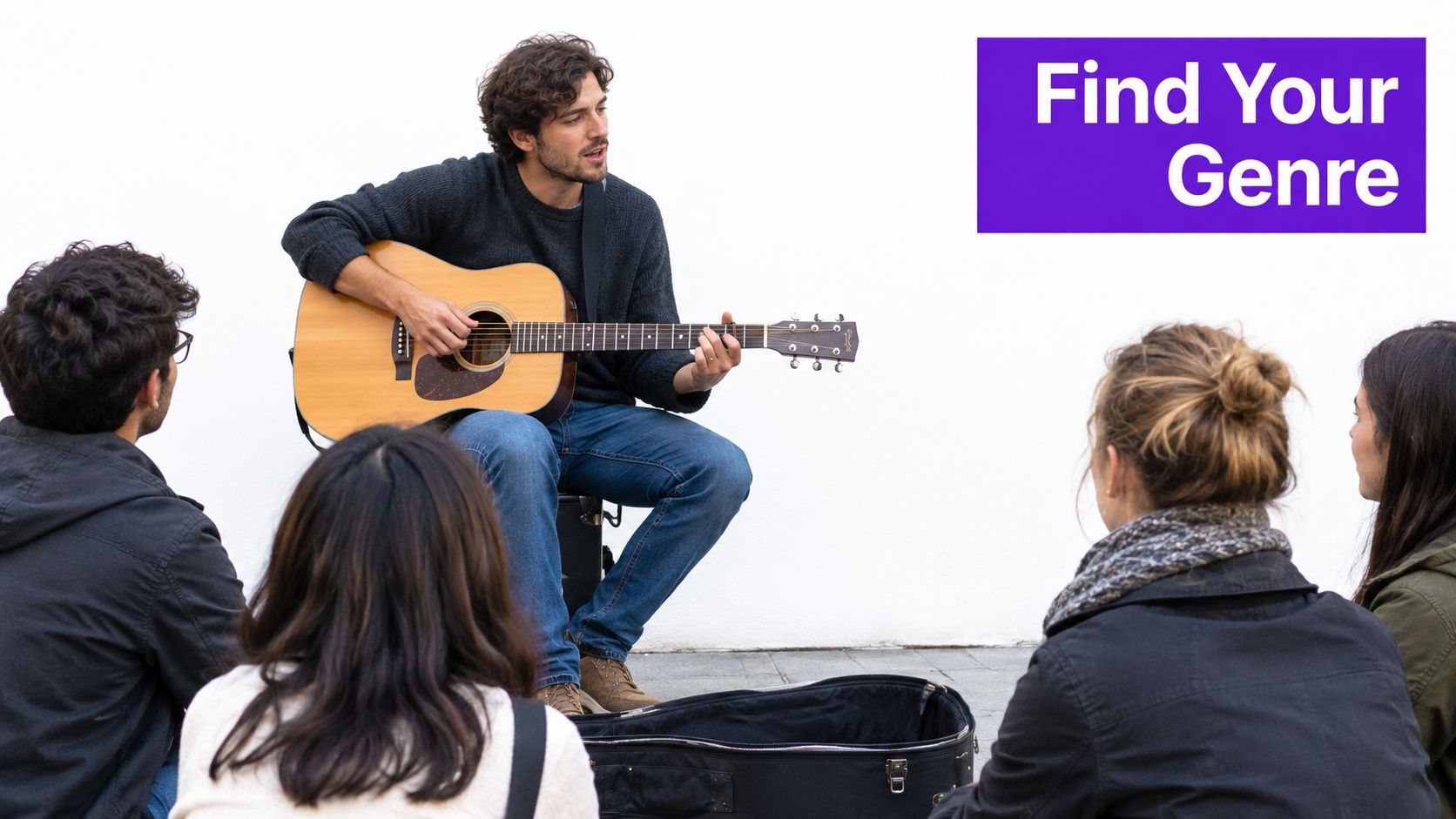
Collaboration hashtags work best when the content has a real shared identity. Use #collaboration, #remix, #coverversion, #duet, or #featuringartist when another performer, producer, songwriter, or creator contributes meaningfully to the post. These tags help frame the content for people interested in creative partnerships, but they won't compensate for a collaboration that the caption barely explains.
A feature announcement should identify the relationship clearly. For example, a rapper can pair #featuringartist with a genre tag and the featured vocalist's artist name. A producer sharing two versions of a track might use #remix, the relevant genre, and a format tag such as #musicproduction. A reaction or reinterpretation can use #coverversion when the video is genuinely a cover rather than an original song presented in a similar style.
Hashtags are only one part of collaborative distribution. Tag each participant in the post, use Instagram Collabs where appropriate, and use TikTok's Duet or Stitch features when they suit the concept. Ask every participant to publish a version with aligned language, but don't force identical captions if each account serves a different audience.
A practical scenario is a vocalist and beatmaker releasing a short chorus preview. The vocalist's account might emphasize #vocalmusic and #featuringartist, while the beatmaker's version emphasizes #musicproduction and #remix. Both should identify the same release so interested viewers can connect the posts.
Don't use collaboration tags on a solo clip just because you want access to another audience. That creates a misleading promise and weakens the relevance of the post.
Listeners often search by situation before they search by artist. They want music for studying, sleeping, exercising, recovering from a breakup, hosting a party, or creating a particular atmosphere. Mood hashtags such as #chillvibes, #sadmusic, #motivationalmusic, #sleepmusic, #studymusic, and #partymusic connect a track with that listening intent.
The match has to feel immediate. A slow loop with soft textures may suit #studymusic, #sleepmusic, or #chillvibes. A high-energy chorus designed for movement may fit #partymusic or #motivationalmusic. Don't apply #sleepmusic to a loud, restless track just because wellness-related audiences are attractive. Viewers who expected calm will leave quickly, and the wrong expectation can matter more than the tag itself.
Mood tags become stronger when paired with a musical descriptor. A lo-fi producer could test #studymusic, #lofibeats, and #chillvibes on a long ambient loop. A singer-songwriter might combine #sadmusic, #acousticmusic, and #originalmusic for a stripped-back verse. The first set describes the use case, the second gives musical context, and the third identifies the content type.
Use the caption to reinforce the mood rather than relying on hashtags alone. “A quiet loop for late-night reading” gives the viewer a clear reason to continue listening. A short on-screen phrase can do the same job in a Reel or Short.
Mood tags should describe the moment your music creates, not merely the emotion mentioned in the lyrics.
Timing can help too, but don't treat a schedule as a rule. Study-focused content may make sense when people are settling into work, while party content may fit social planning periods. Test the context with your own audience and compare meaningful discovery, saves, and comments rather than chasing the largest visible tag.
Licensing hashtags target a different discovery job: helping creators find music they can legally reuse. Tags such as #nocopyright, #royaltyfreemusic, #ccmusic, #freemusicdownload, and #youtubeaudio can bring tracks to video makers, podcasters, streamers, and commercial users. They also help musicians position a catalog for reuse, but only when the actual license supports the claim.
A hashtag does not grant permission. #nocopyright does not prove that a recording is safe to use, while #freemusic says nothing about attribution, commercial use, or modification rights. Check the license for both the recording and the composition before publishing. Creative Commons material may require credit, restrict commercial projects, or prohibit adaptations.
If a track uses a Creative Commons license, name the specific license in the description and include the required attribution. A creator choosing music for a YouTube Short should find the source, artist, license, and credit wording without digging through unrelated comments.
Choose tags according to the rights information:
Creators organizing rights-related descriptions can review Taja's licensing templates as a practical reference. Verification still comes first. An accurate plain-language caption protects users better than a polished caption with an incorrect rights claim.
For example, a musician releasing background music for creators might combine #royaltyfreemusic, #nocopyright, and a genre tag. The description should then state the permitted uses, credit requirements, and source location. That mix assigns hashtags to discovery while the license handles permission.
A hashtag should identify the discovery job your post performs. Platform tags point people to the right channel, format tags describe the asset, production tags signal its technical finish, and identity tags clarify who made the music. Useful examples include #instagramreelsmusic, #youtubeshorts, #spotifyplaylist, #musicproduction, #originalmusic, #studioquality, #hifi, and #mastered.
Match the tag to the actual post. A YouTube Short can use #youtubeshorts. An Instagram Reel may pair #instagramreelsmusic with a genre and a format description. A streaming post can use #spotifyplaylist when it directs listeners toward playlist discovery. Copying the same platform tag block across every channel weakens the signal.
Technical hashtags set expectations before anyone presses play. #studioquality suggests careful recording or presentation, #mastered suggests a completed mastering process, and #hifi signals high-fidelity listening. A phone recording captured in a noisy room may not support those claims.
Build the set around four signals:
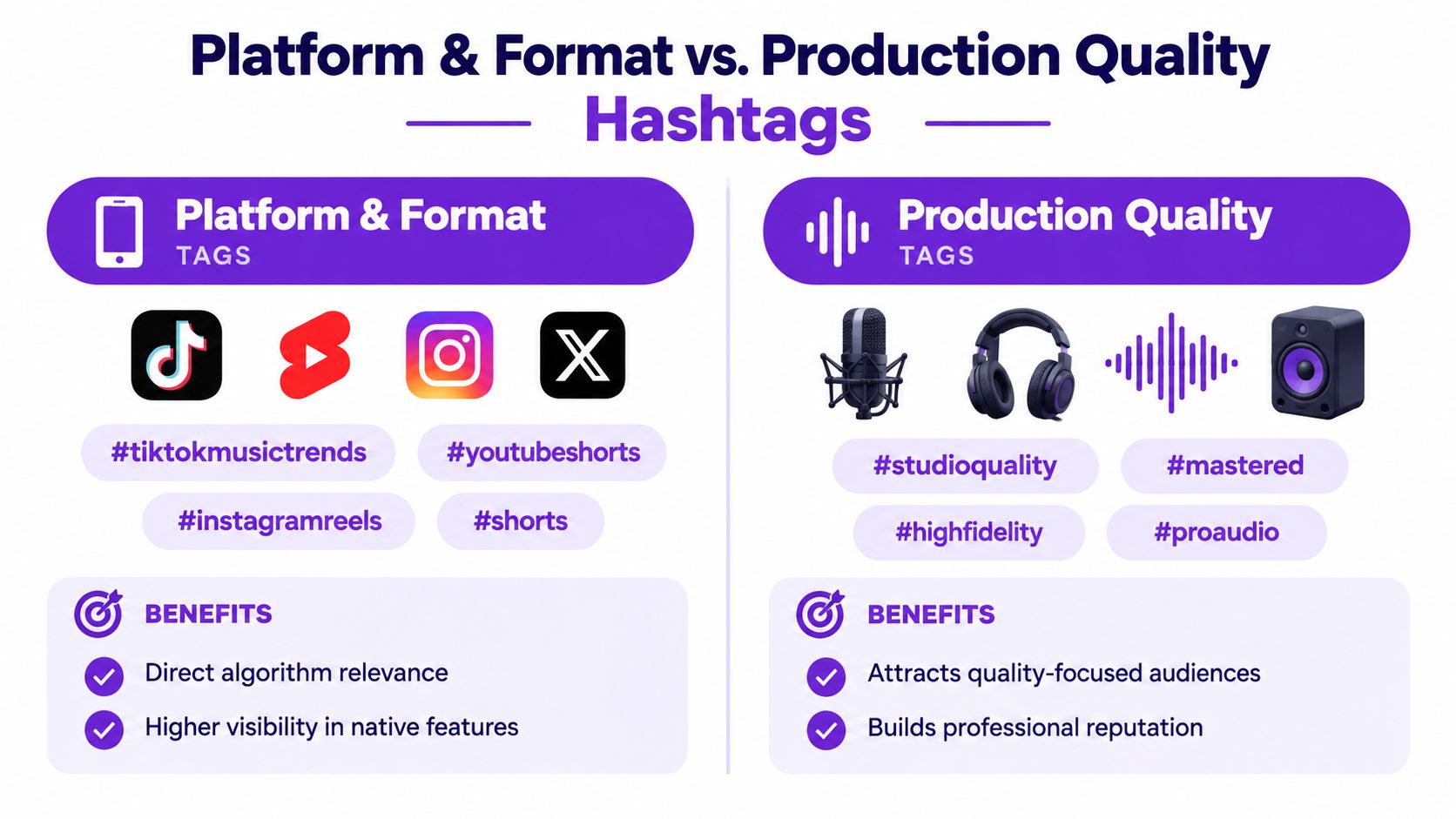
A vocal-chain tutorial might combine #musicproduction, #studioquality, and a genre tag. A performance clip from the same producer may need none of those technical labels. Choose hashtags for the asset in front of viewers, not the creator's full brand.
If you are building TikTok-first music clips, this TikTok music creation guide covers sound selection and format constraints. Use native analytics to decide which platform variations remain in your workflow.
Discovery hashtags should identify both the artist and the reason to listen. #independentartist, #unsignedartist, #newartist, #musicdiscovery, #musicpromotion, and #indieartist can reach listeners looking for unfamiliar musicians, along with peers and curators who follow independent scenes. A generic block of discovery tags gives little context. A balanced set connects career stage, sound, and listener intent.
Start with the artist's position, then add the musical signal. #independentartist #synthwave describes a clearer audience than several broad discovery labels. An emerging rapper might use #unsignedartist, #independentartist, and #undergroundhiphop. A bedroom-pop singer could choose #indieartist, #newartist, and #bedroompop, provided those labels match the recording and its presentation.
Discovery also depends on participation. Follow relevant conversations, respond to thoughtful comments, recommend other artists, and credit collaborators. Independent music communities often value the creative process and the person behind the track as much as the finished release.
Match the tags to the post's job:
Metadata supports discovery across titles, descriptions, and supporting text. Creators refining that wider process can consult Taja's metadata optimization guide, then adapt the wording to the platform and song. Use the guide to improve context, not to publish an automated hashtag block unchanged.
Trend hashtags can create a timely entry point, but only when the music and format belong in the trend. #trending, #viral, #challenge, #musicchallenge, #dancetrend, and #sounds describe participation or momentum. They don't turn an unrelated clip into a relevant contribution.
A music challenge needs a simple action listeners can understand. That might be adding a harmony, responding to a beat switch, performing a dance section, or using a defined part of the song in a new setting. The best version gives viewers a reason to participate, not just a request to “make this viral.”
Research the trend before posting. Check how people are using the sound, whether the format still feels active, and whether the audience fits your genre. A metal guitarist joining a dance trend may work if the performance is deliberately built around the contrast. A serious acoustic release with an unrelated meme tag will probably confuse the audience.
Keep trend tags alongside evergreen context. A short set might include #musicchallenge, a genre tag, and #originalmusic. If the clip is part of an actual dance format, add #dancetrend. If you're using a platform's native audio discovery system, #sounds may be relevant, but don't use it as a substitute for naming the song or explaining the creative prompt.
For creators who need to identify current Instagram audio opportunities, this guide to finding trending audio on Instagram provides a starting point. Trends move quickly, so publish only when you can make a relevant version without sacrificing the content's quality or identity.
Niche hashtags work when they signal a real connection to a scene. #afrobeats, #kpop, #latmusic, #reggaemusic, #christianmusic, #buddhimusic, and #metalmusic each point toward communities with distinct language, references, and expectations. Select the tag for the audience and context of the post, then let the content prove that connection.
A K-pop dance cover needs different discovery signals from a church choir performance or an Afrobeats studio session. The audiences may overlap, but the discovery job changes. Use a subgenre, regional label, faith context, or performance style when it accurately describes the work.
Context earns attention inside a scene. Credit the musicians involved, use local terminology where it fits, and engage with smaller artists who share the audience. A regional artist might pair a broad community tag with a city, language, or event tag. Each label should describe something visible in the music, performance, or conversation.
Use these checks before publishing:
Topic and lifestyle communities can also shape discovery. Tags such as #musictherapy, #vinylcollection, and #studiovibes suit posts built around listening practice, collecting, or studio life. The IQ Hashtags music data illustrates how discovery separates by language, topic, and lifestyle. Use one only when the post genuinely serves that interest.
Build the set around the post's community first, then add a broader genre or format tag. That balance gives insiders a clear signal without closing the door to new listeners.
Seasonal and event-based hashtags give a post a timely discovery job, but timing alone cannot carry it. Use #christmasmusic, #halloweensongs, #summerplaylist, #musicfestival, #livemusicperformance, or #newmusic only when the content genuinely matches the season, event, performance, or release moment.
Build the set around the post's actual context. A festival clip can pair the event's name with #musicfestival and #livemusicperformance. A holiday cover might combine #christmasmusic with a genre label such as jazz or classical music. A summer playlist recommendation needs a caption that explains the listening situation, such as a road trip, outdoor gathering, or relaxed afternoon. Seasonal wording in the tag alone adds little.
The timing also changes the production workflow. Record alternate versions early, prepare captions, confirm usage rights, and create platform-specific crops before people start searching. A timely post can then use a timing tag, a format tag, and one genre or community signal. That mix connects the moment to the right listeners instead of copying a generic block.
Keep evergreen assets flexible. A timeless holiday performance does not need a year-specific tag, so it can remain useful after the original release cycle. For a local concert, name the festival, venue, or city when the connection is clear. For a new release, #newmusic works best alongside the artist's genre and the format of the post.
Event performance varies sharply by context. Research on Indonesian concert hashtags found 811,387 total audience engagement for #coldplayjakarta, compared with 144,150 for #the90festival and 17,653 for #blackpinkworldtourjakarta. The comparison shows why event-specific relevance matters more than assuming every major artist or event tag will perform alike. JoinBrands reports the event-specific engagement comparison.
Community hashtags perform a discovery job beyond passive reach. #musiclovers, #musiccommunity, #supporttheartist, #musicreaction, #musicrecommendation, and #musicdiscussions signal that a post invites opinions, suggestions, or interpretation. Choose them according to the response you want, then balance them with a genre or platform tag that helps the right listeners find the conversation.
The caption must give people a clear reason to reply. Ask which lyric they noticed first, explain why a chord change works, or invite listeners to recommend an overlooked artist. Specific prompts create better discussion than a broad question such as “What do you think?”
Match each hashtag to the post's action. #musicreaction belongs on a reaction or response format. #musicrecommendation suits a post that recommends a song or asks for one. #supporttheartist fits a direct explanation of how listeners can stream, buy, attend, or share an artist's work.
A live Q&A can supply several short clips, each built around one question. Use #musicdiscussions for an answer focused on interpretation, #musiccommunity for a listener story, and a specific genre tag when the topic suits a defined audience. The source event stays connected, while every clip offers a distinct entry point.
Build participation into the workflow:
A generic #musiclovers tag will not build a community by itself. Consistent replies, credited contributions, and visible follow-through do that. The hashtag helps the relevant conversation reach the post.
| Hashtag Type | 🔄 Implementation Complexity | ⚡ Resource Requirements | 📊 Expected Outcomes | Ideal Use Cases | ⭐ Key Advantages | 💡 Tip |
|---|---|---|---|---|---|---|
| Genre-Specific Hashtags | Low–Medium, simple tagging but needs accurate genre | Low, basic research + monitoring | Targeted niche reach; higher engagement from fans | Genre discovery, playlist placement, repurposed music clips | High relevance to genre audiences; lower competition in niches | Mix broad + specific tags; research primary/secondary genres |
| Artist Collaboration & Feature Hashtags | Medium–High, requires coordination between artists | High, scheduling, rights clearance, mutual promotion | Exponential reach via cross-promotion; higher viral potential | Features, remixes, duets, collaborative releases | Leverages multiple fanbases; platform collaboration features | Tag all featured artists; use platform collab tools and coordinate posts |
| Mood & Vibe Hashtags | Low, assign by tone/pacing | Low, mood analysis and validation | Large search volume; consistent but highly saturated traffic | Study/sleep playlists, background music, mood-driven clips | Evergreen demand; cross-genre applicability | Combine mood + niche tags; post when mood is contextually relevant |
| Copyright-Free & Licensing Hashtags | Medium, requires license verification and attribution | Low–Medium, legal checks, crediting, linking sources | Safer monetization; attracts creators needing safe music | Business videos, monetized channels, UGC needing safe audio | Reduces copyright risk; builds trust with creators | Always verify license details; credit when required and link source |
| Platform, Format & Production Quality Hashtags | High, platform-specific strategies and quality claims | High, multi-platform optimization + production standards | Better visibility in native features; attracts quality-focused users | Platform-optimized shorts, professional releases, promo clips | Algorithm relevance; signals professional credibility | Customize tags per platform; only use quality tags if production matches |
| Emerging Artist & Discovery Hashtags | Low–Medium, consistent posting and community work | Medium, community engagement, storytelling | Improved discovery; possible industry/playlist attention | New artist promos, interviews, behind-the-scenes | Lower competition; scout and curator visibility | Combine with genre tags; engage other emerging artists regularly |
| Trend-Riding & Viral Challenge Hashtags | High, real-time responsiveness required | High, rapid content creation and monitoring | Potential for massive short-term spikes; time-limited value | Viral challenges, dance trends, fast-turnaround UGC | Fast algorithmic amplification when timed well | Act within hours of trend; batch-create variations for rapid posting |
| Niche & Community-Specific Hashtags | Medium, requires cultural authenticity | Medium, community participation and research | Deep engagement and loyalty; strong support networks | Cultural/religious content, regional artist promotion | Highly engaged, loyal audiences with purchasing power | Participate authentically; learn community norms before posting |
| Seasonal, Holiday & Event-Based Hashtags | Medium, planning and content banking needed | Medium, advance production and scheduling | Predictable traffic spikes during defined windows | Holiday playlists, festival promos, event tie-ins | Reliable, time-bound engagement; easy calendar planning | Create content 4–6 weeks ahead; bank and schedule via calendars |
| Listener Engagement & Community Building Hashtags | Medium–High, ongoing community management | High, time investment for moderation and interaction | Sustained engagement; higher lifetime value audiences | Q&A, reaction videos, community-driven campaigns | Builds loyalty and UGC; fosters repeat engagement | Respond actively; repurpose interviews/Q&As into discussion clips |
A useful hashtag set is small enough to understand and varied enough to test. Start with one or two accurate genre or community tags. Add a mood or listener-intent tag when the song serves a clear context. Choose a platform or format tag when it accurately describes the destination or asset. Add a trend, seasonal, or event tag only when the content belongs in that moment.
For example, an independent electronic artist posting a studio chorus might use a genre tag, a narrower electronic community tag, #originalmusic, and a production tag that the clip can support. A live festival performance needs a different mix, perhaps a local event signal, #livemusicperformance, the artist's genre, and a community tag. A calm piece designed for reading should prioritize listener intent and atmosphere over unrelated viral labels.
Change one part of the set at a time where possible. If you replace the genre tag, keep the format and content style consistent. If you test a mood tag, compare clips with similar openings and lengths. Review native analytics for discovery sources, profile visits, saves, comments, and audience quality. Raw reach can look impressive while producing no meaningful listeners.
The #music dataset reported 43,595 creators, an 8.22% average engagement rate, 4,273 average likes per post, 166 average comments per post, and a 3.97% median engagement rate. The difference between average and median indicates an uneven distribution, so a few unusually strong posts can distort the average. OpusClip provides the dataset and engagement figures. Treat broad-tag averages as context, not a promise for your next upload.
Keep a simple record with the post date, platform, content type, hashtag set, and meaningful outcomes. Rotate sets by purpose rather than changing every tag randomly. Hashtags remain useful as organization and search signals, but current guidance increasingly favors relevance over giant copy-and-paste blocks. RouteNote explains the shift toward selective, platform-specific hashtag use.
Taja can fit into this workflow when you're turning a long interview, performance, or studio session into platform-specific clips. Its content tools can help organize captions, hashtags, headlines, and publishing variations, while a tool such as an AI tag generator for POD can provide additional starting ideas. Review every suggestion against the actual music, audience, rights, and platform before publishing.
The repeatable process is straightforward. Identify the discovery job, choose only accurate tags, adapt the set for each platform, publish a meaningful piece of content, and record what happened. That approach won't give you a magic hashtag block, but it will show which signals help the right listeners find and understand your music.
Taja AI turns long-form music interviews, performances, and studio videos into ready-to-publish shorts with platform-specific captions, hashtags, headlines, and visual formats. Upload your source video, review the generated variations, and use Taja AI to organize and schedule a more consistent discovery workflow across your channels.


We are blessed to work with leading brands & Companies


We try to make easy and simple for every professionals. Get 30 days free trial - No credit card required.


© 2025 Taja AI. All rights reserved.