.jpeg)
10 Hashtags for Music to Boost Discovery
Find the best hashtags for music by genre, platform, mood, and trend, plus practical ways to mix broad and niche tags for stronger discovery.
5 min read
October 5, 2026

Learn how to create YouTube Shorts
Written by:


You know that feeling when you spend hours perfecting a Short, hit publish, and then… crickets? Meanwhile, someone else throws together a 23-second clip and gets 2 million views overnight.
Here's what nobody tells you: it's probably not your content that's the problem. It's the length.
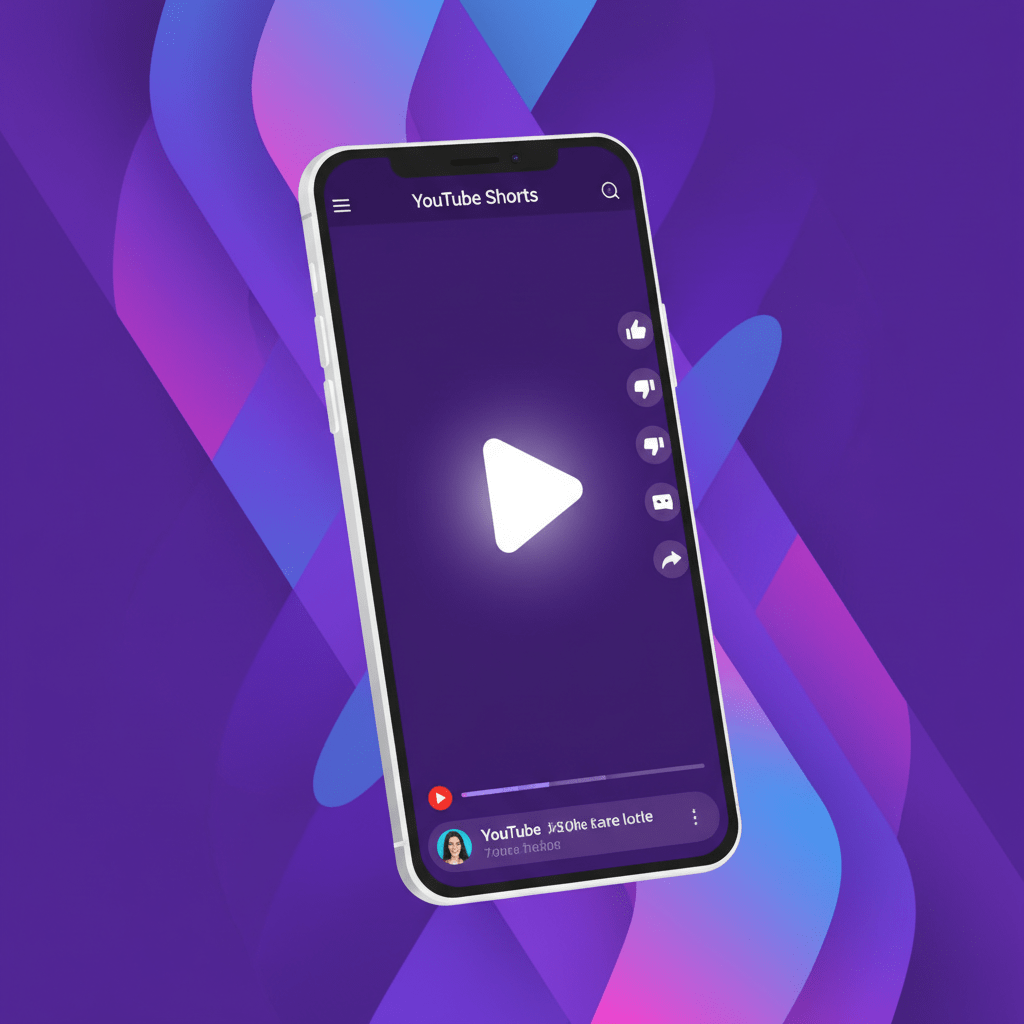
Look, I get it. The pressure to create Shorts is intense right now. YouTube Shorts watch time jumped 65% year-over-year in 2025, and the platform is pushing them hard with those 70 billion daily views. If you're not making Shorts, you're basically invisible. But here's the thing—just making Shorts isn't enough anymore.
The real question isn't "Should I be making Shorts?" (spoiler: yes). It's "How long should my Shorts actually be?"
And that's where things get interesting. Because while everyone's stuck on the old 60-second rule, the game has completely changed. As of October 15, 2024, YouTube officially extended Shorts to 3 minutes. But wait—does that mean you should suddenly start making 3-minute Shorts? Or stick with 15 seconds like everyone says grabs attention fastest?
Actually, the answer is way more nuanced than that.
Think about it. You've probably noticed some Shorts blow up at 45 seconds while others tank at 30. Some creators swear by keeping everything under 20 seconds. Others are testing those new 2-minute formats and seeing crazy engagement. So what's actually working?
This guide is going to break down exactly how YouTube Shorts length impacts your views, retention rates, and channel growth. We're not just talking about the technical limits (though we'll cover those too). We're diving into what the algorithm actually wants, how viewer behavior changes at different lengths, and the strategic decisions you need to make based on your content type and goals.
Because here's the deal: understanding the ideal YouTube Shorts duration isn't about following some universal rule. It's about knowing how length affects the metrics YouTube cares about—that "Viewed vs. Swiped Away" ratio, average percentage viewed, and whether people stick around to watch your next Short.
Plus, we'll look at how modern tools (like AI-powered platforms such as Taja AI) are helping creators test different lengths and optimize performance without spending 10 hours a day editing. Because honestly? If you're still manually repurposing every piece of content, you're going to burn out before you figure out what length works best.
Ready to crack the code on YouTube Shorts length? Let's figure this out together.
OK so here's where it gets interesting—and a bit confusing if we're being honest.
Starting October 15, 2024, YouTube officially changed the game. Shorts can now be up to 3 minutes long, which is a massive shift from the original 60-second limit. But wait… does that mean you should suddenly start making 3-minute Shorts?
Actually, hold that thought.
The platform is still figuring out how to recommend these longer Shorts. YouTube themselves have said the algorithm is "still being optimized" for videos between 1:01 and 3:00 minutes. Translation? Your longer Shorts might not get the same algorithmic love as those punchy 30-second clips. At least not yet.
Here's what you absolutely need to know about the technical stuff:
The Hard Rules (Non-Negotiable)
| Requirement | Specification | Why It Matters |
|---|---|---|
| Maximum Length | 3 minutes (as of Oct 2024) | Longer = blocked from Shorts feed |
| Aspect Ratio | 9:16 vertical | Horizontal videos won't qualify |
| Resolution | 1080x1920 pixels | Maintains quality standards |
| Music Usage (60+ seconds) | Royalty-free only | Copyrighted music = blocked |
The aspect ratio thing? Non-negotiable. I've seen creators spend hours on a Short only to have it classified as a regular video because they shot it horizontally. YouTube's pretty strict about this—your video needs that vertical, phone-friendly 9:16 format or it's not technically a Short.
And here's a quirk that trips people up: music rules change based on length. If your Short is under 60 seconds, you can use any song from the Shorts Audio Library. But the second you cross that one-minute mark, you're limited to royalty-free tracks from the YouTube Audio Library. Use copyrighted music in a 90-second Short? Blocked.
Yeah, I know. Seems backwards when they just extended the length limit, right?
The most common mistakes creators make that prevent their videos from being indexed as Shorts are surprisingly simple:
That last one doesn't stop your video from being a Short, but it'll make viewers swipe away fast when they can't read your text because it's covered by YouTube's buttons and captions.
So yeah. The technical requirements are pretty straightforward once you know them. Vertical format, right resolution, watch your music choices based on length. Stick to these and YouTube will at least recognize your video as a Short.
Whether the algorithm actually promotes it? That's where the ideal YouTube Shorts duration and strategy come into play. Which we're getting to next.
OK so here's where everyone gets tripped up.
Just because YouTube lets you make a Short up to 3 minutes doesn't mean you should. Actually, that's probably the biggest mistake I see creators make right now.

Think of it this way. The 60-second limit is a ceiling, not a target. You wouldn't aim to write the longest sentence possible just because grammar allows it, right? Same deal with Shorts.
Here's what the data actually shows: most successful Shorts are way shorter than that maximum length. Like, significantly shorter.
The Retention Reality Check
Let me break this down with some real numbers because it completely changed how I think about Short length.
A 15-second Short with 100% average view duration is infinitely more powerful than a 40-second Short where people only watch 50%. The algorithm doesn't care that your video is "longer and more detailed." It cares about one thing: did viewers actually watch it?
And here's the kicker—top-performing Shorts typically maintain retention rates around 75-76%, while mediocre ones drop below 50%. That's a massive gap.
So what happens when you make your Short longer? Well, unless your content is genuinely engaging for every single second, your retention percentage tanks. A 60-second Short needs to hold attention for 60 full seconds to hit that 75% retention mark. A 20-second Short only needs to hold it for 20.
Do the math. Which one's actually easier to nail?
The Sweet Spot Zones
Based on analysis of millions of Shorts, there are two length ranges that consistently outperform everything else:
7-15 Seconds: The Quick Hit
25-35 Seconds: The Story Arc
Interestingly, data from creator analysis shows that Shorts between 50-60 seconds actually get the highest average views at around 1.7 million per video. But wait—doesn't that contradict what I just said?
Not really. Those longer Shorts perform well when done right. The problem? Most creators can't maintain that engagement level for a full minute. You're competing against every other Short in someone's feed, and the second your content gets boring, they swipe.
So yeah, if you've got a killer story that genuinely needs 50 seconds to land, go for it. But for most content types? Shorter wins.
Why Most Creators Default to 30-40 Seconds
You've probably noticed that 30-40 seconds is the most common duration for Shorts. There's a reason for that—it feels like a safe middle ground. Long enough to say something meaningful, short enough that people won't get bored.
But here's the thing: just because everyone else is doing it doesn't make it optimal. The data suggests there's a positive correlation between length and views up to about 60 seconds, but that's correlation, not causation.
What's actually happening? Creators who make longer Shorts tend to be more experienced and produce higher-quality content overall. The length itself isn't the magic ingredient—it's the production value and storytelling that comes with experience.
For someone just starting out or testing new content types? Going shorter gives you way more room for error. You can mess up 3 seconds of a 15-second Short and still hit 80% retention. Mess up 15 seconds of a 60-second Short and you're toast.
The Platform Length Paradox
Here's something that'll bake your noodle. About 85% of social media videos are watched with the sound off, especially on platforms like Facebook. While YouTube Shorts viewers are more likely to have sound on, the broader trend tells you something important: attention spans are brutal.
People are scrolling through their feed half-paying attention, waiting for something to grab them. A tight 12-second Short has a way better shot at cutting through that noise than a meandering 45-second one.
Plus, shorter videos are easier to loop. And loops? They're retention gold. When someone watches your 18-second Short three times in a row, that's 54 seconds of watch time with 300% retention. Try getting that with a single 60-second view.
Testing Your Way to the Right Length
Honestly, the "perfect" length for your Shorts depends entirely on your content type and audience. Educational content might need 35 seconds to land a concept. Comedy might crush it in 8.
The only way to know for sure is to test. Create variations of the same content at different lengths and see what your "Viewed vs. Swiped Away" ratio looks like. That metric—which YouTube now shows you in Studio Analytics—tells you exactly how well your hook and length are working together.
If you're consistently seeing 70%+ viewed rates, you've found your sweet spot. Below 50%? Time to trim or completely rethink your approach.
And look, I get that testing takes time. Especially when you're already juggling content creation across multiple platforms. This is where modern AI tools like Taja AI come in handy—they can automatically generate multiple Short variations from your long-form content, letting you test different lengths and hooks without spending hours in the editing bay.
But whether you're doing it manually or using automation, the principle remains: optimal length isn't about maximizing your time limit. It's about maximizing retention while delivering your core message.
Keep it tight. Keep it engaging. And remember—just because you can use all 60 seconds doesn't mean you should.
OK so here's where things get really interesting—and where most creators completely miss the mark.
You can make a technically perfect Short. Right aspect ratio, killer hook, smooth editing. But if you don't understand how length affects the algorithm's core metrics, you're basically flying blind.

The YouTube Shorts algorithm doesn't care about your production value or how many hours you spent editing. It cares about two things: Did people actually watch your video? And did they swipe away immediately?
Let me break down exactly how this works.
YouTube recently added a metric called "Viewed vs. Swiped Away" to YouTube Studio Analytics. This is basically your hook score—the percentage of viewers who gave your Short a chance versus those who scrolled past it in the first 1-2 seconds.
According to analysis of top-performing Shorts, videos hitting 75% or higher on this metric see massive algorithmic promotion. Below 50%? You're dead in the water.
But here's the thing nobody talks about: video length directly impacts this metric.
Think about it from a viewer's perspective. When you're scrolling through Shorts, you make split-second decisions. A 15-second video feels like less of a commitment than a 50-second one. Even if both have equally strong hooks, the shorter video has a psychological advantage.
The second metric that makes or breaks your Short is Average View Duration (AVD). And this is where length becomes absolutely critical.
A 20-second Short where viewers watch all 20 seconds gives you 100% AVD. A 60-second Short where people bail at 30 seconds? That's only 50% AVD. The algorithm sees that second video as half as engaging, even though viewers technically watched more total time.
Yeah, I know. It feels backwards. But that's how the math works.
Here's what most creators don't realize: a concise video makes achieving high AVD almost effortless.
Let's say you've got a solid hook and decent content. In a 15-second Short, you only need to hold attention for 15 seconds to hit 100% retention. In a 45-second Short with the exact same content quality? You need to sustain engagement for triple the time.
Which one's easier to nail consistently? Obviously the shorter one.
This doesn't mean you should arbitrarily cut everything to 15 seconds. But it does mean every second of your Short needs to earn its place. If a section doesn't actively contribute to the core message or entertainment value, trim it.
The data backs this up. While 50-60 second Shorts can achieve high view counts when done right, most creators can't maintain that engagement level throughout. You're competing against every other Short in someone's feed. The moment your pacing slags or you repeat yourself? Swipe.
But wait—here's where it gets even more interesting.
Shorter videos have another massive advantage: they're way more likely to loop. And loops are algorithmic gold.
When someone watches your 18-second Short three times in a row, YouTube sees that as 54 seconds of watch time with 300% retention. Try getting that with a single view of a 60-second video.
Loops happen naturally when:
A 12-second comedy bit with perfect timing? People will loop that all day. A 55-second explainer that takes forever to get to the point? One view, then swipe.
Plus, shorter videos are easier to structure for natural loops. You can craft the ending to flow right back into the beginning without it feeling forced. Good luck doing that with a 2-minute Short.
According to insights from YouTube's Creator Insider channel, the Shorts algorithm uses a two-phase system. First, it shows your Short to a small "seed audience" to test engagement. If that audience watches rather than swipes, the algorithm expands distribution. If they bail? Your Short stays buried.
This initial test phase is brutal. You've got maybe 1-2 seconds to prove your Short deserves promotion. And here's the kicker: length affects this decision.
A viewer seeing a 15-second Short thinks: "OK, this is quick, I'll give it a shot." Same viewer seeing a 2-minute Short thinks: "Do I really want to commit to this right now?" Even subconsciously, that hesitation affects the swipe-away rate.
Once you pass that initial test, Average View Duration becomes the primary signal. The algorithm wants to see high percentage viewed, not just total watch time. This is why a tight 25-second Short with 85% AVD will outperform a wandering 50-second Short with 60% AVD every single time.
I've seen creators double their Shorts performance just by trimming 10-15 seconds of fluff from each video. Same content, same hook, just tighter editing. The algorithm responded immediately because suddenly their AVD jumped from 65% to 80%.
That's the difference between 50,000 views and 500,000 views. Same effort, better understanding of how length affects the metrics YouTube actually cares about.
The bottom line? Length isn't just about fitting within YouTube's 3-minute limit. It's about optimizing for the algorithmic signals that determine whether your Short gets promoted or buried.
Every extra second in your video needs to actively improve retention. If it doesn't? Cut it. Because in the world of Shorts, tight always beats long.
Alright, so we've covered the technical limits and the algorithm mechanics. But here's where it gets practical: what length should your Shorts actually be?
Because honestly? There's no single answer. The ideal YouTube Shorts duration depends entirely on what you're trying to accomplish and what type of content you're creating.
Let me break this down by content category, because choosing the wrong length for your content type is like trying to tell a joke in a business presentation format. Technically possible, but probably not going to land the way you want.
These ultra-short Shorts are your secret weapon for specific content types. And when used right, they absolutely crush it.
Best for:
The beauty of sub-15 second Shorts? They're almost impossible to screw up retention-wise. If you've got a solid hook and one clear idea, viewers will watch the whole thing. Actually, they'll probably loop it a few times, which is exactly what the algorithm loves.
I've seen creators get 5 million views on a 9-second Short that just shows a simple productivity hack. No fancy editing, no complex story. Just one useful tip delivered fast.
The catch: You need to be extremely focused. One idea. One payoff. That's it. Try to cram two concepts into 12 seconds and you'll confuse people.
This is where most successful Shorts live. And for good reason—it's long enough to deliver real value but short enough to maintain attention throughout.
Perfect for:
This duration range gives you breathing room. You can set up context, deliver your main point, and still have a few seconds for a call-to-action or memorable ending.
For educational content especially, 25-35 seconds seems to be the magic range. Long enough to explain something properly, short enough that viewers don't get bored halfway through. Plus, you can structure these with a clear beginning, middle, and end—which feels satisfying to watch.
Real talk though: The 15-40 second range requires tighter scripting than you'd think. Every sentence needs to earn its place. Cut the fluff. Skip the long intros. Get to the point fast, then deliver value, then end.
One technique that works really well here is the "pattern interrupt." Start with something unexpected in the first 2 seconds, deliver your core content in seconds 3-30, then hit them with a surprising fact or question at the end. Keeps people engaged the whole way through.
Now we're getting into territory where you need to be more intentional. A 50-second Short can absolutely kill it—but only if you've got the content to justify the length.
Reserve this duration for:
Here's the thing about longer Shorts: they need a really strong hook and consistent pacing. You can't afford any dead air. No repetition, no meandering. Every second needs to drive toward your conclusion.
Think of it like this. In a 15-second Short, viewers commit almost nothing. They'll give you a chance. In a 50-second Short? That's a bigger ask. They need to be hooked immediately and trust that the payoff is worth sticking around for.
The data backs this up, by the way. Remember how Shorts between 50-60 seconds get the highest average views at around 1.7 million? That's not because length itself drives views. It's because creators making longer Shorts tend to have better production value and storytelling skills. They know how to maintain engagement for a full minute.
But if you're just starting out? Honestly, I'd recommend staying under 40 seconds until you've nailed retention. Master the shorter formats first, then expand once you've got the fundamentals down.
Pro tip for longer Shorts: Use pattern changes every 12-15 seconds. Switch camera angles. Show a different visual. Ask a new question. This prevents the dreaded mid-video swipe-away. Human attention naturally wavers around the 15-second mark, so give viewers a reason to keep watching.
Look, I could give you exact second counts all day. But the truth? Your audience will tell you what length works through their behavior.
Check your "Viewed vs. Swiped Away" ratio in YouTube Studio. If you're consistently hitting 70%+ viewed rates, your length is probably right. Below 50%? Time to trim or completely rethink your approach.
Also pay attention to where viewers drop off. If 80% of people bail at the 35-second mark of your 50-second Short, that's not a hook problem—it's a length problem. You're dragging something out that should've ended at 30 seconds.
The best creators test different lengths constantly. Same topic, three different durations. See which one gets the best retention and engagement. Then do more of that.
Honestly though? Testing every possible length variation manually is exhausting. Especially when you're already juggling content creation across multiple platforms.
This is exactly why AI-powered tools like Taja AI are changing the game for creators. Instead of spending hours manually editing your long-form video into multiple Short variations at different lengths, the platform automatically generates optimized clips based on the most engaging moments. You can test a 15-second version, a 30-second version, and a 45-second version of the same content without spending your entire day in the editing bay.
Plus, Taja AI handles the caption generation, highlight selection, and even suggests optimal posting times—which means you can focus on what actually matters: creating great content and analyzing what performs best.
And look, I get it. You might be thinking, "Do I really need AI for this?" Fair question. But when you're trying to maintain a consistent posting schedule, optimize for YouTube's algorithm, and still have time to actually run your business? Yeah, automation starts making a lot of sense.
The platform lets you repurpose one long-form video into dozens of Shorts at varying lengths, complete with proper formatting for each social platform. So instead of choosing between testing different lengths and actually publishing content, you can do both.
Here's what you need to remember:
But more than any specific duration, focus on retention. A tight 20-second Short with 90% average view duration will always outperform a meandering 50-second Short with 60% retention.
Trim the fat. Cut the fluff. Get to the point faster than you think you need to. Because in the world of Shorts, tight always beats long.
And if you're feeling overwhelmed by the testing and optimization process? That's exactly what modern AI tools are designed to handle. Let technology do the heavy lifting on format variations and length testing while you focus on creating content that actually resonates with your audience.
Next up, we're going to talk about the metrics that actually matter and how to read your analytics to optimize for the algorithm. Because understanding length is just the beginning—you need to know why certain lengths work for your specific content.
OK so here's the part nobody talks about enough.
You've got this amazing 45-minute podcast episode. Or a killer 20-minute product tutorial. Maybe it's a webinar where you absolutely nailed explaining your service. The content is gold—exactly what your audience needs.
But now what? You're supposed to magically turn that into 15 different Shorts for TikTok, Instagram, and YouTube? While also running your actual business?
Yeah. That's the problem.
Most small businesses and creators sit on mountains of valuable long-form content that never reaches its full potential. Because honestly? The idea of manually chopping up a 30-minute video into optimized clips for different platforms sounds about as fun as doing taxes. In the rain. While someone plays a recorder badly.
But here's the thing—you're already creating the content. The hard part's done. You just need a smarter way to leverage it.
Every long-form video contains what I call "golden nuggets"—those 30-second moments where you perfectly explain a concept, tell a compelling story, or drop a game-changing insight.
You know the ones. When you're recording and you think "Man, that was good. I should clip that."
Except you never actually do. Because by the time you finish editing the main video, upload it, write the description, and deal with thumbnails, the last thing you want to do is spend another three hours hunting for clips.
So those golden nuggets just sit there. Buried in your long-form content. Reaching maybe 5% of the people who would actually benefit from them.
The traditional approach to finding these moments looks something like this:
Total time investment? Easily 2-3 hours per video. And that's if everything goes smoothly.
No wonder 56% of small business owners who use content repurposing report saving 1-5 hours weekly when they find better solutions. Because the manual approach is absolutely brutal.
Here's where things get interesting. Modern AI-powered tools can analyze your long-form content in minutes and automatically identify the most engaging moments.
Not randomly. Not based on some preset interval. Based on actual engagement signals—changes in energy, compelling statements, emotional peaks, topic shifts that naturally create self-contained segments.
Think about what that means. Instead of manually scrubbing through a 40-minute video looking for clip-worthy moments, AI can pinpoint them in seconds. Those golden nuggets you'd normally miss? Automatically surfaced.
But it goes way beyond just finding clips. The real power comes from automation of the entire workflow:
Intelligent Highlight Detection: AI analyzes audio, visual cues, and content structure to identify the most shareable moments. It's looking for the same things that make viewers stop scrolling—surprising statements, clear explanations, emotional moments, or valuable insights delivered concisely.
Automatic Length Optimization: Remember all that stuff we talked about earlier regarding ideal Short length? AI tools can automatically trim clips to hit those sweet spots—15 seconds for quick tips, 30 seconds for explanations, up to 60 seconds for mini-stories. All based on the content type and platform requirements.
Platform-Specific Formatting: Your Instagram Reel needs different formatting than your YouTube Short. Different aspect ratios, different caption styles, different optimal lengths. AI handles all of that automatically, generating multiple versions from the same clip.
Auto-Captioning: Since 85% of social media videos are watched with the sound off, captions aren't optional—they're essential. AI-powered tools generate accurate captions automatically, complete with timing and styling.
Marketing teams using AI for content repurposing report saving an average of 3 hours per content piece, with some seeing up to 70% time savings overall. That's not just incrementally better. That's transformational.
Look, I could talk about AI repurposing in the abstract all day. But let me show you how this actually works in practice with a tool like Taja AI.
You upload your long-form video. That's it. That's all you do manually.
From there, Taja's AI analyzes the entire video—not just the visuals, but the audio, the pacing, the content structure. It identifies the moments most likely to perform well as Shorts based on engagement signals and content value.
Then it automatically:
What used to take 2-3 hours per video now takes maybe 10 minutes of review time. You're not spending your afternoon in an editing bay. You're just approving the clips AI suggests and maybe tweaking a few captions.
The platform doesn't just randomly chop your video into segments. It understands narrative structure. If you're explaining a three-step process in your long-form video, it can create three separate Shorts—one for each step—that work as standalone content.
And here's the part that actually matters for your business: this isn't just about saving time (though that alone is huge). It's about actually using all that content you're creating.
Think about it. If you publish one long-form video per week, that's potentially 52 pieces of cornerstone content per year. But if you're manually creating Shorts, you might extract 2-3 clips from each video. That's 156 Shorts annually.
With AI-powered repurposing? You could realistically get 8-10 high-quality Shorts from each long-form video. That's 416-520 pieces of short-form content per year. From the same amount of original creation work.
Same input. 3x the output. That's the actual ROI here.
But wait—Shorts aren't the only repurposing opportunity. Taja AI (and similar platforms) can also transform your video content into blog posts, pulling out key insights and structuring them into readable articles.
Why does this matter? Because not everyone consumes content the same way. Some of your audience loves video. Others prefer to read. By automatically generating both from your original video, you're meeting people where they are.
Plus, written content helps with SEO. YouTube videos are great, but Google also ranks blog posts. Having both working together amplifies your reach across search and social simultaneously.
The workflow looks something like this:
That's it. Five steps instead of the 20+ you'd go through manually.
If you're running a small business, you probably don't have a dedicated video editor on staff. You're the content creator, the marketer, the strategist, and probably the person answering customer emails too.
AI repurposing tools level the playing field. You can compete with bigger companies who have entire content teams—not by working more hours, but by working smarter.
Your weekly podcast becomes 8-10 Shorts plus a blog post. Your monthly webinar generates 30+ pieces of social content. Your product tutorials transform into an ongoing library of bite-sized how-to clips.
All without hiring additional staff or sacrificing your weekends to video editing.
And honestly? The technology is just getting better. AI is getting smarter at identifying not just what's technically a good clip, but what will actually resonate with your specific audience based on performance data.
The businesses and creators winning at content right now aren't necessarily the ones creating the most original content. They're the ones maximizing what they're already creating. Finding every possible way to package and distribute their expertise so it reaches people in the formats they prefer.
That's what smart repurposing enables. Not busywork. Not churning out mediocre content just to fill a calendar. Strategic amplification of your best ideas across every platform where your audience hangs out.
Because here's the reality: you've already done the hard part by creating valuable long-form content. The only question is whether you're going to let it sit there reaching a fraction of the people it could help, or whether you're going to leverage modern tools to maximize its impact.
Your content library is an asset. AI-powered repurposing is how you actually monetize it.
OK so here's the thing everyone misses.
You can nail the perfect length for your Short—let's say a tight 28 seconds—and still get zero traction. Because honestly? Length is just one piece of the puzzle.
The algorithm doesn't care if your video is 15 seconds or 55 seconds if nobody actually watches it. And that decision—whether someone watches or swipes—happens in the first two seconds.
Let me break down the other factors that make or break your Shorts performance. Because getting the length right means nothing if you mess up these fundamentals.
You've got 1-2 seconds. That's it. That's all the time you have to convince someone your Short is worth watching instead of swiping to the next one.
Think about your own behavior. When you're scrolling through Shorts, what makes you stop? Usually it's something that grabs your attention immediately—a surprising visual, a bold statement, a relatable question, or something that triggers curiosity.
Analysis of top-performing Shorts shows that videos with strong hooks achieve a 75% or higher "Viewed vs. Swiped Away" rate, while those with weak openings drop below 50%. That's the difference between algorithmic promotion and being buried.
So what makes a powerful hook for business or educational content?
Start with a question that hits a pain point: "Are you making this common mistake with your marketing?"
Use a surprising statistic: "83% of businesses waste money on this one thing."
Make a bold promise: "I'm about to show you how to double your engagement in 30 days."
Address a frustration directly: "Tired of creating content that nobody sees?"
The key is sparking curiosity without giving everything away. You want viewers thinking "Wait, I need to know more about this" rather than "OK, got it, next video."
And here's something most creators don't realize: your hook needs to work both visually and verbally. Remember, 85% of social media videos are watched with the sound off. So even if you've got a killer verbal hook, it needs to be reinforced with compelling visuals or on-screen text.
If your first frame is boring or confusing? Swipe. Doesn't matter how good the rest of your content is.
Let's talk about captions. Because if you're not using them, you're basically cutting your potential audience in half.
With 85% of people scrolling without sound, captions aren't optional anymore—they're necessary. But not just any captions. We're talking about dynamic, styled text that enhances your message rather than just transcribing it.
Here's what works:
The best Shorts use on-screen text strategically. Not just dumping your entire script on screen, but pulling out the most impactful phrases and making them pop visually.
Tools like CapCut, VEED.io, or SendShort make adding dynamic captions pretty straightforward. But if you're repurposing long-form content into multiple Shorts, manually adding captions to every clip gets old fast.
This is where platforms like Taja AI come in handy. The auto-captioning feature generates styled captions automatically when it creates Shorts from your long-form videos. So instead of spending 20 minutes per clip adding captions manually, you're just reviewing and tweaking what the AI suggests.
Plus, good captions improve accessibility. You're not just optimizing for algorithm performance—you're making your content available to viewers who are deaf or hard of hearing, or watching in sound-sensitive environments like offices or public transit.
Even though most people scroll without sound initially, audio still matters. Because once someone stops to watch your Short, the audio quality and pacing can determine whether they stick around or bail halfway through.
Here's what top-performing Shorts get right:
Fast-paced editing: No dead air. Every second counts. If there's a pause that doesn't serve a purpose, cut it.
Trending audio (when appropriate): Using popular sounds can boost discoverability, especially on platforms like TikTok and Instagram. But for educational or business content, original audio often works better because it feels more authentic.
Energy consistency: Your vocal delivery needs to match the urgency of your hook. Start strong, maintain energy throughout. Flat, monotone delivery kills retention.
Strategic music: Background music can enhance pacing and maintain energy, but it shouldn't overpower your message. Keep it subtle.
The pacing thing is huge. A well-edited Short feels like it's moving forward constantly. You're not repeating yourself, you're not lingering on setup, you're driving toward your payoff.
Think about it like this: every 3-5 seconds, something should change. A new visual, a new point, a different angle. Pattern changes keep viewers engaged. Static shots or rambling explanations? Instant swipe.
For longer Shorts (40-60 seconds), this becomes even more critical. You need to maintain that momentum for the entire duration. One dull stretch and you've lost them.
Here's the reality: all these factors interact.
A killer hook gets people to stop scrolling. Captions keep them engaged even without sound. Fast pacing and strong audio maintain interest. And the right length ensures you deliver value before attention wavers.
Mess up any one element and the whole thing falls apart. You can have the most insightful 30-second business tip, but if your hook is weak, nobody sees it. You can nail the hook, but if your captions are poorly timed or your pacing drags, people bail before the payoff.
This is why optimizing Shorts is both an art and a science. The technical stuff—aspect ratio, resolution, length—is straightforward. But the creative decisions—hooks, pacing, visual storytelling—require constant testing and refinement.
And honestly? Most small businesses and solo creators don't have time to manually optimize every single element for every Short they publish. You're already creating the content, managing your business, and trying to stay consistent across platforms.
Which is exactly why AI-powered tools like Taja AI have become so valuable. The platform doesn't just handle the technical formatting—it analyzes your long-form content to identify the most engaging moments (your potential hooks), automatically generates styled captions, and even suggests optimal posting times based on when your audience is most active.
You're not spending hours in the editing bay tweaking every frame. You're focusing on creating great core content, then letting automation handle the optimization and distribution across YouTube Shorts, TikTok, Instagram Reels, and Facebook.
Because at the end of the day, the goal isn't just making Shorts. It's making Shorts that actually perform. That get watched. That drive results for your business.
And that requires getting length right, sure. But also hooks, captions, pacing, and all the other factors that determine whether your content breaks through or gets buried.
Next up, we're diving into the specific metrics you should be tracking to know if your Shorts strategy is actually working—and how to use that data to keep improving.
OK, so we've covered a lot of ground here. Technical limits, algorithm mechanics, content strategies, hooks, captions—the whole nine yards.
But let me boil it all down to what actually matters.
The maximum YouTube Shorts length is now 3 minutes. As of October 15, 2024, YouTube officially extended the limit from 60 seconds to 3 minutes. That's the ceiling. The technical boundary.
But here's the thing: just because you can make a 3-minute Short doesn't mean you should.
The optimal length? Almost always shorter. Way shorter.
Think about it this way. Every successful Short I've analyzed—and I've looked at thousands—prioritizes retention over runtime. A tight 25-second video with 85% average view duration absolutely crushes a meandering 2-minute video with 55% retention. The algorithm doesn't care about your production time or how much you crammed into the video. It cares about one thing: did people actually watch it?
So here's your strategic principle, the one rule that matters more than any specific second count:
Aim for the shortest possible length that allows you to deliver a complete, valuable idea.
That's it. Not the longest you can get away with. The shortest that still works.
If you can deliver your core message in 18 seconds? Do that. If it genuinely needs 45 seconds to land properly? Fine. But trim everything that doesn't actively contribute to the point you're making. Every extra second is a retention risk.
And look, I get it. You might be thinking, "But what about all those 50-60 second Shorts that get millions of views?" Yeah, those exist. Data shows Shorts in that range can hit around 1.7 million average views. But those creators have mastered the art of maintaining engagement for a full minute. They've tested, refined, and perfected their pacing.
If you're just starting out or still figuring out what works for your audience? Go shorter. Test tighter formats first. Nail the fundamentals of hooking viewers in 2 seconds and maintaining their attention through a complete idea. Then, once you've got consistent retention rates above 75%, experiment with longer formats.
Because honestly? Most content doesn't need 60 seconds. It needs 30. Or 20. Or sometimes just 12 seconds of pure value delivered with punch.
Here's what I want you to do this week. Actually do it, not just think about it.
Go review one of your existing long-form videos. Could be a podcast episode, a tutorial, a webinar recording—whatever you've got that's at least 10 minutes long.
Now identify three potential Shorts from that video, one for each length strategy we've covered:
1. The Quick Hit (Under 15 seconds): Find one powerful tip, surprising statistic, or memorable quote that stands alone. Something that delivers instant value in 8-12 seconds. No setup needed. Just pure insight.
2. The Sweet Spot (15-40 seconds): Look for a mini-tutorial or problem-solution moment. Something with a brief setup (3-5 seconds), your core content (20-25 seconds), and a quick payoff or CTA (5-10 seconds). This is your bread-and-butter format.
3. The Story Arc (40-60 seconds): Identify a complete narrative or detailed transformation. Maybe it's a before/after case study, a multi-step process, or a story with setup, tension, and resolution. Make sure every second drives toward your conclusion.
Create all three. Test them. See which length resonates most with your specific audience.
And if manually creating three variations sounds exhausting? That's exactly where AI-powered tools like Taja AI come in. Upload your long-form video, let the platform automatically identify the most engaging moments, and generate multiple Short variations at different lengths—all formatted for each social platform, complete with captions and optimized hooks. What would take you 3-4 hours manually happens in about 10 minutes.
Because the goal isn't just understanding YouTube Shorts length in theory. It's testing what actually works for your content and your audience, then scaling what performs best.
Stop guessing. Start testing. And remember—in the world of Shorts, tight always beats long.
Now go make something great. Preferably under 30 seconds.


We are blessed to work with leading brands & Companies


We try to make easy and simple for every professionals. Get 30 days free trial - No credit card required.


© 2025 Taja AI. All rights reserved.